

The Real Advantages of Group Hiking You Should Know

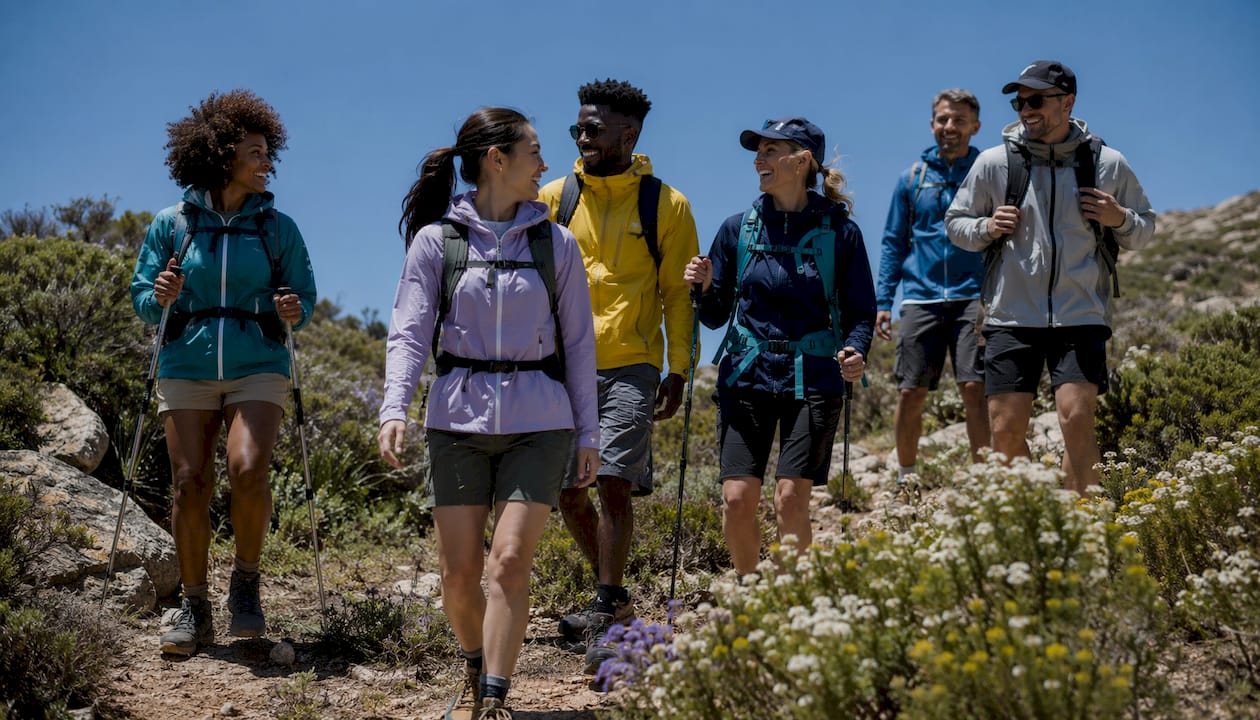
Hiking with a group delivers more than just company on the trail. The core advantages of group hiking include stronger safety through shared gear and skills, genuine social connection, built-in accountability that keeps you hiking consistently, and informal learning that accelerates your outdoor confidence faster than solo trips ever could. Groups also open up terrain that would be unreasonable to attempt alone.
Here is a quick overview of what you gain:
Safety: Shared first-aid kits, navigation tools, and emergency gear reduce individual load while increasing overall preparedness
Social connection: Shared physical effort builds friendships faster than most social settings
Motivation: A scheduled group hike is much harder to cancel than a solo plan
Skill sharing: You learn navigation, gear use, and pacing by watching experienced hikers
Capability expansion: A group with varied skills can tackle terrain no single member could manage alone
Leadership growth: Group settings naturally develop communication and decision-making skills
Groups do come with real challenges, including pace mismatches, scheduling friction, and the risk that everyone assumes someone else is handling the important tasks. Those are worth understanding before you commit.
Table of Contents
How group hiking builds real social connections
Group hiking creates social bonds that most other activities struggle to match. Walking side by side removes the awkward face-to-face pressure of typical social settings. Conversation flows naturally, and silence feels comfortable rather than tense. Over a few hours on trail, you learn more about someone than you might in months of casual contact.
The social benefits of group hiking go beyond pleasant company. Shared physical effort, especially on a tough climb where everyone is breathing hard and pushing through discomfort, creates a specific kind of trust. People open up on trail in ways they rarely do elsewhere. If you have moved to a new city or want to build an outdoor community, group hikes are one of the fastest ways to find people who share your values.
Regular group hiking also reduces isolation, which has a measurable effect on mental wellbeing. A meta-analysis of 42 studies with 1,843 participants found that outdoor walking groups significantly reduced depression scores alongside physical health markers like blood pressure and BMI. The combination of movement, nature, and social contact produces benefits that indoor exercise or solo walking does not fully replicate.
Meeting people across different age groups and backgrounds
Building a shared set of trail memories that deepen over time
Developing conversational skills in a low-pressure environment
Finding future hiking partners for more ambitious routes
Safety advantages that groups provide on the trail
The safety case for hiking with others is real, but it is more nuanced than “groups are safer.” The actual advantage is capability expansion. A group of four people with different skill sets can attempt terrain that none of them would reasonably tackle alone. One person carries extra first aid, another handles navigation, a third has been on that specific route before. That distributed knowledge makes the whole group more capable than any individual.
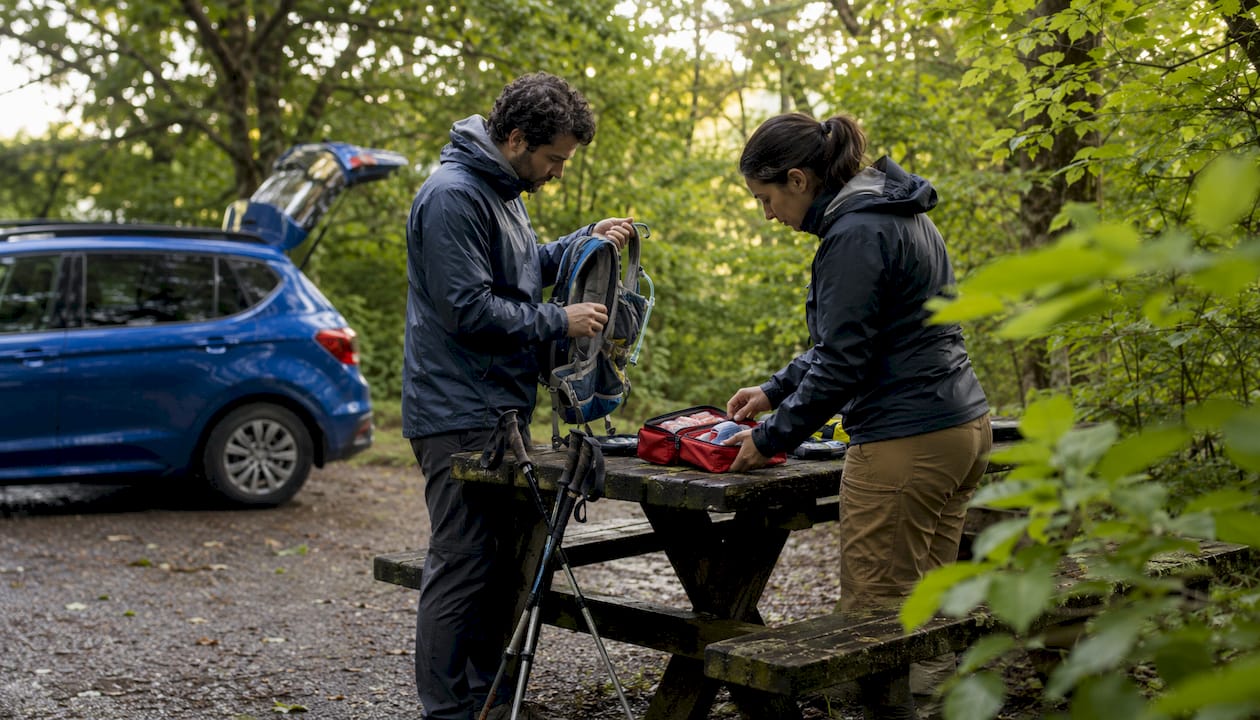
Gear distribution is a concrete example. Groups carry a single first-aid kit, map, or emergency beacon rather than each person duplicating heavy equipment. That frees up pack weight for other supplies and means the group arrives better equipped overall. For multi-day backcountry trips, this matters a lot. Thrillofit covers gear distribution strategies in more detail in this guide to multi-use camp gear.
One risk that groups introduce is diffusion of responsibility. When everyone assumes someone else is tracking water supply or monitoring turnaround time, sometimes nobody is. Every group member must stay actively responsible for their own gear and preparation, regardless of whether a leader is present. The leader sets direction; they do not replace individual accountability.
Shared navigation tools and emergency beacons reduce per-person load
Combined first-aid knowledge covers more scenarios than any solo hiker
Multiple people can respond to an injury or emergency simultaneously
Groups can send someone for help while others stay with an injured hiker
Pro Tip: Before the hike, assign specific safety roles explicitly. Name one person to track water, one to monitor time, one to watch weather. Naming the role eliminates the assumption that “someone else” is handling it.
How groups keep you motivated and hiking more often
Motivation is where groups deliver one of their least-discussed advantages. Canceling a solo hike when the weather looks uncertain or the couch looks comfortable is easy. Canceling when ten people are expecting you at the trailhead at 9:00 AM is a different calculation entirely. That social commitment drives consistency in a way that personal intention rarely does.
Groups also push you toward trails and conditions you would skip alone. Peer encouragement during a tough climb, or seeing someone else work through the same fatigue you are feeling, changes what feels possible. Research on inactive older adults in a group hiking program found that participants described their experience as overwhelmingly positive, with accountability and enjoyment cited as key factors for continued participation.
The small group training dynamic applies directly to hiking: shared effort raises the ceiling of what individuals attempt. You hike harder, more often, and in more varied conditions when others are alongside you.
Scheduled group hikes create external accountability that personal goals often lack
Peer encouragement helps you push through physical and mental resistance
Exposure to varied fitness levels shows you what is achievable with more experience
Group energy during tough sections lifts morale when solo willpower fades
Learning and skill sharing that happens naturally on group hikes
Group hikes are informal classrooms, and the learning happens without anyone trying to teach. Watching an experienced hiker adjust trekking poles on a descent, choose a rest spot based on wind direction, or read a topographic map in real time is more effective than any tutorial. You absorb technique by observation, then ask questions when curiosity strikes rather than when a lesson demands it.
The knowledge transfer on group hikes covers a wide range: route-finding, weather reading, gear selection, plant and wildlife identification, pacing strategies, and layering for changing conditions. Experienced hikers share this knowledge naturally in conversation. Questions that feel awkward to research online become easy exchanges on the trail.
For newcomers, peer modeling builds confidence faster than solo trial and error. Seeing someone navigate a tricky river crossing or manage a blister mid-hike gives you a mental template for handling the same situation yourself. That observational learning compounds over multiple hikes.
Navigation skills transfer through watching leaders read maps and choose routes
Gear knowledge grows by seeing what others carry and how they use it
Weather reading improves through real-time discussion with experienced hikers
Wildlife and plant identification becomes a group activity that everyone benefits from
Leadership, group dynamics, and managing common challenges
Well-run hiking groups use a simple structure: a leader at the front sets pace, and a backmarker at the rear ensures no one falls behind. The backmarker role is more important than it sounds. Without one, groups stretch out, slower hikers feel abandoned, and the social cohesion that makes group hiking worthwhile starts to erode.
Pace mismatch is the most common reason experienced hikers eventually prefer going solo. It is not that they dislike people; it is that they have spent too many days in low-grade negotiation between faster and slower members. The fix is communication before the trailhead, not at it. Agreeing on a target pace, planned stops, and a turnaround time in advance prevents most of the friction.
Personality conflicts and divergent hiking philosophies are real too. Not every group is a good fit, and that is fine. Finding well-matched peers matters more than finding any group at all.
Assign a front-runner and backmarker on every group hike
Discuss pace expectations, distance, and turnaround time before leaving the trailhead
Choose trails matched to the slowest comfortable member, not the fastest
Address conflicts directly and early rather than letting resentment build over miles
Pro Tip: Taking a local hiking class through a retailer or community college is one of the best ways to find well-matched hiking partners. The class acts as an informal vetting process, connecting you with people who share your skill level and safety philosophy before you commit to a serious objective together.
Key Takeaways
Group hiking delivers compounding benefits across safety, social connection, motivation, and skill development when the group is well-matched and well-organized.
Point | Details |
Capability over headcount | A group with varied skills attempts terrain no individual member could manage alone. |
Gear distribution matters | Sharing one first-aid kit or emergency beacon reduces individual load and improves overall preparedness. |
Accountability drives consistency | Scheduled group hikes are significantly harder to cancel, building fitness and trail confidence faster. |
Learning happens by observation | Watching experienced hikers in real time accelerates skill development more than solo practice. |
Pace management is the key challenge | Designating a front-runner and backmarker, and agreeing on pace before the trailhead, prevents most group friction. |
Recommended
Comments