

Spot Copperhead Bite Symptoms in the U.S.: Clinical Signs & Field Tips

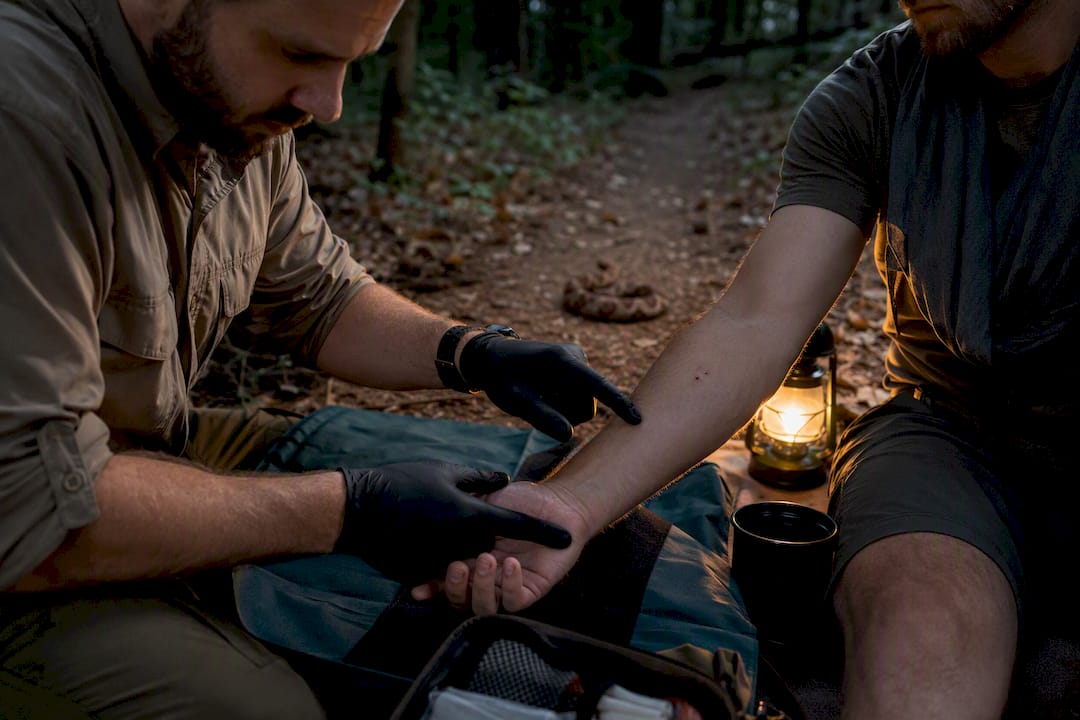
Most copperhead bites cause immediate, sharp pain and swelling that spreads over several hours, with serious systemic effects being the exception rather than the rule. About 20 to 25 percent of bites inject no venom at all, and symptoms typically build over 8 to 12 hours. Get to an emergency room right away if you notice swelling racing up a limb, trouble breathing, fainting, or unexplained bleeding.
TL;DR:
About 20 to 25 percent of copperhead bites inject no venom, but symptoms can develop gradually over 8 to 12 hours, so delayed severity is possible.
Local signs such as expanding swelling, discoloration, blistering, and persistent pain indicate envenomation, while superficial marks and quick pain relief suggest a dry or nonvenomous bite.
First aid should focus on staying calm, immobilizing the limb, removing constrictive items, and seeking emergency care immediately if symptoms escalate rapidly or systemic signs appear.
Early evaluation by medical professionals is crucial, as quicker hospital visits within roughly 5.5 hours can lead to faster recovery and reduce reliance on antivenom.
Most copperhead bites result in full recovery with proper monitoring, and serious complications or death are extremely rare in the United States.
Table of Contents
What do copperhead bite symptoms look like at the wound site?
The bite itself usually announces itself fast. You’ll feel a sharp, burning, or stinging pain within seconds, and you’ll often spot one or two puncture marks, though a grazing bite can leave just one. The skin around the wound turns tender almost immediately, even before swelling sets in.
From there, things develop over the next several hours. Swelling spreads outward from the bite, often accompanied by redness, bruising, and sometimes blood blisters or open blistering at the wound edges. Bites on feet and hands, the most common bite locations for hikers and yard workers, tend to swell in patterns that follow the tendons and joints, which can make a finger or toe look dramatically out of proportion to the rest of the limb.
Local signs to track:
Two puncture marks, or occasionally one, with immediate tenderness
Swelling that expands outward from the bite over hours
Redness and bruising around the wound
Blood blisters or blistering skin at the site
Pain that intensifies rather than fades in the first hour
Pro Tip: Use a pen to trace the leading edge of the swelling every 15 to 20 minutes and write the time next to each mark. Clinicians use this exact method to track progression, and it gives the emergency room a clear timeline the moment you arrive.
Snap a photo of the bite next to a coin or ruler for scale if you can do it safely without wasting time, and note the exact minute the bite happened. That detail matters more than people expect once you’re in triage.
Do copperhead bites cause whole-body symptoms?
Systemic symptoms are possible but uncommon. When they show up, they usually include nausea, vomiting, diarrhea, lightheadedness or a drop in blood pressure, bleeding from the gums or nose, and, rarely, breathing difficulty or neurological changes like tingling around the mouth.
Systemic effects occur in a minority of copperhead bites, and severe coagulopathy is uncommon for this species compared with other pit vipers, according to clinical review data from StatPearls.
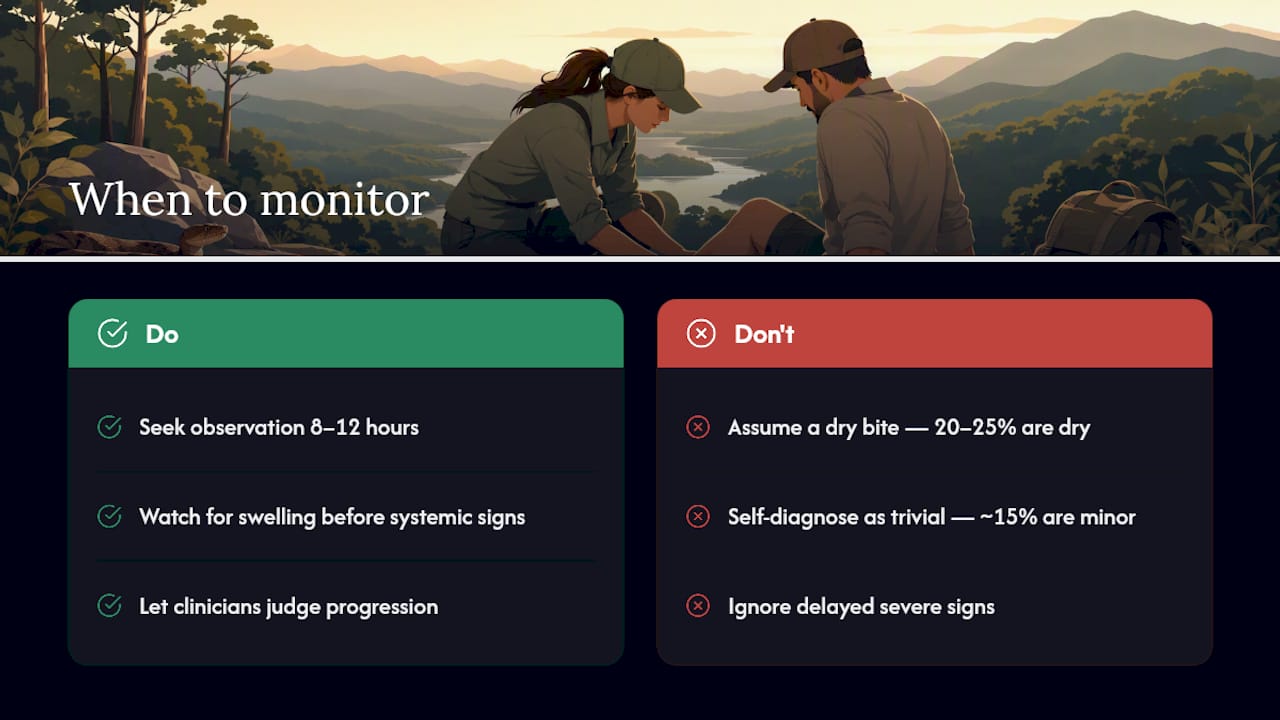
Local swelling and pain almost always show up first and progress well ahead of anything systemic. Symptoms generally evolve over 8 to 12 hours, which is why a bite that looks mild in the first thirty minutes can still turn into something that needs monitoring by dinnertime. Delayed severe signs, while rare, are the reason doctors want you observed rather than sent home after a quick look.
Don’t assume you got a dry bite just because things feel calm early on. Roughly 20 to 25 percent of copperhead bites inject no venom, and another 15 percent are trivial with minor symptoms, but that’s a diagnosis a clinician makes after watching how you progress, not something you can safely guess in the woods.
How can you tell a venomous bite from a harmless one?
Envenomation usually announces itself through progression: swelling that keeps expanding, discoloration spreading outward, blistering, and pain that stays severe rather than settling down. Two clear puncture wounds paired with any of those signs point toward a real envenomation.
A nonvenomous bite, or a dry bite from a copperhead, tends to look unremarkable. You might see superficial scratch marks instead of deep punctures, minimal swelling, and pain that fades within the hour rather than building.
Envenomation signs: expanding swelling, discoloration, blistering, persistent severe pain
Nonvenomous or dry-bite signs: little to no swelling, shallow marks, pain that eases quickly
Identifying the snake helps clinicians confirm what they’re treating, but it should never delay your trip to care. If you can photograph the snake from a safe distance without approaching it, do it. If not, describe the color and pattern from memory. Getting evaluated matters more than getting a perfect ID.
What first aid should you do right after a copperhead bite?
Follow these steps in order:
Move away from the snake and stay calm; adrenaline speeds up circulation and can push venom through your system faster.
Remove rings, watches, and tight clothing near the bite before swelling makes that impossible.
Keep the bitten limb still and positioned at or slightly below heart level.
Call 911 or Poison Control immediately and describe the bite, time, and symptoms.
Note the exact time of the bite and any changes in symptoms while you wait for help.
Avoid every home remedy you’ve heard about. Cutting the wound, sucking out venom, applying a tourniquet, packing the area in ice, or trying any kind of electric shock treatment can cause more damage than the bite itself, and none of it removes venom effectively, according to MedlinePlus first-aid guidance.
Pro Tip: When you call for help, lead with the bite time, your location, and what you’re seeing right now. Dispatchers and ER staff triage faster when they get those three details up front instead of a rundown of everything that happened before the bite.
If you’re on a trail with spotty signal, our snake bite survival guide covers how to get a rescue moving even without full connectivity.
When does a copperhead bite become an emergency room visit?
Go straight to the emergency room, don’t wait it out, if you notice any of these:
Swelling spreading rapidly up the limb
Trouble breathing or tightness in the throat
Fainting or feeling like you might pass out
Active bleeding from the gums, nose, or wound
Redness expanding quickly beyond the original swelling
Signs the limb is losing blood flow, like numbness or a cold, pale appearance
Once you arrive, expect a fairly standard workup: vital signs, an IV line, and blood tests including a complete blood count and a coagulation panel checking PT/INR, PTT, and fibrinogen. Staff will mark the swelling’s edge and recheck it on a schedule to see whether it’s advancing.
Antivenom isn’t automatic. Doctors decide based on how your symptoms progress, not just on the fact that you were bitten. Trial data from Missouri researchers shows that earlier antivenom, given within roughly 5.5 hours, was linked to faster limb function recovery and less reliance on opioids for pain. Antivenom does carry a risk of mild allergic reaction, which is part of why it’s reserved for cases that show real progression rather than given reflexively. Depending on how you’re trending, you’ll either be observed for several hours or admitted for continued monitoring.
What’s the long-term outlook after a copperhead bite?
Most people recover fully, and deaths from copperhead bites are extremely rare in the United States. Clinical reviews generally describe the majority of bites as mild to moderate, with severe outcomes making up a small minority of cases.
Surgery is rarely needed. Reviews of copperhead bite management note that fasciotomy, once assumed necessary for serious swelling, usually isn’t required, since antivenom and supportive care resolve most cases. The main complications people deal with afterward are prolonged swelling and stiffness, occasional tissue injury in delayed-treatment cases, and, less often, a mild allergic reaction to the antivenom itself.
What outdoor experience teaches about spotting a copperhead bite early
Thrillofit built its reputation covering wilderness survival and field first aid, and copperhead encounters are one of the most common snake incidents reported across the eastern and central United States. The pattern we hear about most isn’t dramatic. It’s someone reaching into leaf litter or stepping off a marked trail without looking first.
Closed-toe boots and gloves during brush clearing or firewood gathering cut your risk more than almost anything else you can do. Carry a written card in your pack with emergency contacts and your medical info. It sounds excessive until you’re the one who can’t speak clearly from pain or shock.
Our camping first aid kit guide lists what to pack beyond the basics, and our wildlife encounter guidelines cover how to keep distance from snakes you spot on the trail before a bite ever happens. If you do get bitten, photograph the scene from a safe distance and log the time immediately. Clinicians rely on that timestamp more than almost anything else you can hand them.
Why the calm, wait-and-see approach to copperhead bites is the wrong instinct
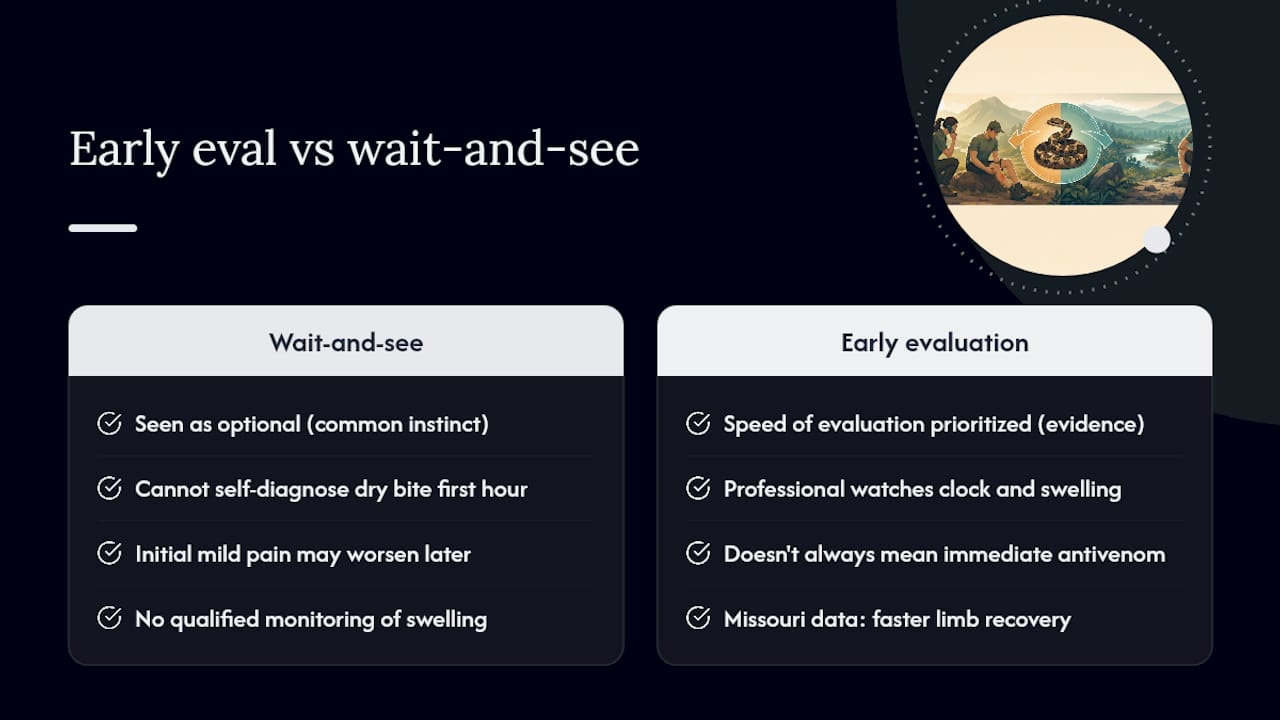
The biggest gap in how people talk about copperhead bites isn’t a lack of information. It’s a bad instinct: because copperhead bites are rarely fatal, a lot of people treat the “should I go to the ER” decision as optional. The research doesn’t support that. Dry bites exist, but you can’t diagnose one yourself in the first hour, and minimal envenomations sometimes progress to moderate severity well after the initial pain fades.
What the evidence actually supports is speed of evaluation, not speed of treatment escalation. Getting seen early doesn’t mean you’ll automatically get antivenom. It means someone qualified is watching the clock and the swelling line instead of you guessing at home while symptoms build for eight hours. The Missouri antivenom-timing data makes that case plainly: earlier evaluation and treatment tracked with faster limb recovery. That’s the priority. Not panic, not home remedies, just getting to a hospital before the decision gets made for you by a symptom you didn’t expect.
— S
This article is general information, not a substitute for advice from a qualified doctor. Consult a qualified healthcare professional about your own circumstances before acting on anything here.
Sources
Recommended
Comments