
One Minute Boil, One Backup: Campers' Plan to Prevent Giardia

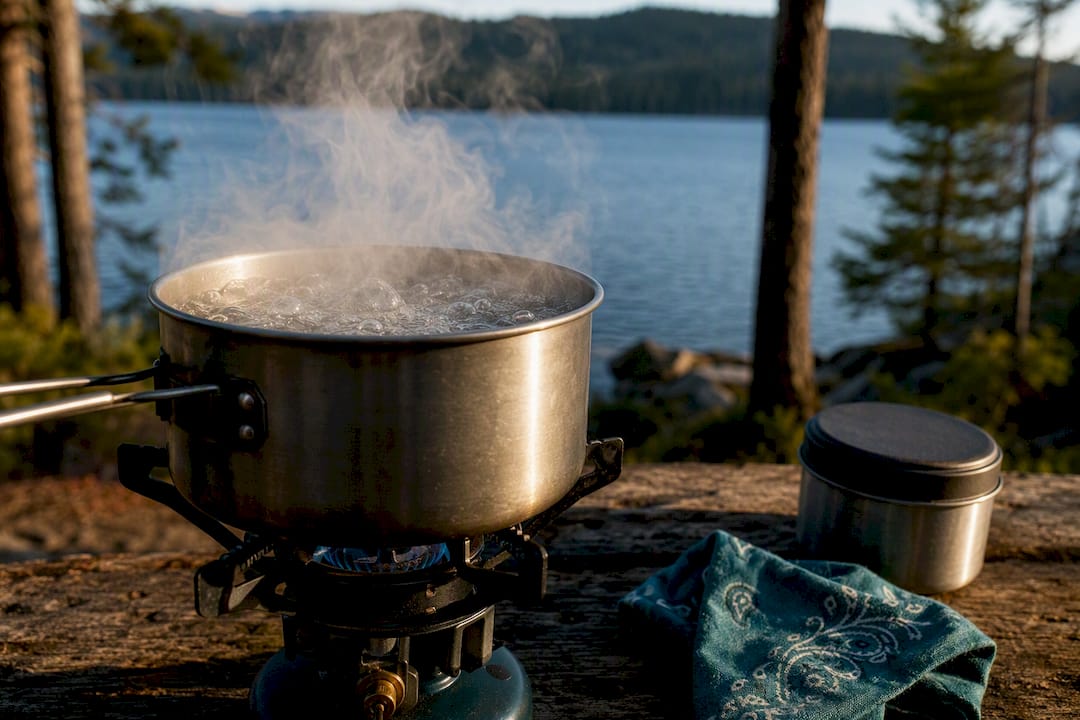
Boiling untreated water for one minute, or running it through a filter certified for cyst removal, is the single most reliable way to avoid Giardia in the backcountry. Pair that with soap-and-water handwashing and burying human waste well away from any water source, and you’ve covered the routine that stops nearly every camp-borne case. Carry a backup treatment method too, because gear fails and cold hands drop filter cartridges.
TL;DR:
Using boiling for one minute or a certified filter with an absolute pore size of 1 micron ensures the most reliable removal of Giardia cysts from water.
Handwashing with soap and water at key moments is essential because sanitizer alone cannot effectively eliminate Giardia cysts from skin surfaces.
Carrying a backup water treatment method, such as chlorine dioxide tablets, and testing all gear before the trip can prevent failures that lead to contamination.
Proper waste disposal, including burying human and pet waste at least 8 inches deep and 200 feet from water sources, drastically reduces infection risk.
Combining filtration with chemical or UV methods provides the best protection against bacteria, viruses, and protozoa on unpredictable water sources.
Table of Contents
Giardia Prevention Camping Checklist: Priority Steps
Treat every drop of surface water before it touches your mouth, your food, or your toothbrush. A mountain stream running clear and cold looks nothing like contaminated water, but clarity tells you nothing about safety — a beaver upstream or a careless hiker’s cathole can taint water that looks pristine.
Here’s the order that matters most on any trip:
Treat all water first. Boil it or run it through a certified filter before drinking, cooking, or brushing your teeth.
Wash hands at key moments. Before eating, after using the bathroom, and after handling raw food or pet waste.
Dispose of waste correctly. Bury it deep and far from any water source, every single time.
Watch kids and pets closely. They’re the ones most likely to splash, drink, or scoop water without asking first.
A few habits deserve their own callout because campers skip them constantly:
Hand sanitizer is convenient, but alcohol-based gels are not a reliable substitute against Giardia cysts. Soap and water mechanically scrub cysts off skin; sanitizer mostly doesn’t touch them.
Don’t swallow water while swimming in lakes or rivers near camp, especially downstream from other groups or livestock.
Diaper changes and pet waste need the same disposal discipline as human waste. A dog squatting near the water-collection spot creates the same risk as a person.
Pro Tip: Keep a small squeeze bottle of soap clipped to your pack strap. If handwashing feels like a chore, campers skip it. Making it a 10-second reach instead of a hike to your gear pile is what actually changes behavior.
How to Make Wilderness Water Safe: Boiling, Filters, and Chemicals
Boiling remains the gold standard because heat doesn’t care about turbidity, cyst count, or water chemistry. Bring water to a rolling, bubbling boil and hold it there for one full minute, extending to three minutes above roughly 6,500 feet, where thinner air lowers the boiling point and reduces heat transfer. Let it cool naturally in a covered pot rather than dumping in unfiltered water to speed things up.
Filtration is the practical choice when you don’t want to fire up a stove for every liter. The number that matters here: Giardia cysts run about 8 to 12 microns long, so any filter needs a cyst-removal certification (NSF/ANSI 53 or 58) or an absolute pore size of 1 micron or smaller to catch them reliably. Household pitcher filters built for taste and odor, the kind sitting on kitchen counters everywhere, will not stop a Giardia cyst. Check filter specs at a source like Pure Wave Water if you’re shopping for a certified unit before a trip.
Chemical disinfectants come with real caveats. Iodine and standard chlorine tablets can fail against Giardia in cold or cloudy water, since both depend on contact time and temperature to work. Chlorine dioxide performs better against Giardia specifically, but it demands the full stated contact time, usually 30 minutes or longer in cold water, and it’s not recommended for pregnant people or anyone with certain thyroid conditions.
UV pens work well but only on clear water with charged batteries. Cloudy water blocks the light from reaching every cyst, so prefiltering turbid water is not optional if you’re relying on UV.
Boil: kills everything, needs fuel and time.
Certified filter: fast, physical removal, needs maintenance.
Chlorine dioxide: good backup, needs patience.
UV: convenient, needs clear water and battery life.
The smartest backcountry setups combine filtration with a chemical or UV step for water that might carry bacteria or viruses too, not just protozoa. For a deeper walkthrough of technique, A guide on how to purify water outdoors covers each method step by step.
Camp Hygiene and Waste Disposal That Actually Prevent Infection
Handwashing protocol sounds obvious until you’re three days into a trip and your hands are cold and dirty. Wash before every meal, before handling food, and immediately after using the bathroom, and use actual soap. Hand sanitizer doesn’t reliably kill Giardia cysts, which have a tough outer shell built to survive outside a host.
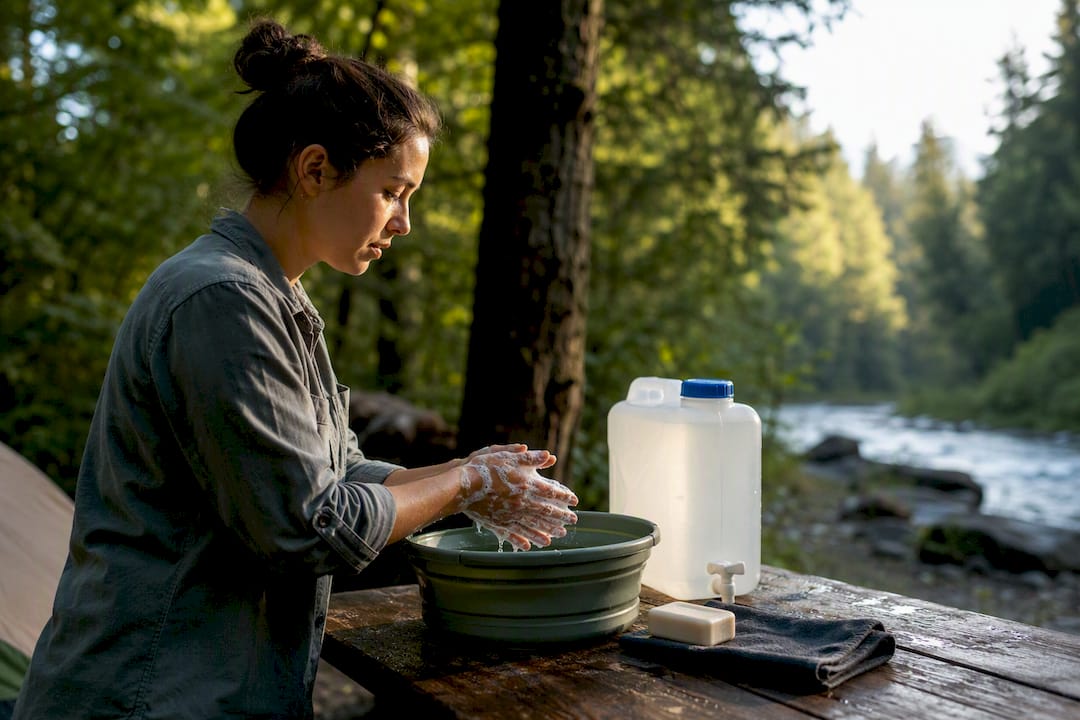
Digging a proper cathole is a five-minute job that prevents most of the transmission risk in group camps. The rule is simple: bury waste at least 8 inches deep and at least 200 feet from any water source, roughly 70 adult paces. Pick your spot downhill and well away from anywhere your group collects drinking water, never upstream of it.
A few more habits round out camp sanitation:
Keep a “clean” food-prep area separate from a “dirty” area used for dishwashing or raw meat handling.
Store treated water in its own container, clearly marked, so nobody tops it off with untreated stream water by mistake.
Bag pet waste and pack it out, or bury it with the same depth and distance rules as human waste.
Pro Tip: Assign one water bottle exclusively for treated drinking water and mark it with tape. Mixed-use bottles are how “safe” water quietly gets contaminated on multi-day trips.
What to Pack: Gear and Backups for Safe Water on the Trail
Redundancy isn’t overkill here. It’s the actual rule backcountry travelers rely on, because a cracked filter housing or dead UV batteries at hour six of a hike leaves you with nothing if you packed only one system.
Primary treatment. A stove and pot for boiling, or a portable filter certified under NSF/ANSI 53 or 58.
Chemical backup. Chlorine dioxide tablets pack small and don’t rely on batteries or fuel.
Spare parts. Extra filter cartridges, O-rings, and a small repair kit for cracked hoses or fittings.
Pre-trip test run. Practice your treatment method at home before you’re standing in the rain trying to figure out the pump handle.
Elevation check. Know your trip’s highest camp elevation so you know whether you need the 1 minute or 3 minute boil time.
For a more detailed emergency setup, An emergency water purification methods guide walks through backup techniques when your primary gear fails mid trip.
Giardiasis Symptoms and When to Get Medical Help
Watery diarrhea, gas, bloating, and stomach cramps are the classic signs, sometimes joined by nausea or fatigue. Symptoms can show up anywhere from a few days to two weeks after exposure, which makes it easy to blame the wrong meal.
Seek medical care for prolonged diarrhea lasting more than a few days, signs of dehydration, fever, or blood in the stool, especially in young children, older adults, or anyone immunocompromised. No vaccine exists for Giardia, so prevention through water treatment and hygiene is the only real defense. Pack a basic first aid kit stocked for stomach issues, but treat persistent symptoms as a reason to see a doctor, not just ride out.
Field-Tested Tips Most Guides Skip
Test any new filter or UV pen at home before your trip, not on day one of a backcountry loop. A jammed plunger or a dead battery pack is a lot easier to troubleshoot in your kitchen than on a trail three miles from the car.
If your source water looks murky, run it through a bandana or a coffee filter before treating it. This single step reduces clogging in pump filters and improves how well UV light or chemicals actually work, since sediment can shield cysts from both light and disinfectant contact.
Pro Tip: Set up a designated “dirty hands” basin at camp, away from the cooking area, and actually enforce it. Groups that skip this step almost always end up passing something around by the second night.
Why the Standard Advice Undersells Redundancy
Most guidance on Giardia prevention treats water treatment as a single decision: pick a method, use it, done. That framing misses what actually causes outbreaks on trips. It’s rarely a total absence of treatment. It’s a filter that clogs on day three, a UV pen with dead batteries, or a chemical tablet used in water too cold to work properly.
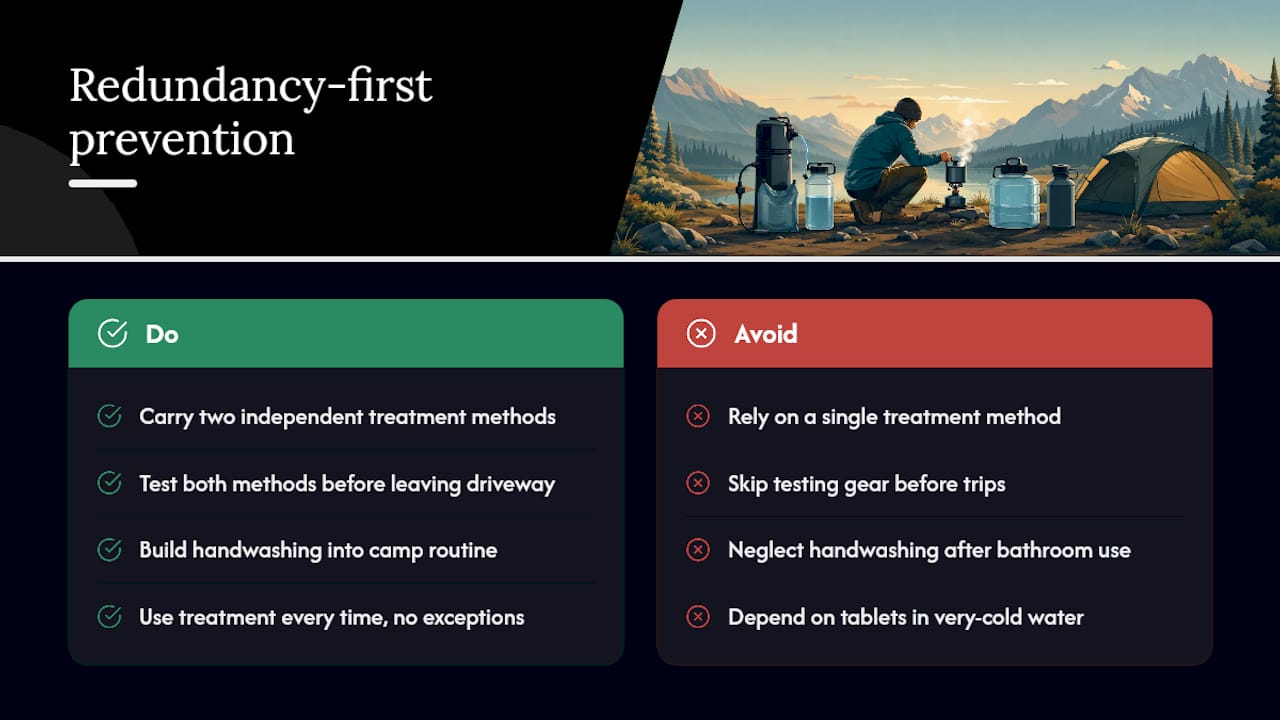
The conventional advice also underplays hygiene relative to water treatment. Camp outbreaks often trace back to hands, not streams, because Giardia’s infectious dose is small enough that sloppy handwashing after a bathroom trip does real damage even when your water is perfectly treated.
If you take one thing from this guide, make it redundancy. Carry two independent treatment methods, test both before you leave the driveway, and build handwashing into camp routine the same way you’d build in a bear hang. The gear matters less than the habit of actually using it every time, not just when the water looks suspicious.
— S
Keep Building Your Camp Safety Skills
Thrillofit exists because field knowledge shouldn’t live only in guidebooks nobody reads before a trip. If this guide answered your water-safety questions, the deeper procedural breakdowns are worth bookmarking before your next trip, not during it.
A guide to purifying water outdoors walks through filter, chemical, and UV setups in more depth than any single blog post can cover, and a camping first aid kit checklist pairs well with this one for anyone planning a multi-day trip. If you’re newer to overnight trips generally, start with the hiking tips for beginners guide before you head out. Save whichever guide matches your next trip to your phone now, before you lose signal on the trailhead.
This article is general information, not a substitute for advice from a qualified doctor. Consult a qualified healthcare professional about your own circumstances before acting on anything here.
Sources
FAQ
What naturally kills Giardia cysts?
Heat is the most reliable method: a rolling boil for one minute (three minutes above about 6,500 feet) destroys Giardia cysts completely. Certified filtration physically removes cysts rather than killing them, which works just as well in practice.
What are the chances of getting Giardia while camping?
There’s no fixed statistic for camping-specific infection rates, but risk climbs sharply whenever untreated surface water is consumed or hands go unwashed near a shared water source. Consistent water treatment and handwashing cut that risk dramatically regardless of location.
Can I take Imodium if I have Giardia?
Anti-diarrheal medication like Imodium can mask symptoms without addressing the parasite itself, and a doctor should confirm the diagnosis before you self-treat. See a medical provider for proper testing and prescription antiparasitic treatment rather than relying on over-the-counter symptom control alone.
Does Giardia ever fully go away?
Yes, giardiasis typically clears with appropriate antiparasitic medication and usually resolves within a few weeks of treatment. No vaccine prevents reinfection, so the same water-treatment and hygiene habits that stopped it the first time remain your best protection on future trips.
Recommended
Comments