

How to Recognize Poison Hemlock Before It Touches You

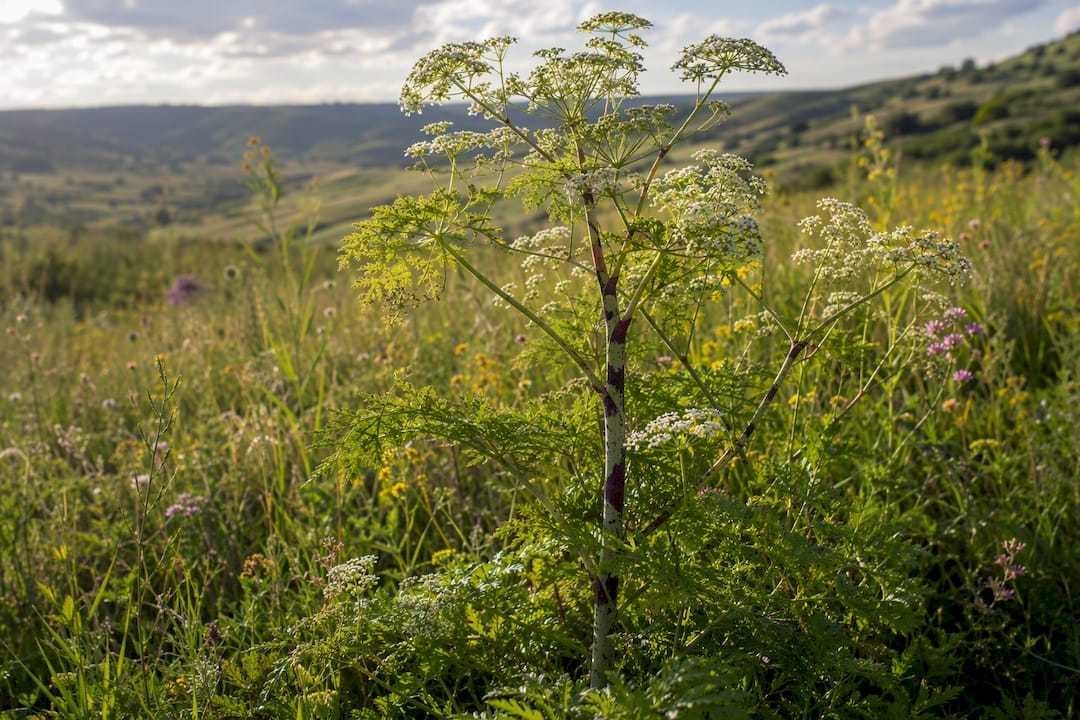
Look for a smooth, hairless stem streaked with purple or reddish blotches, lacy fern-like leaves, and clusters of small white flowers shaped like upside-down umbrellas. That combination points to poison hemlock (Conium maculatum), one of the most toxic plants in North America. Don’t touch it to confirm. If someone has eaten any part of it, call Poison Control immediately at 1-800-222-1222.
TL;DR:
Poison hemlock’s purple-blotched, hollow, hairless stem is the most reliable identification feature in the field.
The plant produces fern-like leaves, small white umbrella-shaped flowers, and emits a musty odor when crushed, but only with gloves.
Its two-year cycle includes a low rosette stage and a tall flowering stalk that bears seeds viable for up to three years in soil.
Immediate action is critical if ingestion is suspected, requiring a call to Poison Control and avoiding vomiting unless instructed.
Safe removal involves protective gear, careful pulling or cutting, double-bagging, and monitoring for new seedlings over several seasons.
Table of Contents
Hemlock Identification: Stem, Leaves, Smell, and Flowers
The stem is your fastest checkpoint. Poison hemlock grows a hollow, hairless stem, often with a waxy bloom you can rub off with a thumb, and blotches of purple or dark red running up its length in irregular patches, not neat stripes. That coloring shows up most clearly in the plant’s second year, when the stalk shoots up and starts to branch.
The leaves are finely divided and fern-like, arranged alternately along the stem, and can look almost identical to carrot or parsley foliage from a few feet away, which is exactly why so many people misjudge this plant. Flowers appear from late spring into midsummer: small, white, five-petaled blooms packed into flat-topped umbrella clusters called umbels. A mature second-year plant can reach six to ten feet tall, according to the University of Maryland Extension, towering well over most garden weeds by midsummer.
Crushed foliage gives off a sharp, unpleasant odor, often compared to mouse urine, according to Cornell’s Weed Identification program. That smell can help confirm a suspicion, but skip the sniff test unless you’re wearing gloves. Sap on bare skin is the actual risk, not the smell itself.
Quick checklist for a safe visual scan:
Hollow stem, no hairs, purple or reddish blotching
Leaves lacy and fern-like, similar to carrot tops but larger
White flowers in flat umbrella-shaped clusters
Height up to several feet in the plant’s second year
Musty, unpleasant odor when crushed (check with gloves only)
Pro Tip: Photograph the base of the stem and a close-up of a single leaf cluster. Those two shots give an extension agent or plant ID app the most reliable material to work from without you needing to touch anything.
Poison Hemlock vs. Queen Anne’s Lace and Other Lookalikes
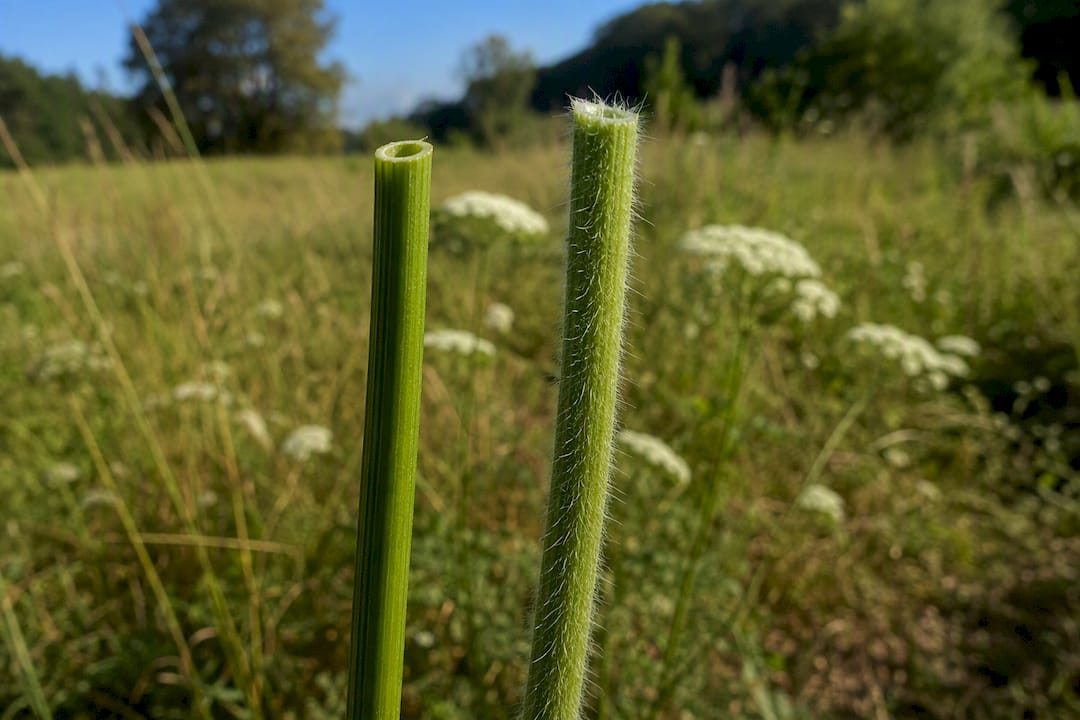
Stem hair is the single most reliable test in the field. Queen Anne’s lace, also called wild carrot, has a fuzzy, hairy stem you can feel with a gloved finger, while poison hemlock’s stem stays completely smooth, according to Penn State Extension. Run a gloved fingertip or folded tissue along a stem node. Hair means wild carrot. Smooth means stop and back away.
Fennel and parsley cause confusion too, since both share that same feathery leaf structure. Fennel smells sweet and licorice-like when crushed, nothing like hemlock’s musty odor, and garden parsley has a much shorter, less woody stem. Neither test alone is bulletproof, so don’t assume a plant is a safe edible relative just because one trait matches.
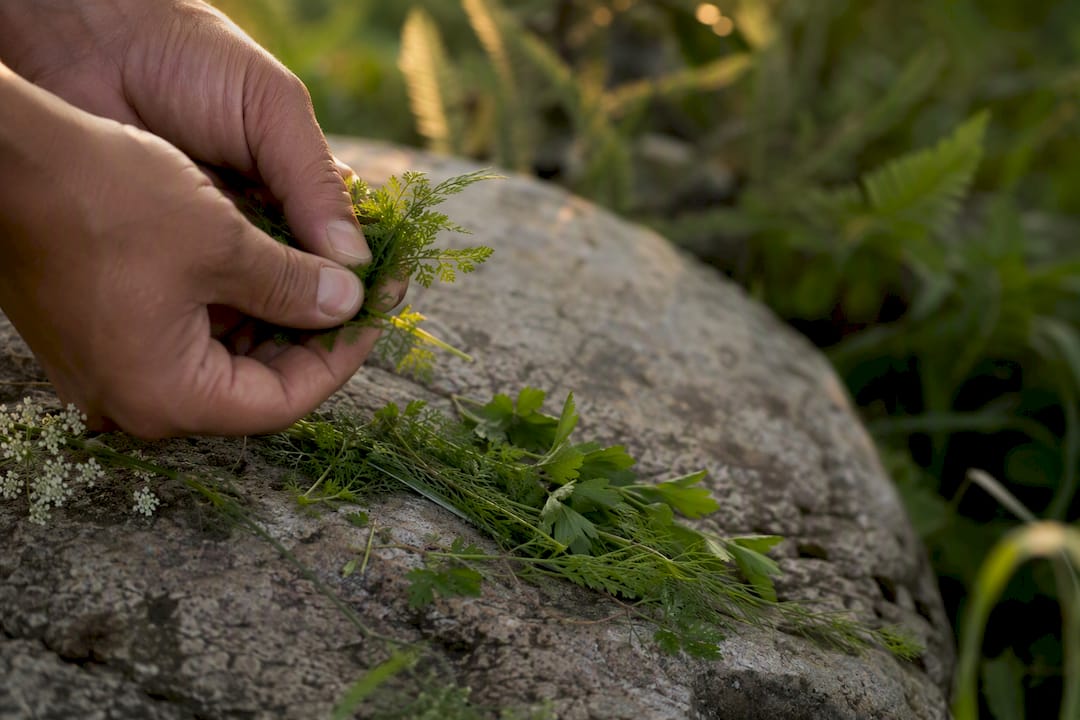
Cow parsnip and giant hogweed present a different problem: they’re also toxic, just at a much larger scale, with hogweed reaching heights of ten feet or more and leaves that can span several feet across.
Field checks worth running side by side:
Stem texture: hairy suggests Queen Anne’s lace, smooth suggests hemlock
Scent: sweet and anise-like suggests fennel, musty suggests hemlock
Overall size: giant hogweed and cow parsnip dwarf hemlock and wild carrot
Never rely on a single trait. Confirm at least two or three before drawing conclusions
When Hemlock Changes: The Two-Year Growth Cycle
Year one, spring through fall: The plant grows as a low rosette of fern-like leaves close to the ground, easy to mistake for parsley seedlings or wild carrot sprouts.
Year two, spring: The rosette bolts into an erect, branching stalk, gaining height fast through late spring.
Year two, late spring to midsummer: White umbel flowers open, marking the plant’s most identifiable and most dangerous stage, since it’s producing seed.
Late summer into fall: Seeds mature and drop, staying viable in soil for two to three years according to the University of Maryland Extension, which is why one missed season can restart the whole cycle.
Growing conditions shift how a plant looks from site to site, so a rosette in dry shade might look different from one in wet, sunny soil. Revisit suspected patches more than once a season instead of trusting a single glance.
Toxicity, Symptoms, and What to Do in an Emergency
Every part of poison hemlock is toxic, root to seed. Ingestion attacks the nervous system, and symptoms can include trembling, muscle weakness, difficulty breathing, and in severe cases, coma, according to Alabama Extension (ACES). Skin contact with the sap can cause irritation or blistering in sensitive people, so bare-handed pulling is never a good idea, even for “just a quick look.”
If you suspect ingestion:
Call Poison Control immediately at 1-800-222-1222. Save this number in your phone before you head outdoors.
Seek emergency medical care right away for ingestion or worsening symptoms.
Bring a photo or a bagged sample of the plant. It helps clinicians identify the toxin fast.
Don’t induce vomiting unless a poison control specialist or physician tells you to.
One number, every case: 1-800-222-1222 works nationwide, staffed around the clock, whether the exposure happened in a backyard or on a hiking trail.
Removing Poison Hemlock Safely From Your Yard
Small patches are manageable without hiring anyone, as long as you treat the plant with real caution.
Gear up first. Wear chemical-resistant gloves, long sleeves, long pants, and eye protection. Wash your clothes separately afterward.
Pull or cut young plants. For a handful of first-year rosettes, hand-pulling works, especially in damp soil where the root comes up whole. For older, taller stalks, cut at the base and dig out as much root as you reasonably can.
Bag it, don’t burn it. Double-bag the plant material and put it in the trash. Never burn hemlock. The smoke can carry toxins, according to MSU Extension, and composting risks spreading viable seed.
Consider herbicide for larger infestations. Herbicide works best on young, first-year plants, and timing matters more than product choice. Talk to your local extension office or a licensed applicator before spraying, since rules and recommended products vary by region.
Monitor for at least two to three seasons. Because seeds stay dormant in soil for years, new seedlings often show up where you thought you’d cleared everything, according to Cornell Weed Identification.
Pro Tip: Mark cleared areas with a small stake or flag through the following spring. It’s a two-second habit that saves you from re-identifying the same patch from scratch every season.
Keep kids and pets away from the removal site until it’s fully cleared and double-check the area before letting anyone dig or plant nearby.
Getting a Second Opinion: Extension Offices and Reporting
Confirm before you commit to removal, especially if the plant is growing somewhere you can’t easily monitor.
Contact your county extension office for a positive ID and advice tailored to your soil and climate.
Reach out to your state’s noxious-weed program for local control regulations, since some states classify hemlock as regulated.
Report infestations on public land to park managers or local authorities, and flag any sightings to community garden coordinators if you spot it in a shared plot.
Keep the University of Maryland Extension guide and Poison Control’s number bookmarked for quick reference.
If you’re already comfortable scanning for hazardous plants in the wild, our guide on identifying poisonous plants in general covers the broader skill set that makes spotting hemlock second nature.
A Field Habit Worth Building
Most people get hurt by hemlock not because they can’t spot it, but because they touch first and check later. Snap a photo, back away, and confirm from a safe distance. That single habit prevents almost every avoidable exposure we hear about.
Keep Poison Control’s number saved before you need it, not after. Pair that habit with a solid camping first aid kit stocked with gloves and antiseptic, and cross-reference anything you’re unsure about against our guide on poison ivy identification for contact-based hazards. If you forage at all, treat hemlock as the reason to never eat a wild carrot relative without triple-checking it first.
— S
This article is general information, not a substitute for advice from a qualified doctor. Consult a qualified healthcare professional about your own circumstances before acting on anything here.
Sources
Recommended
Comments