

Poison Ivy Identification: Field ID and First Aid

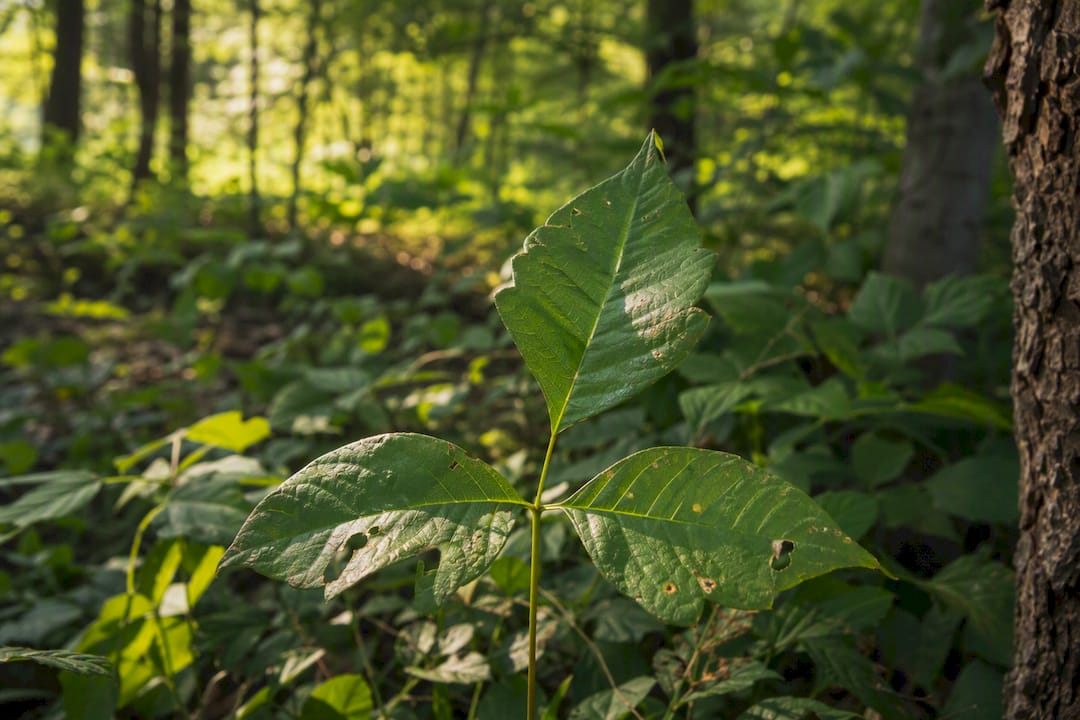
If you’re staring at a plant on a trail right now, here’s the fast answer: poison ivy grows compound leaves in groups of three, arranged alternately along the stem, with the middle leaflet sitting on a stalk longer than the two beside it, and it can show up as a vine, a low shrub, or a groundcover. If you already touched it, wash the area now with soap and warm water or rubbing alcohol. Don’t wait, and never burn the plant to get rid of it. The rest of this guide walks through the seasonal changes, the lookalikes that fool even experienced hikers, and exactly what to do if a rash shows up anyway.
Key Takeaways
Accurate poison ivy identification comes down to alternate leaf arrangement and a longer middle-leaflet stalk, and fast washing after contact is the single most effective way to limit a rash.
Point | Details |
Trust arrangement over shape | Alternate leaves with a longer center leaflet stalk beat leaf shape as the reliable identifier. |
Wash within 30 minutes | Soap, water, or rubbing alcohol removes urushiol before it fully penetrates the skin. |
Never burn the plant | Burning releases aerosolized urushiol that can cause severe respiratory reactions. |
Stack your lookalike checks | Combine leaflet count, leaf arrangement, and berry color rather than relying on one trait. |
Photograph, don’t pick | Clear photos with a size reference let extension offices confirm an ID without handling the plant. |
Table of Contents
How Do You Identify Poison Ivy Fast?
Run through this list before you decide a plant is safe to brush past.
Leaflet count: three leaflets per leaf, no exceptions. This is the “leaves of three” rule, and it’s a starting point, not the whole test.
Leaf arrangement on the stem: alternate, not opposite. This single detail rules out several lookalikes immediately.
Middle leaflet stalk: longer than the two side leaflets, which often attach almost directly to the stem.
Leaf edges: variable. They can be smooth, toothed, or lobed, sometimes on the same plant.
Vine texture: older vines often show hairy aerial rootlets clinging to bark or fences.
Berries: white, waxy, and clustered, typically visible from late summer into winter.
The leaflet-shape variation is exactly why botanists caution against relying on shape alone. A poison ivy leaf can look toothy one week and smooth the next season on the same vine.
Pro Tip: Check the stem arrangement before you look at leaf shape. Alternate leaves plus that longer middle stalk will confirm poison ivy faster than trying to memorize every leaf outline you might encounter.
Every part of the plant carries urushiol oil, the compound responsible for the rash, all year, not just during peak growing season.
Does Poison Ivy Look Different by Season?
Poison ivy changes its costume constantly, which trips up people who only learned to spot it in one season. Young spring leaves often emerge shiny and reddish, almost like they’re coated in a light gloss. By midsummer, they settle into a duller, matte green. Come fall, the same plant can turn brilliant red, orange, or yellow, often before most other foliage starts changing.
Growth habit shifts too. You’ll find it as a trailing groundcover in open fields, a climbing vine with hairy rootlets scaling trees and fence posts, or a compact, upright shrub in sunnier clearings. Young seedlings look nothing like the thick, rope-like vines that have spent a decade climbing a tree trunk.
Spring: reddish, glossy new growth, small greenish flower clusters
Summer: dull green leaves, white berries forming
Fall: red, orange, or yellow foliage, mature white berry clusters
Winter: bare, hairy vines and exposed roots, still toxic
The urushiol persists in the woody stems and root system through the coldest months, which is how hikers end up with a rash from grabbing a seemingly dead, leafless vine in January.
What Plants Get Mistaken for Poison Ivy?
Several common plants share enough traits with poison ivy to cause genuine confusion in the field, and the mixups run both directions. People pull harmless vines thinking they’re dangerous, and people brush past the real thing thinking it’s safe.
Virginia creeper: usually shows five leaflets instead of three, though young shoots occasionally have fewer. Count carefully.
Boxelder: leaves grow in opposite pairs along the stem, not alternate, which is the single clearest tell. Young boxelder seedlings can briefly show three leaflets and fool a fast glance.
Poison oak: found more in the western and southeastern U.S., with lobed, oak-shaped leaflets and a fuzzier texture. Same urushiol, same rash risk, different regional range.
Fragrant sumac (skunk bush sumac): also grows in threes, but the leaflets are smaller, the center leaflet has almost no stalk, and mature plants carry red, fuzzy berry clusters instead of white waxy ones.
The fastest field strategy combines three quick checks rather than one: count the leaflets, confirm alternate versus opposite arrangement, and look at berry color if any are present. University extension identification guides consistently point to leaf arrangement as the tiebreaker when leaflet count alone isn’t conclusive. Seasonal overlap makes single-trait identification risky. A plant that looks like poison ivy in October might just be a boxelder seedling losing its extra leaflets, so stacking checks matters more than trusting any one clue.
What Should You Do Right After Touching Poison Ivy?
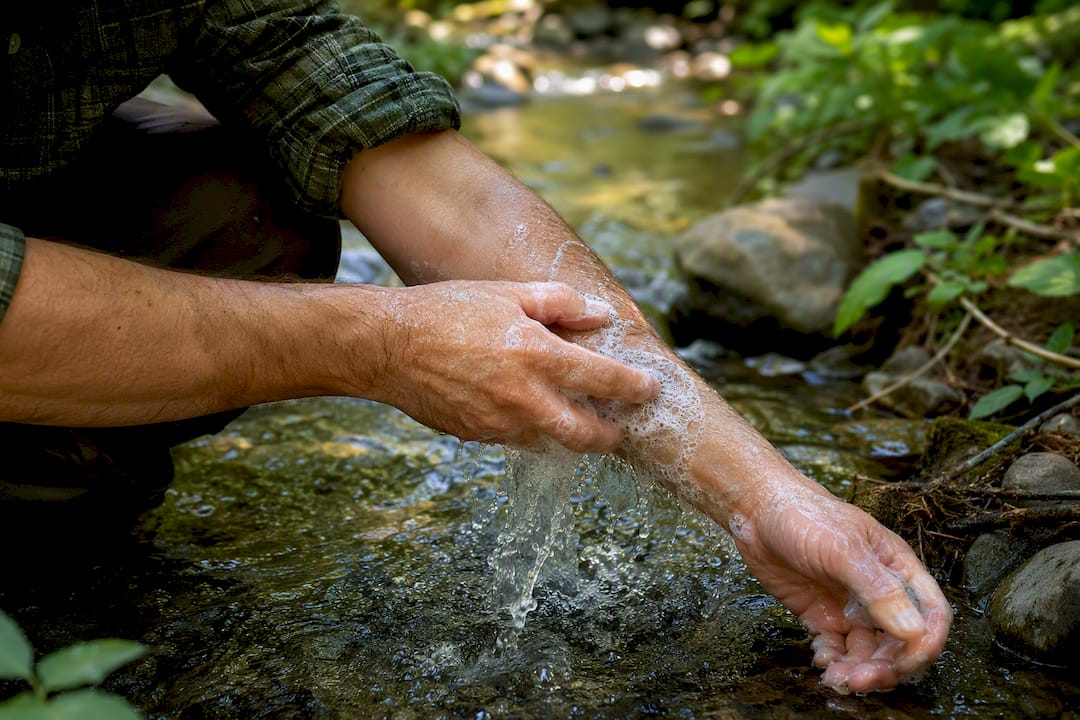
Speed matters more than the specific product you use. Urushiol oil can penetrate skin within about 30 minutes, so the window to reduce absorption and prevent spreading it to other body parts is narrow.
Wash exposed skin immediately with warm, soapy water. Ordinary hand soap works, but a dish detergent like Dawn cuts through the oily resin especially well if you catch it early.
If soap and water aren’t available, rubbing alcohol is a solid backup. It breaks down urushiol effectively as a wipe-down solution.
Remove and set aside any exposed clothing before you touch anything else, including your face.
Launder clothing separately in hot water, and wipe down boots, hiking poles, and any gear that brushed the plant.
Wash pets that ran through the area too. Their fur can carry oil straight to your hands later.
Never burn poison ivy to clear it, ever. Burning releases aerosolized urushiol into smoke, and inhaling that smoke can trigger severe respiratory reactions that are far worse than a skin rash.
What Does a Poison Ivy Rash Look Like and How Do You Treat It?
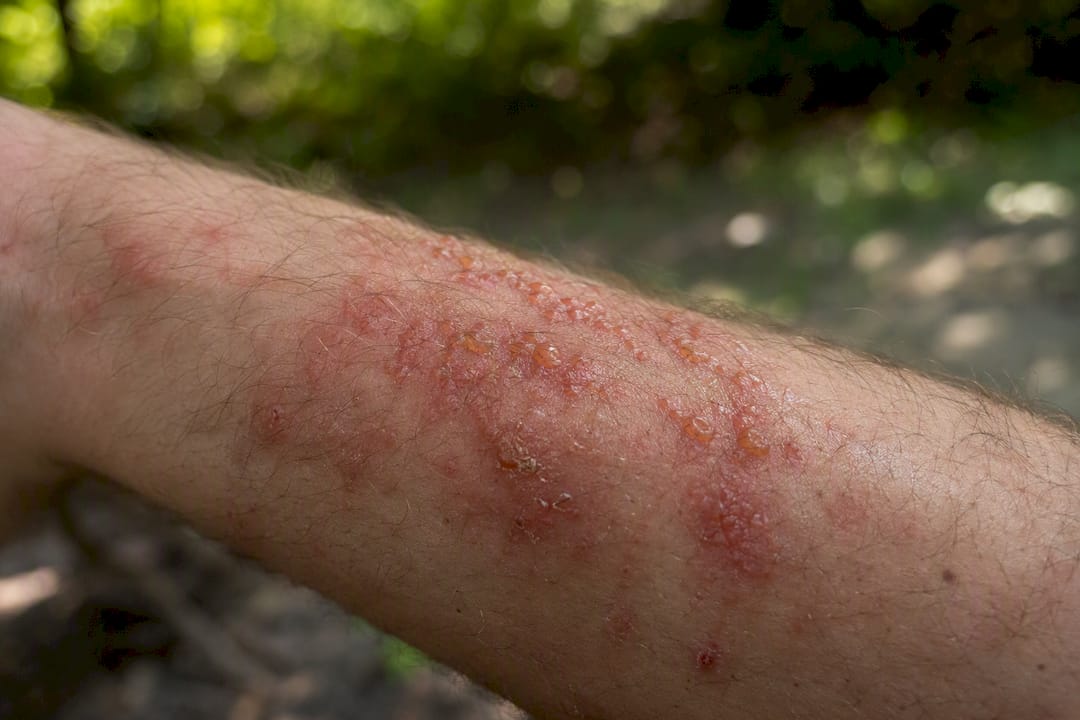
Expect redness and itching first, followed by raised bumps and sometimes fluid-filled blisters, usually appearing anywhere from several hours to a couple of days after contact depending on your sensitivity. People with more urushiol exposure or prior sensitization tend to react faster and harder.
For most cases, home care is enough:
Apply cool, wet compresses to calm itching and reduce swelling.
Use topical hydrocortisone or calamine lotion on affected skin.
Oral antihistamines can help you sleep through the itch, though they don’t treat the underlying reaction.
Avoid popping blisters. They protect the healing skin underneath.
Topical antihistamine creams applied directly to the rash can actually make things worse, since the allergic reaction to urushiol isn’t primarily histamine-driven the way a bug bite is. Save antihistamines for the oral, sleep-support role, not skin application.
Get medical attention if you notice swelling around the eyes or face, a rash spreading across the genitals, difficulty breathing, oozing that suggests infection, or a reaction covering a large portion of your body. Those symptoms go beyond what calamine and cool compresses can handle. Packing basic rash-care supplies into your first aid kit before a trip beats scrambling for calamine lotion after the fact.
How Can You Avoid and Safely Remove Poison Ivy?
Long sleeves, pants tucked into boots, and staying on cleared trails cut your exposure risk more than any lotion or spray. Teach kids the simple rule early: if it has three leaflets and you don’t recognize it, leave it alone.
For removal on your own property:
Wear gloves, long sleeves, and eye protection every time, even for small patches.
Hand-pull young seedlings while the root systems are still shallow, then dispose of them in sealed trash bags, never a burn pile.
Herbicides containing glyphosate or triclopyr can knock back established plants when applied exactly per the label directions, ideally on a calm day with no wind to carry drift.
Never mow or weed-whack dense growth. It aerosolizes urushiol-laden plant matter into the air around you.
Pro Tip: Call a professional removal service when vines have climbed high onto a structure, when root systems have spread extensively underground, or when anyone in the household has a known severe urushiol allergy. Large infestations are one of the few situations where paying for expert removal is worth every dollar.
How Do You Get a Plant Positively Identified?
If you’re not sure what you’re looking at, document it rather than yanking it out of the ground. Take close, well-lit photos of the full leaf cluster, the stem arrangement showing alternate versus opposite leaves, any aerial rootlets on the vine, and berry clusters if present. Include something for scale, like a coin or your hand, in at least one shot.
Photograph multiple angles of the same plant, not just one leaf.
Send images to your local cooperative extension office for a reliable identification.
Contact Poison Control if you’ve already had skin contact and want exposure-specific advice.
Skip the plant sample. A clear photo set works just as well for most extension identification requests, without the risk of handling the plant again.
Author Perspective: Staying Safe While Enjoying the Outdoors
Confident identification beats blind caution every time. Thrillofit’s take: learning three or four decisive clues, not a dozen vague ones, is what actually keeps you moving on the trail instead of second-guessing every green leaf you pass. Master the leaflet stalk trick and the alternate-arrangement check, and you’ll spend less energy worrying and more time outside.
Sources
These resources back every claim in this guide, and they’re worth bookmarking for state-specific detail:
They’re reliable because extension offices and medical institutions test identification and treatment advice against regional growth patterns and clinical evidence, not guesswork.
This article is general information, not a substitute for advice from a qualified doctor. Consult a qualified healthcare professional about your own circumstances before acting on anything here.
Recommended
Comments