

Before You Eat: U.S. Foragers' Field Checks to Spot Poisonous Mushrooms

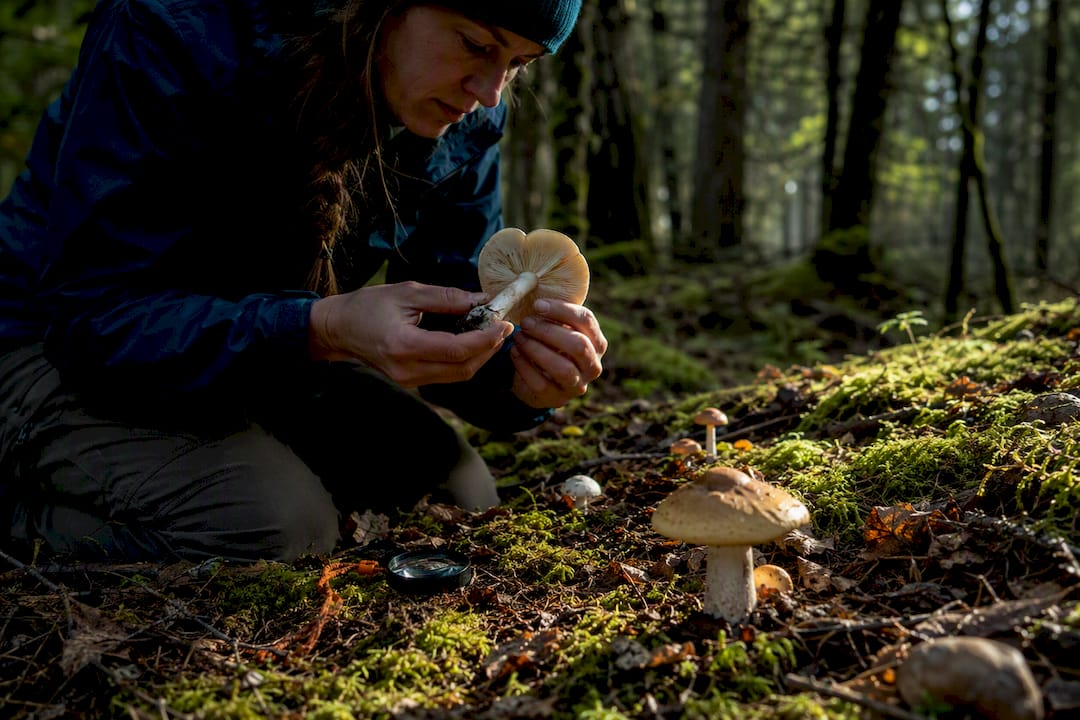
There’s no quick test that separates poisonous mushrooms from edible ones. The only method that reliably works is species-level identification using multiple physical features, ideally confirmed by an expert, and when you can’t get there, you don’t eat it. If ingestion happens anyway, call Poison Control at 1-800-222-1222 immediately.
TL;DR:
Accurate identification relies on examining multiple physical features, including cap shape, gill structure, stem details, spore print color, and habitat.
The most dangerous species to memorize are Amanitas, false morels, and small brown mushrooms, as they cause the majority of fatal poisonings in the US.
Spotting lookalikes such as true versus false morels or chanterelles versus jack-o’-lanterns requires checking specific traits like hollow interiors or gill edges, not just appearance.
Documenting key details with photographs and spore prints, and consulting experts, significantly improves chances of correct identification before consumption.
Immediate action for suspected poisoning involves calling Poison Control and going to the ER, as symptoms, especially from amatoxins, can be delayed and worsen even after initial recovery.
Table of Contents
Poisonous Mushrooms Identification Checklist: What to Inspect in the Field
Identifying a mushroom means looking at it the way a mycologist does: as a bundle of separate clues that only mean something together. No single feature, color, smell, or shape, tells the whole story on its own.
Start with the cap. Note its shape (convex, flat, conical), surface texture (dry, slimy, scaly), and color changes as it ages. Then flip it over. What’s underneath matters more than almost anything else: true gills (thin blades radiating from the stem), pores (a spongy layer, as in boletes), or false gills (blunt ridges that don’t have a knife-edge, a giveaway for jack-o’-lantern mushrooms mimicking chanterelles).
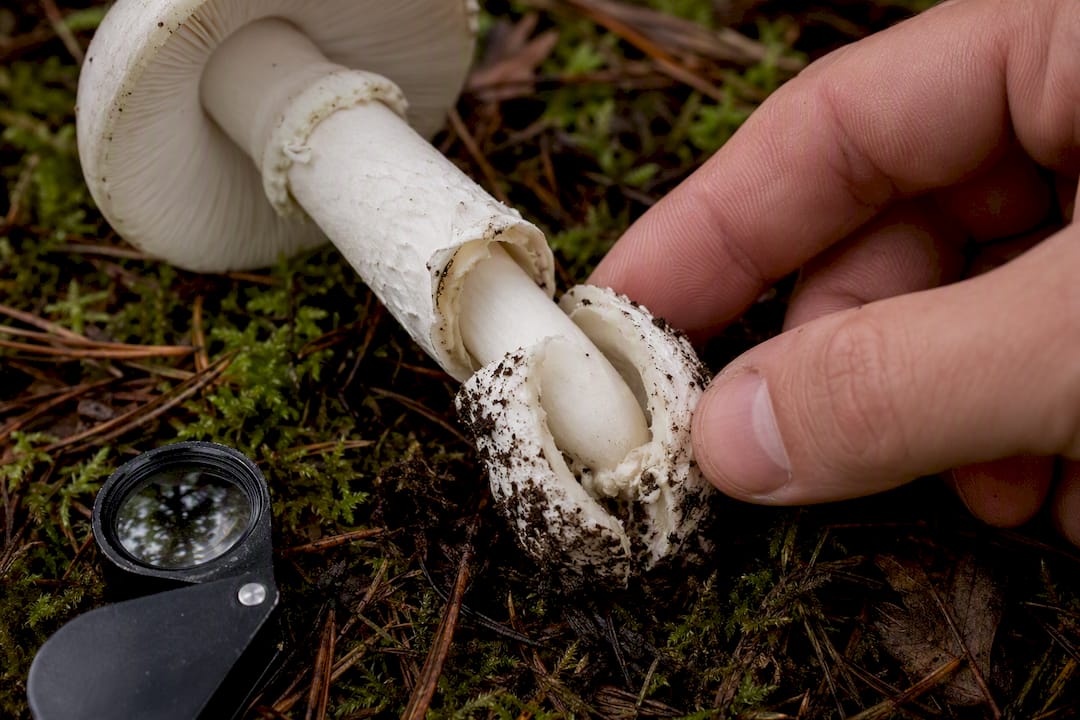
The stem tells its own story. Check for a ring (annulus) partway up, a cup-like volva at the base, whether the flesh bruises or changes color when cut, and whether the stem is hollow or solid. A volva, in particular, is one of the more reliable red flags in North American fungi.
Spore prints add a layer of confirmation nothing else provides. Lay the cap gill-side down on paper split half white, half black, so the color shows up regardless of what the spores turn out to be. Leave it covered for six to twelve hours, then check the color against a field guide.
Finally, note the habitat: growing on wood versus soil, alone versus in clusters or fairy rings, under specific tree species, and the season.
Cap: shape, texture, color shifts with age
Gills, pores, or false gills underneath
Stem: ring, volva, bruising, hollow or solid
Spore print color after a six to twelve hour print
Growth pattern and substrate (wood, soil, lawn)
Pro Tip: Skip the folklore. Silver spoons don’t darken around toxins, and the fact that squirrels or slugs nibbled a cap tells you nothing about how it affects a human liver.
The High-Risk Groups Worth Memorizing First
Most fatal mushroom poisonings in the U.S. trace back to a small handful of species. Learning to recognize these groups on sight does more for your safety than any general foraging rule.
Amanitas top the list. The death cap (Amanita phalloides) and destroying angel (Amanita virosa) both carry amatoxins, and together with related species, Amanita mushrooms account for roughly 90% of mushroom-related deaths in the country. Look for a volva at the base, often buried in soil, a ring on the stem, and white gills that produce a white spore print. The cruelest part of amatoxin poisoning is timing: symptoms can take 6 to 24 hours to appear, long after the meal feels digested and forgotten.
False morels (Gyromitra species) are the second group to know cold. They contain gyromitrin, which breaks down into monomethylhydrazine (MMH), a compound with unpredictable toxicity that varies by region, season, and even individual sensitivity. Cap folds look wrinkled or brain-like rather than honeycombed, and the interior is chambered or cottony instead of the clean hollow chamber of a true morel.
Little brown mushrooms, often shortened to LBMs, and their close cousins in the Galerina genus deserve blanket avoidance. They’re small, brown-capped, and visually near-identical across dozens of species, some deadly, some harmless. No reliable field shortcut exists for telling them apart.
Two more deserve a mention: the jack-o’-lantern mushroom, an orange, gilled wood-dweller often confused with chanterelles, and the green-spored lepiota, a lawn mushroom that causes severe gastrointestinal distress.
Lookalikes That Fool Even Careful Foragers
A handful of pairings cause more confusion, and more emergency room visits, than any other confusion in North American foraging. Knowing the exact differences turns a guess into a decision.
Chanterelle vs. jack-o’-lantern. True chanterelles have blunt false gills (ridges, not knife-edge blades) and solid white to pale yellow flesh inside. Jack-o’-lantern mushrooms grow in dense clusters on wood, have true sharp-edged gills, and orange flesh straight through. Chanterelles almost never grow directly out of wood; they emerge from soil near tree roots.
True morel vs. false morel. A true morel’s cap is uniformly pitted, like a honeycomb, and the entire mushroom, cap and stem, is hollow when sliced lengthwise. False morels have wrinkled, lobed, or brain-like caps and a chambered or cottony interior, never a clean hollow tube.
Grocery-store white mushrooms vs. green-spored lepiota. Young Chlorophyllum molybdites can resemble common button mushrooms, but its gills turn from white to olive-green as it matures, and its spore print comes out distinctly green rather than brown or white. It also tends to fruit in fairy rings on lawns, not in the tight clusters store-bought mushrooms come from.
Boletes with a caveat. The old rule that all boletes are safe if the pores aren’t red is outdated and unreliable. Any bolete that bruises blue or has red pore surfaces should be left alone unless you can confirm the exact species.
Pro Tip: If a mushroom checks two out of three boxes for something edible, that’s not good enough. Treat “close” the same as “unknown.”
How to Document a Find So an Expert Can Actually Help
Good documentation is what turns a maybe into a confirmed identification, and it’s often the difference between a fast diagnosis and a guessing game in an emergency room.
Photograph the full cap from above, then the underside showing gills or pores clearly.
Photograph the stem base, digging gently around it since a volva can be buried in soil and easy to miss if you just pull the mushroom up.
Photograph the immediate habitat: nearby trees, whether it’s growing from wood or soil, and any cluster pattern.
Note the date, location, and time you found it.
For a physical specimen, wrap it loosely in a paper bag, never plastic, since plastic traps moisture and speeds decay, obscuring key features. Refrigerate it if you’re not identifying it same day.
Take a spore print using the split white/black paper method
Photograph the print itself alongside the specimen
Contact a local mycological society, university extension office, or Poison Control for identification help
Bring the specimen, or at minimum the photos, to whoever you consult
What to Do the Moment You Suspect Poisoning
If anyone may have eaten a wild mushroom you can’t positively identify, call Poison Control at 1-800-222-1222 right away, then head to the emergency room. Bring the mushroom, or clear photos of it, since visual identification speeds treatment decisions dramatically.
Here’s the part that catches people off guard: amatoxin poisoning often includes a latent phase. Symptoms can ease up for a day or two after the initial gastrointestinal distress, creating a false sense of recovery, right before liver and kidney damage progresses. That apparent improvement is exactly why waiting to “see how you feel” can be the costliest mistake in the whole process.
Prevention beats treatment every time:
Learn three or four foolproof edible species with no dangerous lookalikes before expanding your list
Avoid all LBMs and any unidentified white-gilled mushroom resembling a parasol
Join a local mycological society or an expert-led foray before foraging solo
Never trust cooking, freezing, or drying to neutralize toxins like amatoxins or gyromitrin
None of the old folk tests, cooking it thoroughly, watching how animals react, checking for discoloration, hold up under scrutiny. They’re guesses dressed up as rules.
Thrillofit’s Take on Learning This Skill the Right Way
The honest limit here: no article, including this one, replaces hands-on training. Thrillofit’s guides on identifying poisonous plants and poison sumac work the same way, habitat and physical detail first, guesswork never.
Start with expert-led forays and a short list of edible species with zero dangerous lookalikes. Skip apps and social media groups for anything you plan to eat; visual matching software misses the anatomical detail that separates a chanterelle from a jack-o’-lantern.
What Actually Reduces Risk (and What Doesn’t)
The conventional wisdom oversells memorization and undersells restraint. Most foraging guides hand you fifty species to learn. Realistically, mastering three dangerous groups (amanitas, false morels, LBMs) and three or four bulletproof edibles gets you further than half-remembering fifty names.
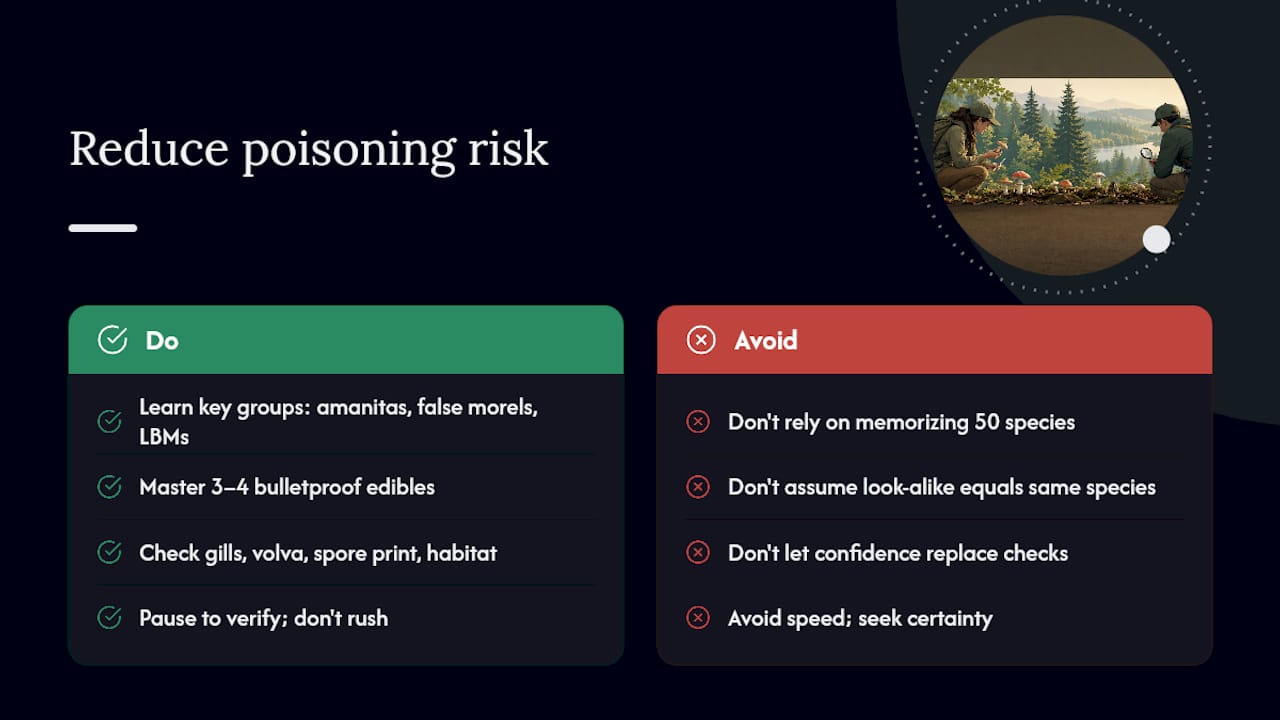
The bigger blind spot is confidence itself. Foragers get hurt not from ignorance but from overconfidence after a few successful seasons, assuming a familiar-looking cap is the same species they found last year. Regional variation and rare flushes of dangerous look-alikes catch even seasoned collectors off guard.
My take: treat every “probably fine” mushroom as a research project, not a meal. The field checks in this guide, gills versus pores, volva, spore print, habitat, exist to slow you down long enough to be right. That pause is the entire point. Speed is not the goal here. Certainty is.
— S
Keep Learning Before You Head Back Out
Field identification is a skill you build trip by trip, not something you master from one article. Thrillofit covers the habits that keep outdoor time safer, from reading poison sumac in the field to starting foraging the right way.
If a suspected poisoning ever turns into a longer wait for help, a stocked camping first aid kit matters as much as any ID skill. Browse more identification guides, survival basics, and gear breakdowns at Thrillofit, and sign up for the newsletter to get new field guides as they publish.
Sources
For deeper reference, lean on Poison Control’s wild mushroom warning, the Missouri Department of Conservation’s mushroom guide, NAMYCO’s poisoning syndrome breakdown, and the CDC’s MMWR outbreak report. Each one backs a different piece of this guide, from species biology to emergency protocol.
This article is general information, not a substitute for advice from a qualified doctor. Consult a qualified healthcare professional about your own circumstances before acting on anything here.
FAQ
How can I tell if a mushroom is poisonous?
You can’t rely on one trait. Positive identification requires checking cap shape, gill or pore structure, stem features like a ring or volva, and spore print color together, ideally confirmed by a local expert or mycological society.
How can I tell if a mushroom is edible or poisonous?
Match every feature (cap, gills, stem, spore print, habitat) to a confirmed edible species with no dangerous lookalikes; if any feature doesn’t fit cleanly, don’t eat it.
Which backyard mushrooms are poisonous?
The green-spored lepiota (Chlorophyllum molybdites) is one of the most common lawn mushrooms causing poisoning, identified by its shift from white to olive-green gills and a green spore print.
What are the most common poisonous mushrooms?
The highest-risk species include the death cap (Amanita phalloides), the destroying angel (Amanita virosa), false morels (Gyromitra species), jack-o’-lantern mushrooms (Omphalotus illudens), and the green-spored lepiota.
What should I do if someone eats a mushroom I can’t identify?
Call Poison Control at 1-800-222-1222 immediately and head to the emergency room, bringing the mushroom or clear photos, even if symptoms haven’t started yet.
Recommended
Comments