

Campers: Read Sleeping Bag Temperature Ratings, Buy 5 to 15°F Colder

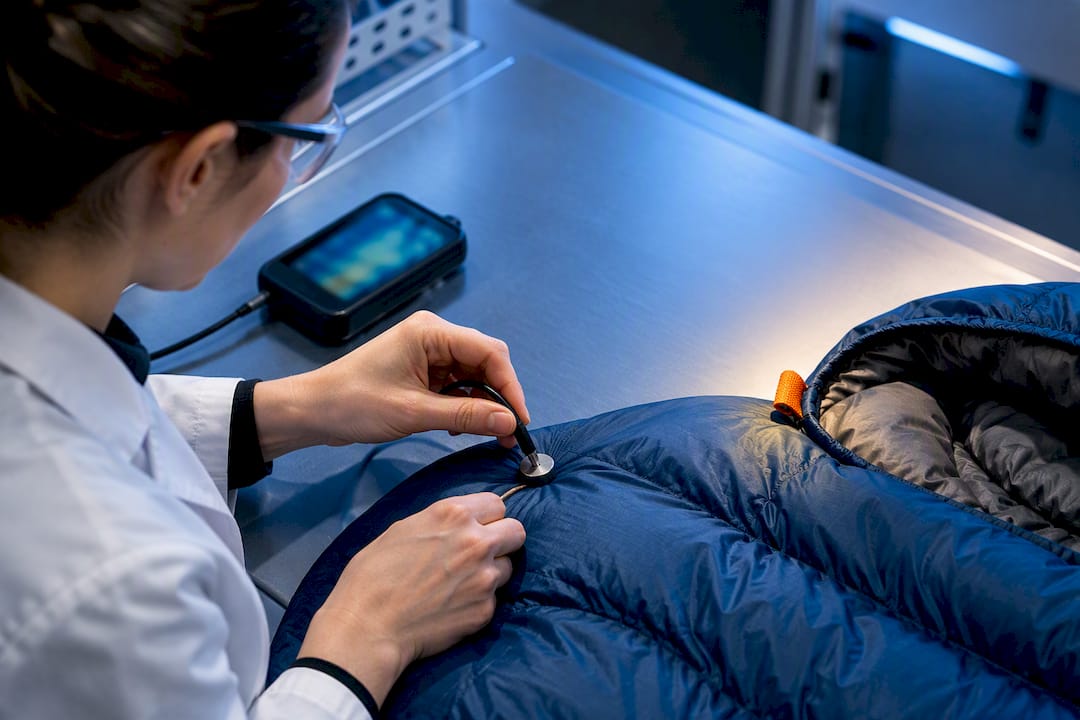
A sleeping bag’s rating is a lab number, not a promise: it comes from a heated-manikin test under standardized clothing and a standardized pad, and it splits into comfort, lower limit, and extreme thresholds. The practical rule that matters more than any spec sheet: buy a bag rated 5 to 15°F colder than your coldest expected night, and lean toward the bigger buffer if you sleep cold or camp near water.
TL;DR:
The comfort rating is the most reliable figure for cold sleepers and should be used when selecting a sleeping bag, while the lower limit caters to warmer sleepers.
Lab ratings are based on idealized tests that do not account for real-world variables like pad insulation, humidity, wind, and movement, which significantly influence actual warmth.
Mismatched pad insulation is often the largest factor causing a sleeping bag to feel colder than its rated temperature outside the lab.
For optimal warmth, consider the entire sleep system by matching pad R-value and clothing layers to expected conditions instead of relying solely on the bag’s official rating.
Buying a sleeping bag with a buffer of 5 to 15°F below your expected lowest temperature helps account for unpredictable weather and environmental factors.
Table of Contents
Sleeping Bag Temperature Ratings Explained: Comfort, Lower Limit, and Extreme
Every ISO or EN rated bag carries up to three numbers, and mixing them up is the single most common buying mistake. Brand names don’t help. A bag marketed as a “20°F bag” is often reporting the lower limit, not the number a cold sleeper should actually plan around, so check the full spec on the product page before assuming the marketing number applies to you.
Comfort rating: the temperature at which a cold sleeper, modeled in ISO testing as a “standard woman,” can sleep in a relaxed position without waking from cold. This is the number cold sleepers should use when shopping.
Lower limit rating: the temperature at which a warmer sleeper, modeled as a “standard man,” can curl up and stay in a stable thermal state for eight hours without injury. It’s usually 10 to 15°F lower than the comfort figure on the same bag, since it’s modeled on a different sleeper.
Extreme rating: the point at which hypothermia becomes a real risk within six hours. Treat this as a survival threshold you never want to test, not a target for planning an actual trip.
If you don’t know which category you fall into, default to the comfort rating. It costs you a little pack weight, but it keeps a bad forecast from turning into a bad night.
How EN/ISO Testing Works, and Where It Falls Short
The current standard, ISO 23537, replaced the older EN 13537, and both use the same core method: a heated manikin dressed in a fixed layer of thermal underwear lies inside the bag on a standardized foam pad while sensors track heat loss. That controlled setup is exactly why the ratings work for comparing bags across brands, even when they’re made from different insulation or cut on different patterns.
The test has real blind spots, though.
Some brands publish only the flattering number, showing a comfort rating for a bag marketed to backpackers who need to check the lower limit, or vice versa.
The manikin doesn’t toss, turn, or generate variable body heat the way a sleeping human does.
Testing pads are warmer than a lot of consumer inflatable pads, which skews results toward the optimistic side.
Humidity, wind exposure, and how tightly a bag is cinched around the face all shift outcomes in ways no lab number captures.
Ratings improve comparisons between bags. They don’t replace judgment about your own conditions.
The Real-World Variables That Change How Warm You Sleep
Pad insulation is the single biggest factor standing between a rated bag and how it actually performs outside. ISO testing uses a pad far warmer than what most campers bring, so a bag tested at 20°F can feel closer to 35°F on a thin summer pad. Inflatable pads on the market commonly range from R-value 1 to R-value 2 for warm weather up to R-value 6 or higher for winter use, and pad R-values stack roughly additively when you layer one pad on top of another.
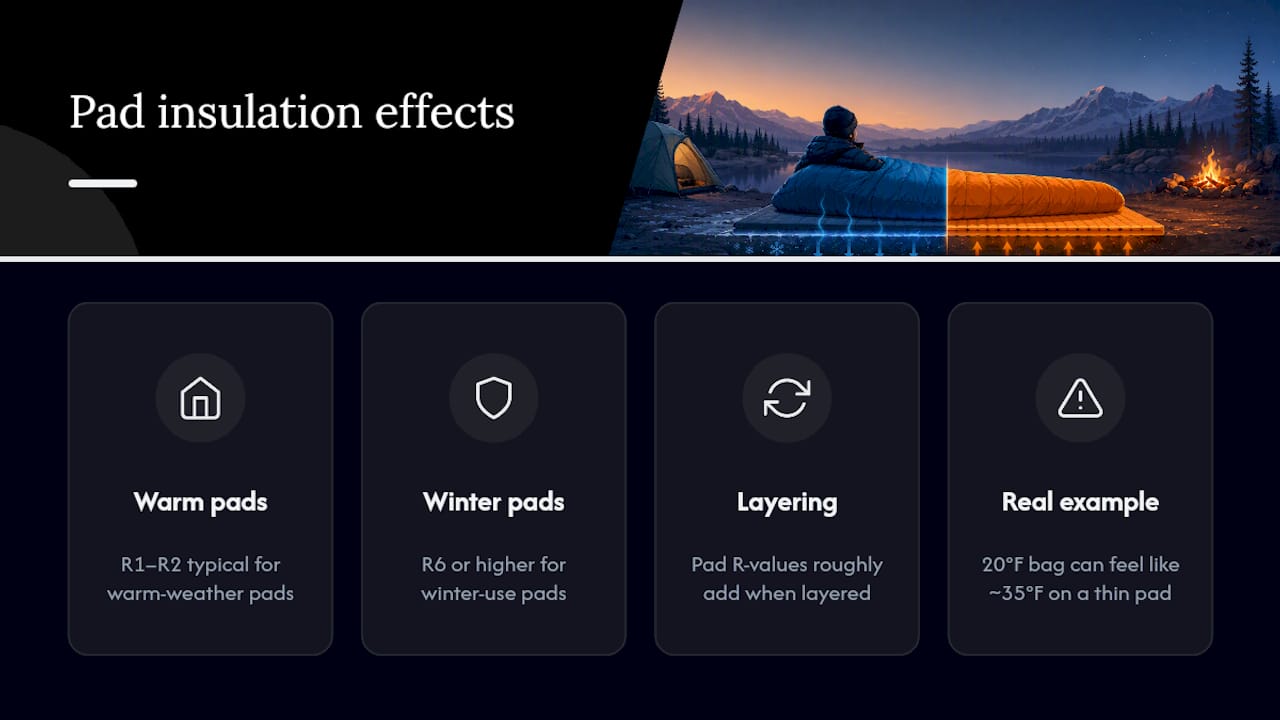
Statistic Callout: Mismatched pad insulation is consistently flagged as the largest gap between a sleeping bag’s rated temperature and how warm it actually feels on the ground.
Whether you run cold or warm changes which number to trust, too. If you’re often reaching for another blanket at home, use the comfort rating and add a few extra degrees of buffer. If you routinely kick off covers, the lower limit is probably closer to your real experience. Ground conduction, wind exposure at an exposed campsite, and condensation from high humidity all pull warmth away faster than still, dry air, regardless of what the tag says.
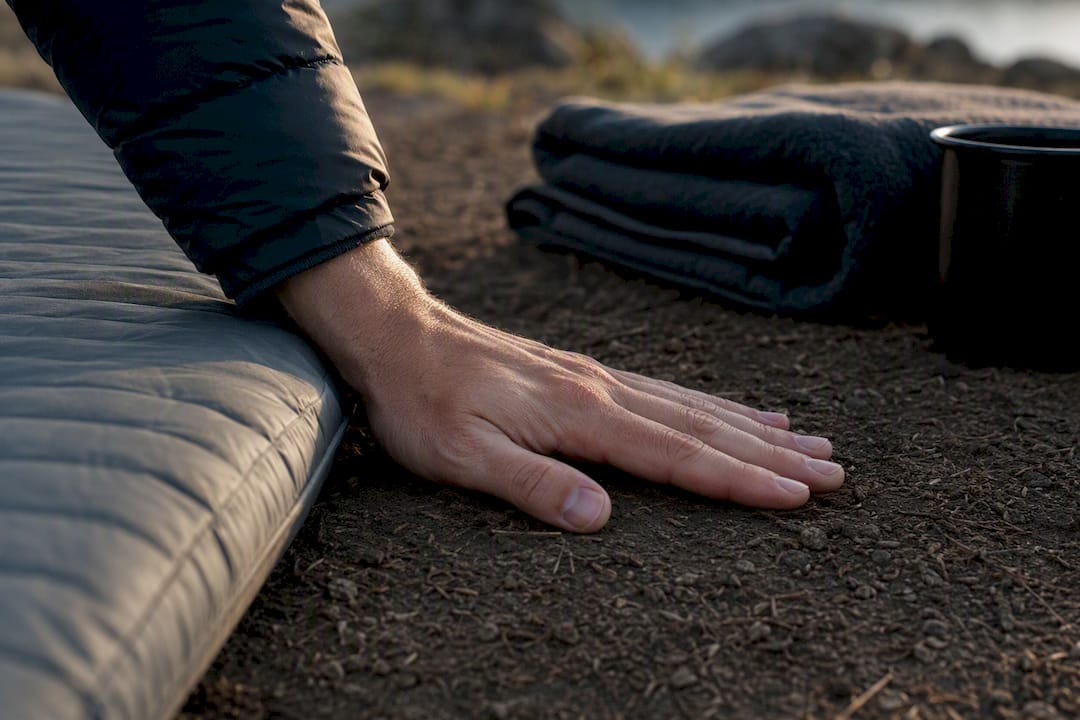
Pro Tip: Before blaming a “bad” sleeping bag for a cold night, put your hand flat on the ground under your pad. If you can feel cold radiating through, the pad is the problem, not the bag.
How to Pick the Right Rating for Your Trip
Match the buffer to your risk tolerance and the bag’s job. A tighter 5°F margin works for predictable, mild conditions where you know you run warm and the forecast is solid. A wider 10 to 15°F margin belongs on any trip with wet weather, unpredictable overnight lows, or a history of waking up cold. This lines up with the common guideline of buying about 10°F colder than your expected low as a default safety margin.
Summer trips (lows above 32°F): A summer bag with a comfort rating in the 35 to 45°F range covers most warm-season car camping and backpacking without excess bulk.
Three-season trips (lows between 20 and 32°F): This is the range most versatile bags target, and it’s the sweet spot for spring, fall, and mild winter use across most of the country.
Winter and expedition trips (lows below 20°F): Dedicated cold-weather bags rated below 20°F trade pack size and weight for serious insulation, and that trade is worth making once temperatures drop into true winter territory.
Weight versus warmth: A backpacker shaving ounces for a multi-day thru-hike might accept a tighter margin than a car camper who can throw an extra bag or blanket in the trunk without thinking twice.
Car campers can lean on the extra buffer since gear weight barely matters. Backpackers should think harder about the trade, and winter mountaineers should never buy to the exact forecast low.
Your Trip-Ready Checklist for Getting the Rated Warmth You Paid For
A bag performs to its rating only when the rest of your sleep system backs it up. Run through this before every cold-weather trip.
Match your pad to the season: R-value 1 to 2 for summer, R-value 3 to 4 for three-season use, R-value 5 and up for winter.
Stack a closed-cell foam pad under an inflatable one if you’re short on R-value; the insulation adds together rather than getting wasted.
Wear a dry base layer, a hat, and clean, dry socks. Damp clothing from the day’s hike will pull warmth out of the bag all night.
Pack a liner for trips near your bag’s limit; a good liner adds several degrees without extra bulk.
Check zippers seal fully and use the draft collar and hood. An open hood on a cold night is like leaving a window cracked in winter.
Pro Tip: If a cold front rolls in unexpectedly, your fastest fix isn’t more clothes inside the bag. Slide a jacket or extra layer between your pad and the ground first. That’s where heat loss is worse.
For deeper guidance on picking pad insulation by season, Thrillofit’s sleeping pad R-value guide breaks down specific R-value targets in more detail, and layering strategies for outdoor sleep cover what to wear inside the bag itself.
Field Notes: Common Rating Mistakes and What Changes With Experience
The most common mistake isn’t picking the wrong bag. It’s trusting the tag on the bag while ignoring everything underneath it. Campers who buy a well-rated bag and still wake up cold almost always trace it back to a pad that couldn’t keep up, not an insulation failure in the bag itself.
A rated temperature assumes a warm pad underneath you. Skip that assumption and the number on the tag stops meaning much at all.
Experienced backpackers tend to shop backward from what beginners do. Instead of asking “what’s the lowest temperature this bag survives,” they ask “what’s the coldest night I’d actually enjoy in this system,” then build pad, liner, and clothing choices around that answer. That shift in framing, from a single number to a full sleep system, is what separates a rough night from a good one.
— S
Standards and Guides Worth Checking Before You Buy
For verification beyond marketing copy, check the ISO 23537 testing standard directly on a manufacturer’s spec sheet, not just the product name. Buying guides from Outside and Switchback Travel go deeper on seasonal ranges and real-world buying trade-offs than most brand pages will.
Why Pad R-Value Deserves More Attention Than the Bag’s Tag
The rating on a sleeping bag gets treated like gospel, and that’s backward. It’s a controlled lab result, useful for comparing one bag against another, but weak as a prediction of your actual night outside. The variable that decides most cold nights isn’t insulation type or fill weight. It’s whether the ground underneath you got taken seriously.
Conventional buying advice spends most of its energy on down versus synthetic and barely mentions pad R-value until the fine print. That’s the wrong order of priorities for anyone camping below 40°F. Fix the pad first, then worry about which bag rating fits your trip.
If there’s one habit worth adopting from experienced campers, it’s shopping for the whole sleep system at once: bag, pad, and liner priced and packed together, rather than buying a bag in isolation and hoping the number on the tag does all the work. Buy the buffer. Buy the pad. The bag was never going to save you on its own.
Sources
FAQ
Should I Get a 0°F or 20°F Sleeping Bag?
It depends on your coldest expected night and how cold you sleep. If overnight lows realistically hit below ~20°F, a winter-rated bag gives you the safer margin; if lows stay in the 20s and you don’t run particularly cold, a 20°F bag with a solid pad usually covers it. When unsure, size up toward the colder rating, since venting excess warmth is far easier than manufacturing more of it in the field.
What Temperature Should a Sleeping Bag Be Rated For?
Aim for a rating 5 to 15°F colder than the lowest temperature you expect to encounter on the trip. Cold sleepers and unpredictable weather call for the larger buffer, while warm sleepers on a settled forecast can lean toward the smaller one.
How Do I Choose the Right Temperature Rating for My Sleeping Bag?
Start with your trip’s coldest likely night, then check whether you naturally sleep warm or cold to decide between the comfort and lower limit numbers on the tag. Match your sleeping pad’s R-value to the season, since an underinsulated pad can undercut even a well-rated bag.
Is a 20°F Sleeping Bag Too Hot for Summer?
Yes, for most summer camping, a 20°F bag runs too warm. Summer trips with overnight lows above 32°F are better served by a bag rated in the 35 to 45°F range, which saves pack weight and prevents overheating on mild nights.
Recommended
Comments