

Wait 10 Minutes, Then Wash: Nettle Relief for Hikers and Gardeners

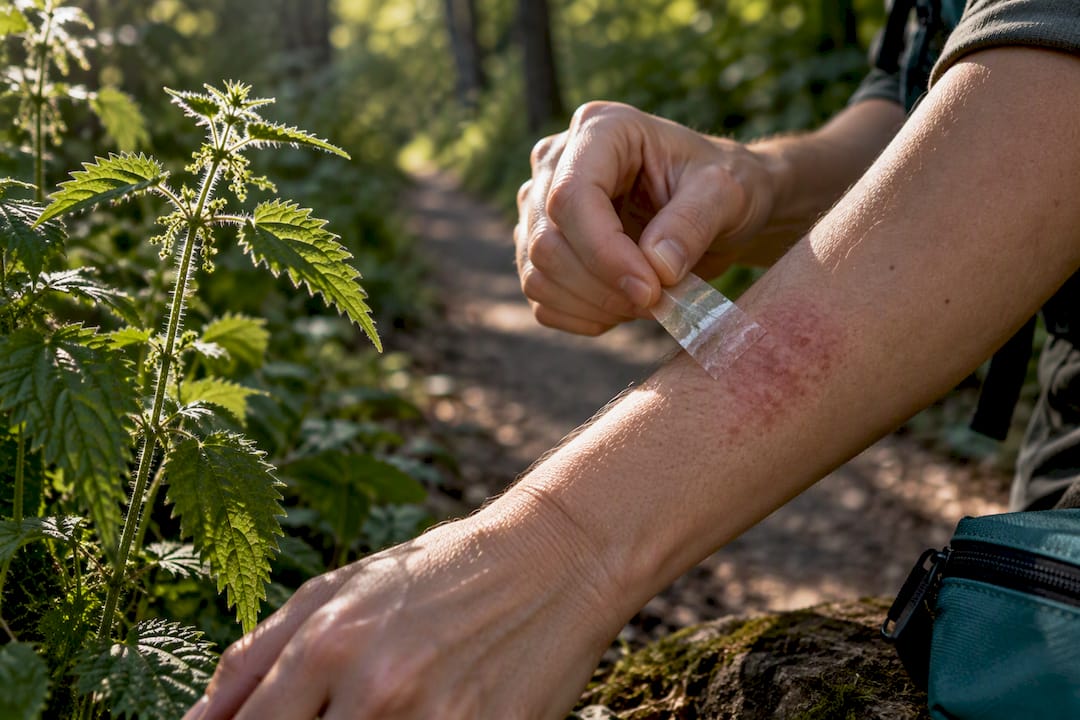
Wait about 10 minutes before you touch the sting, then wash the area with soap and water and let it cool. That single sequence, resist the urge to rub, wash, then cool, stops the irritant from spreading and cuts most of the pain within an hour. Most stings fade inside 24 hours. A baking soda paste, aloe, or OTC hydrocortisone can speed things along, but call a doctor if you notice trouble breathing, a spreading rash, or signs of infection.
TL;DR:
Washing with soap and water within 10 minutes of contact efficiently removes surface irritants and prevents the sting from worsening.
Applying a cool compress for 10 to 15 minutes helps reduce swelling and numbs the pain more effectively than heat.
Using a strip of tape to lift embedded nettle hairs is a quick, low-tech method especially useful when water is unavailable.
Home remedies like baking soda paste and aloe vera can alleviate lingering discomfort, but should follow initial washing and cooling steps.
Most stings resolve within 24 hours, but signs of infection or worsening symptoms require medical evaluation.
Table of Contents
How to Treat a Nettle Sting Step by Step
Stinging nettle leaves are covered in hollow, needle-like hairs called trichomes. Brush against one and it snaps off and injects a mix of histamine, formic acid, and other irritants straight into your skin. That’s the burning, itching welt you feel within seconds. It’s a chemical injection, not just a scratch, which is why the order of your response actually changes the outcome.
Here’s the sequence that works, drawn from field guidance and clinical sources:
Don’t touch it for about 10 minutes. Rubbing or scratching right away pushes the irritant deeper into the skin instead of letting it sit on the surface where it can be washed off, according to Healthline.
Wash with soap and running water. This removes surface chemicals and any leftover plant hairs still clinging to your skin.
No water nearby? Wipe the area with a clean cloth or bandana until you can get to a proper wash, a trick MedicalNewsToday recommends for trail situations.
Remove stubborn hairs with tape. Press a strip of sturdy tape onto the skin and peel it off; this lifts embedded trichomes without the friction of scrubbing.
Cool it down. A cool compress or ice wrapped in cloth, applied for 10 to 15 minutes at a time, calms swelling and numbs the sting.
Skip the warm shower. Heat tends to make itching worse and can drag out symptoms longer than they need to last.
Pro Tip: Carry a small role of packing tape in your first-aid kit. It weighs nothing, and it’s the fastest way to lift nettle hairs off skin when you’re miles from a sink.
What Home Remedies Actually Ease Nettle Sting Pain?
Once the area is washed and cooled, several kitchen and garden remedies can take the edge off the itching. None of these replace step one, wash first, but they help manage lingering discomfort.
Baking soda paste: Mix roughly three parts baking soda to one part water, dab it onto the welts, and let it dry before rinsing. Reapply once or twice; stop if the skin starts feeling raw.
Aloe vera gel: Pure aloe cools the skin and may lower infection risk on broken skin, but avoid scented or alcohol-based versions that can sting further.
Colloidal oatmeal bath: For stings covering larger patches of skin, pour a cup of colloidal oatmeal into a sock, tie it off, and swirl it in lukewarm bathwater to avoid clogging the drain.
Calamine lotion or Burow solution: Both work as drying agents; aluminum acetate (Burow solution) is particularly useful for weeping or blistered skin, per a PMC clinical review.
Dock leaf or jewelweed: Rubbing a crushed dock leaf on a nettle sting is one of the oldest field remedies around, and jewelweed gets similar folklore treatment. Neither has strong clinical backing, but both are low risk if you’re outdoors with nothing else on hand, according to Healthline.
Vinegar: Skip it. It isn’t listed among recommended nettle treatments, and there’s no clinical case for pouring an acid on already-irritated skin.
Which OTC Medicines Help With Nettle Sting Symptoms?
Home remedies handle mild stings well, but over-the-counter medicine covers the gap when itching or swelling won’t quit.
Topical hydrocortisone (1%): Apply a thin layer to calm inflammation, but limit use to a few days. Long-term or repeated use on the same skin can thin it over time.
Oral antihistamines: Diphenhydramine (Benadryl) is sedating and useful at night; loratadine or cetirizine work through the day without the drowsiness.
Topical anesthetics: Some numbing creams help temporarily, but skip topical antihistamine creams. They carry a higher risk of triggering their own skin reaction on already-irritated skin.
Acetaminophen or ibuprofen: Either eases lingering pain or swelling. Check with a doctor first if you’re on blood thinners, have kidney issues, or are giving anything to a child.
Prescription steroids: Reserved for severe, widespread, or blistering reactions, and only under a clinician’s supervision, per the PMC review.
When Should You See a Doctor for a Nettle Rash?
Most nettle stings are a nuisance, not an emergency. But a few warning signs mean it’s time to stop treating it yourself.
Call emergency services immediately for trouble breathing, swelling of the face or throat, or fainting. Those point to a severe allergic reaction, not a typical sting.
See a doctor if the rash keeps spreading, the pain intensifies instead of fading, or blisters start oozing.
Watch for infection from scratching: increasing warmth, pus, expanding redness, or fever all call for evaluation, notes Healthline.
Track the timeline. Most reactions ease up within a few hours and are largely gone by 24 hours. If symptoms are still building after a day or two, get it checked.
A clinician dealing with a stubborn case might prescribe a short steroid course, use Burow solution for weeping blisters, or treat a secondary skin infection directly, per MedicalNewsToday.
How Can You Avoid Getting Stung Again?
The best nettle sting relief is the one you never need. A few habits go a long way on trail or in the garden.
Wear long sleeves and sturdy gloves whenever you’re brushing through undergrowth, especially in overgrown trailside patches or garden borders. Thick canvas beats thin nylon here.
Learn to spot nettles before you’re in reach: serrated, heart-shaped leaves with fine hairs on the stem. Note nearby dock leaf and jewelweed too, since both often grow close to nettle patches. Our guide to identifying poisonous plants in the wild covers the visual cues in more detail.
Pack a compact kit: travel soap, tape, a small aloe gel tube, antihistamine tablets, and an instant cold pack cover almost every sting scenario. Our camping first aid kit essentials list breaks down what else belongs in that bag.
Clear yard nettles with gloves on, and dig out the rhizomes rather than just cutting the tops. Nettles regrow fast from root fragments left in the soil.
The Thrillofit Take on Nettle Sting First Aid
Most nettle sting advice online reads like a pharmacy shelf, cream after cream after cream. What actually matters more is sequence. Wash before you soothe. Cool before you medicate. We’ve watched hikers make their stings worse by grabbing the nearest antihistamine cream before doing the one thing that actually clears the irritant off the skin.
On group trips, the fix is almost never fancy. A strip of tape passed around the group, a shared travel bottle of soap, five minutes at a stream, that handles ninety percent of nettle encounters before anyone needs to dig through a first-aid kit for anything stronger. Save the hydrocortisone and antihistamines for the stragglers who got the worst patch. Low-tech, in the right order, beats high-tech applied out of sequence every time.
— S
Where to Learn More About Nettle Stings and Skin Reactions
For step-by-step first aid guidance, Healthline’s stinging nettle rash guide covers timing and home remedies in plain language. MedicalNewsToday’s rash overview is useful when you need to weigh emergency signs against normal healing. For the clinical side, the PMC review on topical dermatitis treatments explains where steroids and Burow solution fit into more severe cases. If you’re heading out on trail soon, our hiking tips for beginners guide covers clothing choices that keep you out of the nettle patch altogether.

This article is general information, not a substitute for advice from a qualified doctor. Consult a qualified healthcare professional about your own circumstances before acting on anything here.
Sources
FAQ
What Neutralizes Stinging Nettles?
Nothing fully “neutralizes” the sting chemically, but washing with soap and water removes the irritant from your skin fast. Cooling with a compress and applying a baking soda paste afterward manages what’s left of the itching and burning.
How Do You Soothe Stinging Nettle Pain?
Wait roughly 10 minutes, wash with soap and water, then apply a cool compress. From there, aloe vera, a baking soda paste, or an OTC hydrocortisone cream can ease lingering itch and inflammation.
How Long Do Stinging Nettle Burns Last?
Most stings resolve within a few hours to about 24 hours. If tingling or swelling is still building past a day or two, that’s worth a doctor’s look rather than more home care.
Do You Put Vinegar on Nettle Stings?
No. Vinegar isn’t listed among recommended nettle sting treatments, and there’s no solid case for adding an acidic solution to already-irritated skin. Stick with soap, water, and cooling instead, per MedicalNewsToday.
Recommended
Comments