

The Real Role of Tarp in Camping: A Practical Guide

TL;DR:
A tarp is a lightweight, waterproof shelter that offers versatile protection in camping, including rain, sun, and wind. It reduces pack weight significantly and can be configured in various ways for different conditions, but it requires practice to set up correctly and does not provide bug protection. Tarp camping is ideal in stable weather and forested areas, while tents are better for unstable conditions or insect-heavy environments.
A tarp is a waterproof, lightweight sheet that serves as a multipurpose shelter and protection tool in camping. The role of tarp in camping goes far beyond a simple rain cover. A well-pitched tarp protects you from rain, sun, and wind, shields your gear, and creates a functional living space at camp. Transitioning to a tarp-based shelter system can reduce pack weight by 60–70% compared to a traditional tent, with shelter weight dropping from roughly 3 pounds to under 1 pound. That weight savings changes how far and how fast you can move through the backcountry.
What are the main uses and benefits of tarps in camping?
A camping tarp is one of the most versatile pieces of gear you can carry. Its primary function is shelter, but experienced campers use it across nearly every part of camp life.
Core tarp camping uses include:
Rain shelter: Pitched overhead, a tarp keeps you and your sleeping area dry without the enclosed, stuffy feel of a tent.
Sun shade: A flat or angled pitch creates a shaded cooking or resting area during hot weather.
Windbreak: Staked low and angled into the wind, a tarp cuts wind chill significantly.
Ground cloth: Laid under a sleeping pad or tent, a tarp blocks ground moisture and adds insulation.
Gear cover: Draped over packs or firewood, a tarp keeps critical supplies dry overnight.
Cooking shelter: A tarp overhead protects your stove and food prep area from rain, which matters on multi-day trips.
The benefits of camping tarps extend to cost and speed. A quality tarp costs $20–$100, compared to $200–$600 or more for an ultralight tent. With practice, you can deploy one in under 60 seconds. That speed matters when a storm rolls in fast.
Tarps also improve camp workflow by protecting cooking areas, firewood, and gear. On extended trips, keeping your food prep area dry and your firewood covered is the difference between a functional camp and a miserable one. A tarp’s modularity means you can reconfigure it throughout the day as conditions change, something a tent cannot do.
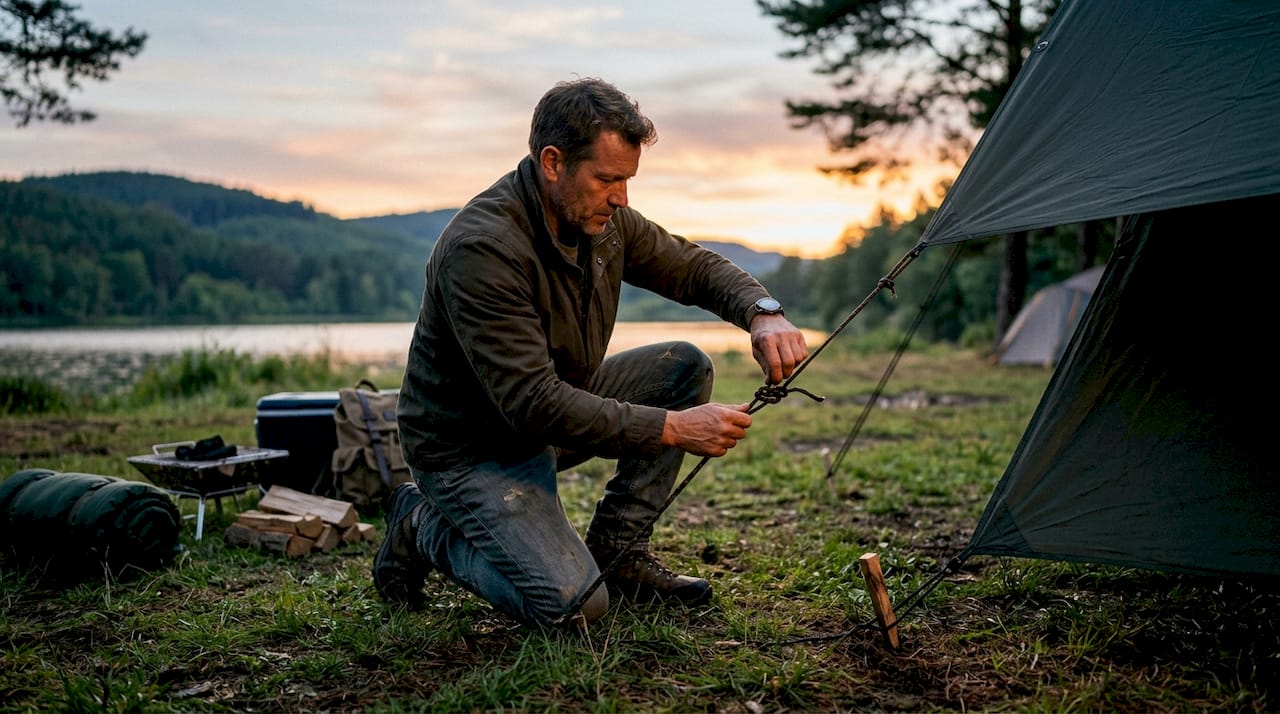
Pro Tip: Carry a tarp even when you bring a tent. Use it as a cooking shelter or gear cover to keep your tent interior clean and dry.
How to effectively pitch a tarp for camping shelter
Setup technique determines whether your tarp performs or fails. The five most common configurations each suit different conditions.
Popular tarp configurations
A-frame: String a ridgeline between two trees and drape the tarp over it, staking both sides to the ground. This is the most weather-resistant pitch for rain. A steep angle forces water runoff and prevents pooling.
Lean-to: Attach one edge high and stake the opposite edge low to the ground. This opens one side for ventilation and views, but offers less rain protection.
Plow point: Stake one corner into the wind, creating a pointed windbreak. The angled sides deflect wind and rain from a specific direction.
Ridgeline with doors: Attach both ends of the tarp to a ridgeline and stake the corners out wide, leaving adjustable “doors” on each end for airflow control.
Hammock cover: Pitch the tarp above a hammock using the same ridgeline, protecting the sleeping area from rain without blocking airflow below.
Site selection and tensioning
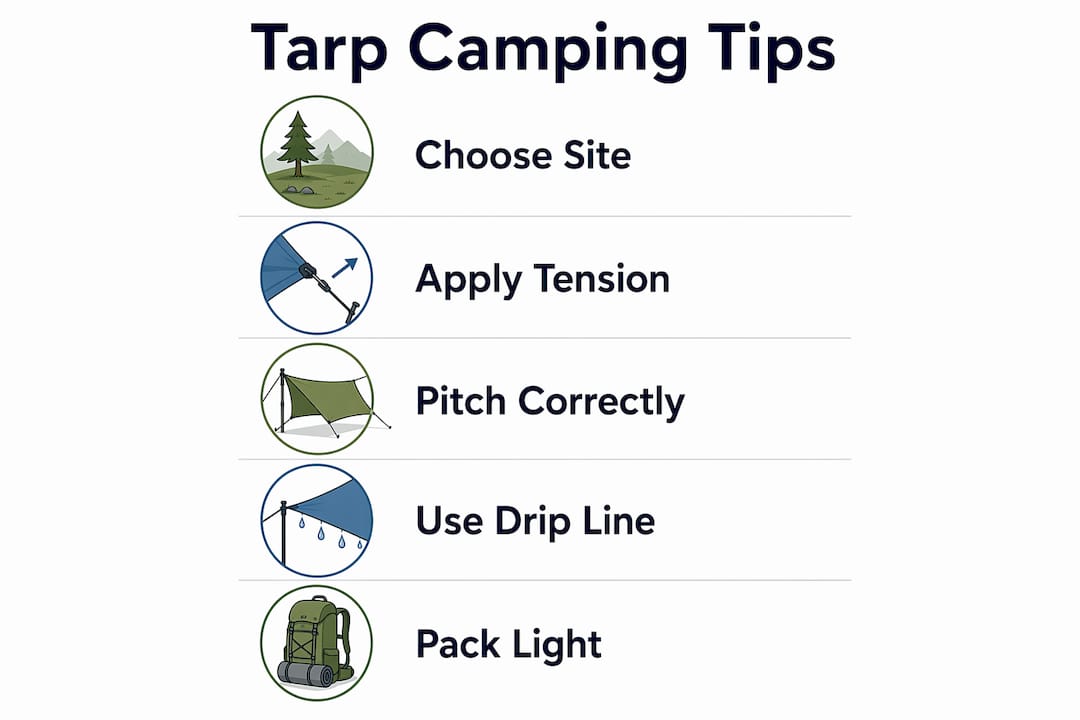
Site selection is critical for tarp success. Choose spots with natural windbreaks like dense trees or rock formations, and look for ground that slopes slightly for drainage. Unlike a tent, a tarp relies on the landscape to do part of its job.
Tension is equally important. Proper tension prevents pooling and fraying. Over-tightening causes cord fraying and premature failure. Under-tensioning lets rain pool in the fabric, which can collapse the pitch or soak through seams. The taut-line hitch knot is the go-to for adjustable tension. It lets you tighten or loosen guylines without retying.
A ground clearance of 4–6 inches between the tarp edge and the ground improves ventilation and reduces condensation buildup underneath. This matters most in humid conditions where moisture collects fast.
Configuration | Best conditions | Key advantage |
A-frame | Heavy rain | Maximum water runoff |
Lean-to | Mild rain, warm weather | Ventilation and open views |
Plow point | High wind, directional rain | Wind deflection |
Ridgeline with doors | Variable weather | Adjustable airflow |
Hammock cover | Any, with hammock | Dry sleep without ground contact |
Pro Tip: Practice pitching at home before your trip. Set up each configuration in your backyard until you can do it in under two minutes. Speed matters when weather turns fast.
When is a tarp enough, and when should you use a tent?
A tarp works best in specific conditions. Knowing when to rely on one and when to bring a tent is a skill that separates confident campers from frustrated ones.
Conditions where a tarp excels:
Stable, predictable weather with low wind
Forested areas with natural windbreaks and tree anchors
Warm nights where ventilation matters more than enclosure
Ultralight trips where every ounce counts
Locations with low insect pressure
Conditions where a tent is the better choice:
Rapidly changing or unstable weather
Open, exposed terrain with no natural windbreaks
High insect activity, since a tarp provides no bug protection on its own
Cold nights requiring a fully enclosed, insulated environment
Situations where privacy is a priority
Unstable conditions reduce tarp effectiveness significantly. A sudden wind shift can collapse a lean-to or drive rain under an A-frame. In those situations, an enclosed tent with a floor and netting is the safer call.
The bug issue is worth taking seriously. A tarp leaves you fully exposed to mosquitoes, gnats, and other insects. Pairing a tarp with a bivy sack or a separate bug net solves this, but adds weight and complexity. If you camp in areas with heavy insect pressure, that combination is worth it. If you camp in the desert Southwest or high alpine zones, bugs are rarely a problem and a tarp alone works well.
The honest answer is that tarp camping and tent camping are not competing choices. They suit different trips, different conditions, and different skill levels. A beginner in a stable, forested campground can thrive under a tarp. That same beginner in an exposed alpine meadow during a thunderstorm needs a tent.
What are the best tarp camping tips for beginners?
Mastering tarp use takes practice, but a few focused habits accelerate the learning curve dramatically.
Key skills to build:
Learn three knots well: The taut-line hitch, bowline, and trucker’s hitch cover nearly every tarp situation. Over-tightening cords causes fraying and failure, so the trucker’s hitch lets you apply controlled, even tension without guessing.
Practice at home first: Set up your tarp in the backyard in different configurations before relying on it in the field. Muscle memory built at home pays off when you are tired and it is raining.
Pair your tarp with a bivy sack: A bivy adds bug protection and a small amount of warmth without much weight. This combination covers most of the gaps a tarp leaves open.
Use trekking poles as anchors: Experienced users pitch with trekking poles when trees are not available, adapting to open terrain without extra gear.
Manage drip lines: Tie a short piece of cord around each guyline near the tarp edge. Water follows the cord down and drips off before reaching your sleeping area.
Common beginner mistakes to avoid:
Choosing a tarp that is too small. A 9-by-9-foot tarp is the minimum for one person with gear.
Letting the tarp extend beyond the tent footprint when using it as a ground cloth. Excess tarp funnels rainwater under the tent. Fold any extra fabric underneath so it stays within the tent perimeter.
Pitching in low spots that collect water. Always check the ground slope before committing to a site.
Pro Tip: Tie a drip line on each guyline before your first rainy night out. It takes 30 seconds and keeps water from running down the cord into your sleeping area.
Key Takeaways
A tarp is the most weight-efficient shelter tool in camping, and its value multiplies when you match the right pitch to the right conditions.
Point | Details |
Weight advantage | Switching to a tarp cuts shelter weight by 60–70%, from roughly 3 pounds to under 1 pound. |
Versatile uses | A tarp functions as rain shelter, sun shade, windbreak, ground cloth, gear cover, and cooking shelter. |
Pitch selection matters | Match your configuration to conditions: A-frame for rain, lean-to for ventilation, plow point for wind. |
Know the limits | Tarps offer no bug protection and struggle in unstable, open, or rapidly changing weather. |
Practice builds confidence | Learning knots and pitches at home before a trip is the single fastest way to improve tarp performance in the field. |
Why I think tarps deserve more credit than they get
Most beginners treat a tarp as a backup item, something to throw in the pack just in case. That is the wrong way to think about it. A tarp is a skill multiplier. Every time you pitch one, you learn something about wind, drainage, and how your campsite actually behaves in weather. A tent hides those lessons from you.
I have carried tarps on trips where I also had a tent, and the tarp almost always ended up doing more work. It covered the cooking area, kept firewood dry, and gave me a shaded spot to sit during afternoon heat. The tent just sat there waiting for bedtime.
The weight savings are real and they change how you move. Cutting 2 pounds from your shelter means you can carry two extra days of food, or simply feel less beat up at the end of a long day. That trade is worth learning the skills for.
The connection to nature that tarp camping offers is something you cannot replicate inside a tent. Falling asleep under an open sky with just a sheet of fabric between you and the weather is a different experience entirely. It demands more awareness and more skill, and that is exactly what makes it rewarding. If you want to build real outdoor confidence, start practicing your tarp shelter setups before your next trip.
— S
Thrillofit’s gear and guides for tarp campers
Thrillofit covers the full range of outdoor shelter skills, from basic tarp pitches to full wilderness survival setups.

Whether you are picking your first tarp or refining your A-frame technique, Thrillofit’s camping gear guides walk you through gear selection, setup methods, and field-tested tips. You will also find practical advice on camp organization, like duct tape camping uses that pair perfectly with tarp setups when repairs are needed in the field. The goal is simple: give you the knowledge to set up a functional, comfortable camp in any conditions.
FAQ
What is the main role of a tarp in camping?
A tarp serves as a lightweight, waterproof shelter that protects campers from rain, sun, and wind. It also functions as a ground cloth, gear cover, and cooking area shelter.
How does a tarp compare to a tent for camping?
A tarp is lighter and cheaper than a tent but offers no floor, no bug netting, and less protection in unstable weather. Tents suit exposed terrain and insect-heavy environments; tarps suit stable, forested conditions.
What size tarp do I need for camping?
A 9-by-9-foot tarp is the minimum for one person with gear. Larger tarps give more configuration options but add weight.
How do I stop rain from pooling on my tarp?
Pitch the tarp at a steep angle and use proper tension with a taut-line hitch or trucker’s hitch knot. A steep A-frame pitch forces water to run off the sides rather than collect in the center.
Do I need extra gear with a tarp for camping?
A tarp alone leaves you exposed to insects. Pairing it with a bivy sack or a separate bug net covers that gap without adding much weight to your pack.
Recommended
Comments