

Wild Edible Plants Identification: A Forager's Field Guide

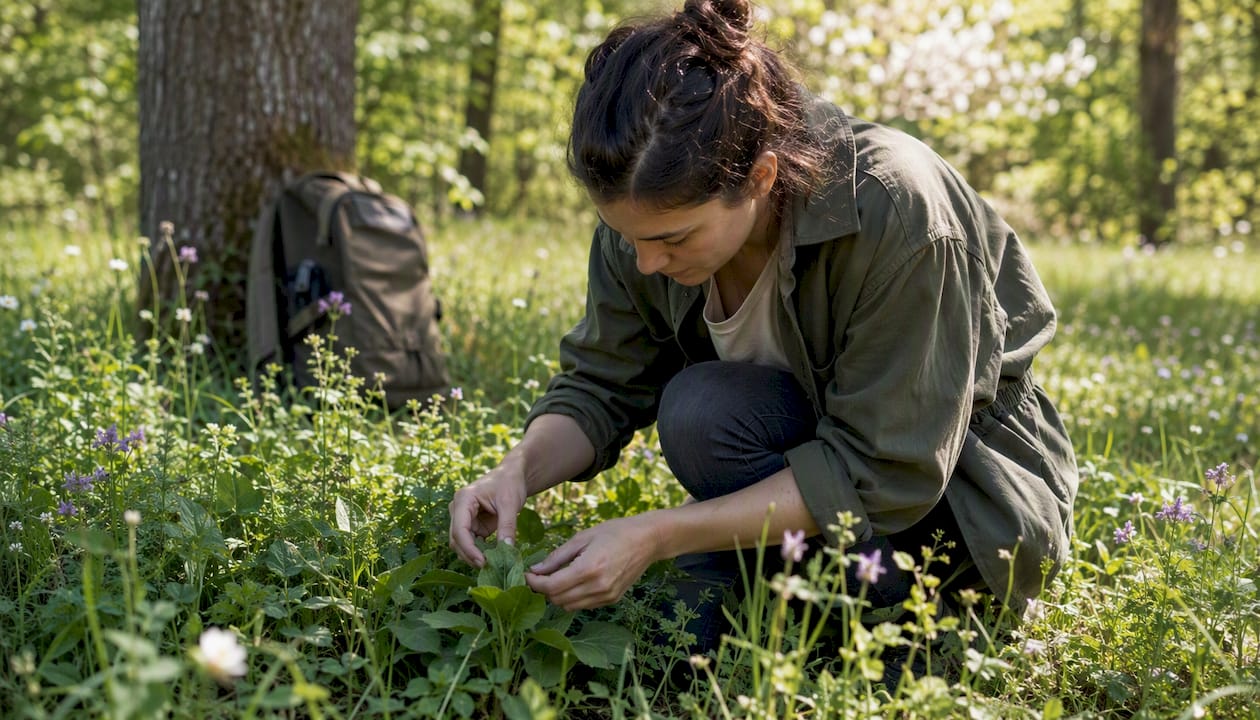
Never eat a wild plant until you have confirmed its identity using at least three distinct features — leaf shape, stem characteristics, and either flower or fruit — cross-checked against a regional field guide and, ideally, a local expert. That single rule prevents the vast majority of foraging accidents.
Before you put anything in your mouth:
Check leaves first. Note arrangement (opposite, alternate, whorled), shape, margin (toothed, smooth, lobed), and surface texture.
Examine the stem. Look for hollow vs. solid, hairy vs. smooth, color, and any sap that bleeds when cut.
Confirm habitat and season. A plant growing in the wrong habitat or at the wrong time of year is a red flag, not a green light.
Photograph multiple angles before harvesting — top of leaf, underside, stem, flower or fruit, and the root zone.
When in doubt, leave it out. No meal is worth a trip to the emergency room.
If you suspect plant poisoning: Call U.S. Poison Control immediately at 1-800-222-1222. Do not induce vomiting unless instructed. Keep a sample of the plant for identification.
Key Takeaways
Safe, sustainable wild edible plant identification requires confirming at least three distinct morphological features, cross-checking with multiple regional sources, and applying conservative harvest practices every time you forage.
Point | Details |
Confirm three features minimum | Check leaf shape, stem characteristics, and flower or fruit before consuming any wild plant. |
Use multiple ID sources | Cross-reference a regional photographic guide, a flora key, and a local expert or extension resource for every unfamiliar species. |
Cook what needs cooking | Acorns, elderberries, and nettles require specific preparation; never rely on the Universal Edibility Test as a substitute for positive ID. |
Harvest no more than one-third | Take no more than one-third of any plant population at a site, and rotate harvest locations to allow recovery. |
Poison Control is 1-800-222-1222 | Call immediately if poisoning is suspected; keep a plant sample and note the location and time of ingestion. |
Thrillofit foraging resources | Thrillofit’s free printable checklist and species cards give you a field-ready ID workflow for common U.S. edibles. |
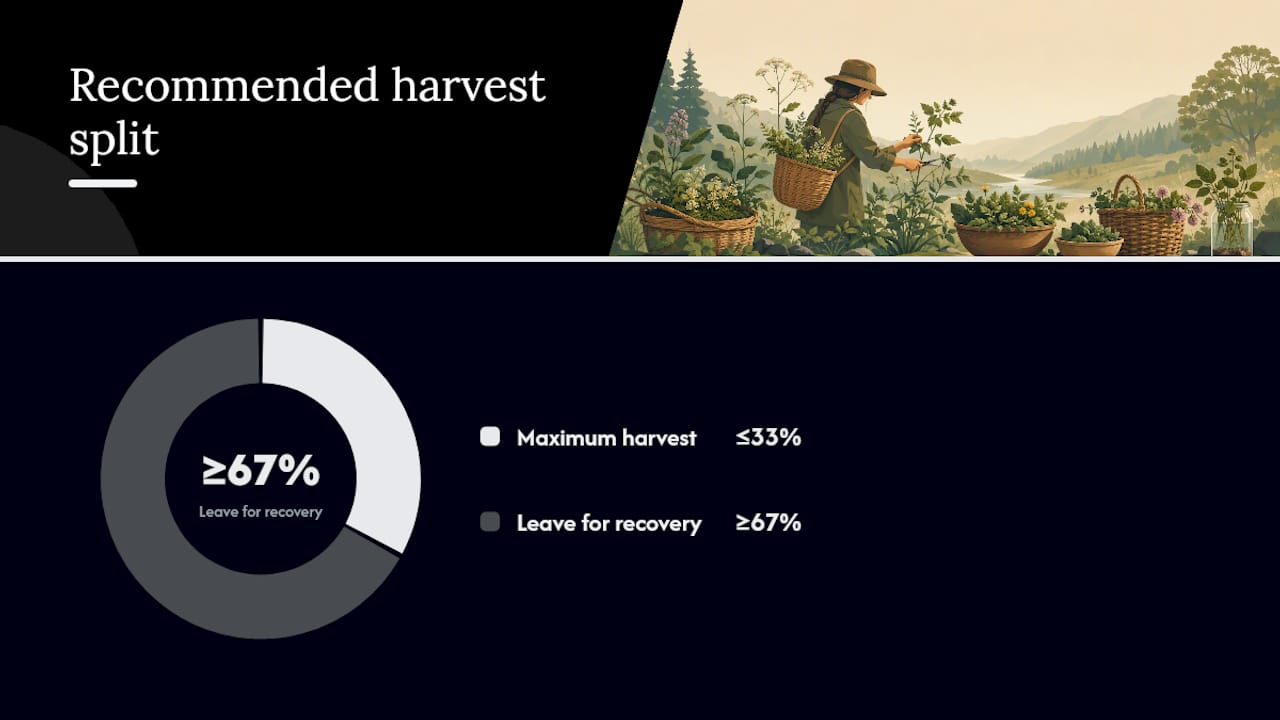
Table of Contents
How do you reliably identify wild edible plants in the field?
Wild edible plants identification is not a single-step process. It is a checklist you run through every time, without shortcuts. The more features you confirm, the safer your ID.
Step-by-step field identification checklist:
Leaf arrangement. Are leaves opposite (paired across the stem), alternate (staggered), or whorled (three or more at one node)? This narrows the family immediately.
Leaf shape and margin. Is the leaf simple or compound? Are the edges smooth, toothed, lobed, or deeply divided? Measure the approximate length and width.
Leaf surface. Hairy, waxy, rough, or smooth? Check both the top and the underside — they often differ.
Stem cross-section. Round, square, or triangular? Hollow or solid? Square stems point to the mint family (Lamiaceae); hollow stems with a white pith appear in elderberry; hollow stems in the carrot family (Apiaceae) can signal danger.
Sap or latex. Cut the stem and watch for milky sap. Milky sap is a hard stop in most contexts — it appears in toxic species like poison hemlock relatives and many spurges.
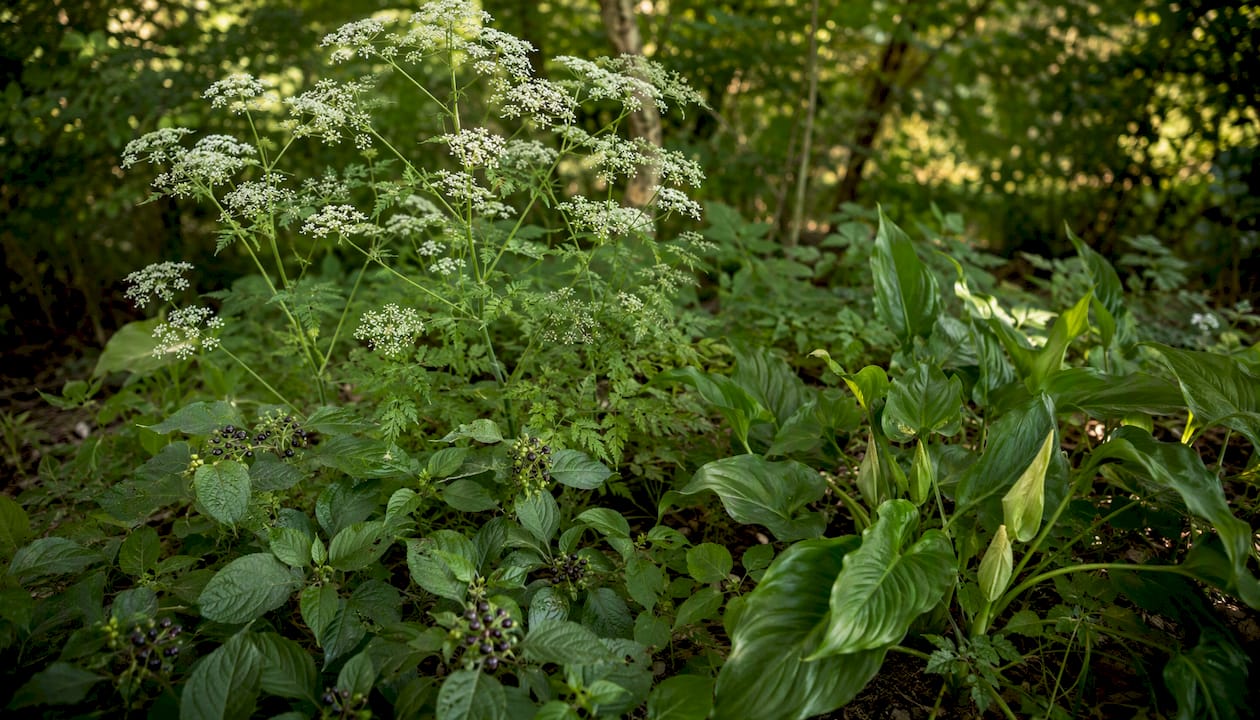
Flower structure. Count petals, note color, and identify the inflorescence type (umbel, spike, raceme, head). Umbrella-shaped flower clusters (umbels) require extra caution — the carrot family contains both edible and deadly species.
Fruit and seed. Berry, drupe, capsule, achene? Color when ripe vs. unripe? Cluster arrangement?
Growth habit. Rosette, vine, shrub, or tree? Rosettes close to the ground in early spring are often edible greens; vines with three-leaflet patterns should trigger immediate caution (poison ivy).
Habitat and soil. Wet meadow, dry upland, forest edge, disturbed ground? Many edibles have strong habitat preferences.
Season and phenology. What growth stage is the plant in? Phenology matters: many plants are edible only during specific growth stages, and a plant that is safe in spring may be toxic or unpalatable by midsummer, as extension educators note.
Touch and smell — use carefully. Crushing a leaf and smelling it is safe and often diagnostic. Garlic mustard smells like garlic; wild ginger has a spicy, earthy scent. Touching a plant to check texture is generally safe, but wash your hands before touching your face or eyes. Never taste a plant raw until you have a positive ID — and even then, start with a small amount.
Automatic walk-away triggers:
Any milky or colored sap
Umbrella-shaped flower clusters you cannot positively ID to species
Three-leaflet leaf patterns (poison ivy, poison oak)
Fine, stinging hairs (stinging nettle is edible but requires handling precautions)
Any plant near roadsides, industrial sites, or areas with known chemical use
Pro Tip: Experienced foragers rely on the plant’s overall “gestalt” — the combination of growth habit, habitat, and seasonal timing — rather than any single visual trait. Cross-check every ID with at least three independent sources: one regional photographic guide, one flora key or technical guide, and either a local expert or a university extension resource, as practitioner guidance recommends.
Common U.S. wild edibles to learn first
Start with species that are distinctive enough that their look-alikes are easy to rule out. The Missouri Department of Conservation’s wild edibles guide and similar state publications are excellent regional starting points. The table below covers ten widely distributed U.S. edibles worth learning before anything else.
Common Name | Key ID Features | Poisonous Look-alike | Easiest Distinguishing Trait | Season / Habitat | Edible Parts | Prep Note |
Dandelion | Toothed basal leaves, hollow stem, yellow composite flower, milky sap | None dangerous (chicory is similar but has blue flowers) | Hollow stem + milky sap + toothed rosette | Spring–fall / disturbed ground, lawns | Leaves, flowers, root | Young leaves are least bitter; roots can be roasted |
Stinging Nettle | Opposite toothed leaves, square stem, stinging hairs | Wood nettle (also edible); dead nettle (no sting, also edible) | Stinging sensation on contact | Spring / moist, disturbed areas | Young shoots, leaves | Boiling or steaming neutralizes the sting completely |
Elderberry | Compound leaves (5–11 leaflets), flat-topped white flower clusters, dark purple berries in clusters | Pokeweed (simple leaves, purple stem), water hemlock (white umbel flowers) | Compound leaves + woody shrub + dark berry clusters | Summer–fall / forest edges, stream banks | Ripe berries, flowers | Raw berries cause nausea; cook before eating |
Wild Garlic / Ramps | Broad flat leaves, strong garlic smell when crushed, white bulb | Lily of the valley (no garlic smell, toxic), false hellebore (no garlic smell) | Unmistakable garlic odor | Early spring / moist forest floors | Leaves, bulbs | Eat raw or cooked; bulbs are pungent |
Purslane | Succulent, paddle-shaped leaves, reddish stems, low-growing mat | Spurge (milky sap, smaller leaves) | No milky sap; thick succulent leaves | Summer / sunny disturbed ground | Leaves, stems | Eat raw in salads or lightly sautéed |
Lamb’s Quarters | Powdery white coating on young leaves, diamond-shaped leaves, mealy texture | Nightshade seedlings (no powdery coating, different leaf shape) | Powdery/mealy coating on leaf surface | Spring–fall / disturbed ground, gardens | Young leaves, seeds | Steam or sauté like spinach |
Cattail | Tall aquatic grass-like plant, brown sausage-shaped seed head | Young shoots can resemble iris (toxic) | Brown cylindrical seed head is unmistakable at maturity | Spring–fall / wetlands, pond edges | Shoots, pollen, green seed heads | Young shoots peeled and eaten raw or cooked |
Wood Sorrel | Clover-like trifoliate leaves, heart-shaped leaflets, yellow or pink flowers | Clover (no sour taste, round leaflets) | Distinctly sour taste; heart-shaped leaflets | Spring–fall / forest floors, lawns | Leaves, flowers | Eat raw; high in oxalic acid — moderate quantities only |
Blackberry / Raspberry | Thorny canes, compound leaves (3–5 leaflets), white flowers, aggregate berries | Pokeweed berries (simple leaves, no thorns, purple stem) | Thorny canes + aggregate berry structure | Summer / forest edges, clearings | Ripe berries | Eat raw or cooked; unripe berries cause stomach upset |
Acorns (White Oak preferred) | Round to oval nuts in caps, lobed leaves | None (acorns are distinctive) | Cap + lobed oak leaf | Fall / oak forests | Nut meat | Raw acorns are bitter and mildly toxic; leach tannins before eating |
A few field habits that make this table more useful:
Photograph the leaf top, leaf underside, stem, and any flower or fruit before harvesting. A single photo of the whole plant is rarely enough for a reliable ID.
Learn the growth stages of each species. Elderberry shoots in spring look very different from the fruiting shrub in August.
Regional variation is real. A dandelion in Vermont and one in New Mexico may look slightly different. Use a guide specific to your region, not just a national overview.
How do you avoid the most dangerous look-alikes?
The plant families that kill foragers are not random. Three families account for the majority of serious poisonings in the United States: Apiaceae (carrot family), Solanaceae (nightshade family), and Araceae (arum family). Knowing their warning signs lets you apply a consistent filter before you ever pick anything.
Edible Species | Poisonous Look-alike | Key Visual Difference | Shared Habitat |
Wild carrot (Queen Anne’s Lace) | Poison hemlock | Hemlock has purple-blotched, hairless stem; wild carrot has hairy stem + carrot smell | Roadsides, meadows |
Wild carrot (Queen Anne’s Lace) | Water hemlock | Water hemlock grows in wet areas; chambered root; no carrot smell | Wet meadows, stream banks |
Elderberry (ripe dark berries) | Pokeweed | Pokeweed has simple leaves, a single thick purple stem, and berries on a spike | Forest edges |
Ramps / Wild garlic | Lily of the valley | Lily of the valley has NO garlic smell — smell is the single most reliable test | Moist forest floors |
Blackberry / Raspberry | Pokeweed berries | Pokeweed has no thorns, simple leaves, and a thick purple-stained stem | Forest edges, clearings |
Cattail young shoots | Iris | Iris leaves are flat and fan-shaped; cattail leaves are round in cross-section | Wetlands |
Hard rules for avoiding dangerous mistakes:
Never eat an umbel-flowered plant unless you have confirmed the species with a regional expert or multiple authoritative guides. This family includes poison hemlock and water hemlock, both of which can be fatal.
Never eat a berry you cannot positively ID. Red, white, and yellow berries are statistically more likely to be toxic than blue or black ones, but blue and black berries include pokeweed and deadly nightshade.
Never eat a three-leaflet plant without a confirmed ID. Poison ivy, poison oak, and poison sumac all follow this pattern.
Smell everything. A plant that smells wrong — musty, unpleasant, or chemical — is not worth the risk, regardless of how it looks.
Walk away from any plant with milky sap unless you have already positively identified it as a known edible (dandelion and purslane are exceptions, but confirm the full ID first).
For a deeper look at identifying poisonous plants in the wild, Thrillofit covers the most dangerous U.S. species with photo-based guidance.
How should you prepare wild plants before eating them?
Correct preparation is not optional for several common species. Some plants that are perfectly safe when cooked are genuinely toxic raw.
Plants that require special processing:
Acorns: Raw acorns contain tannins that cause digestive upset and, in large quantities, kidney stress. Leach them by soaking shelled, ground acorn meal in cold water for several hours, changing the water repeatedly until the bitter taste is gone. White oak acorns need less leaching than red oak.
Elderberries: Raw or underripe elderberries contain sambunigrin, a cyanogenic glycoside. Cooking destroys it. Never eat raw elderberries in quantity.
Pokeweed: Pokeweed is toxic throughout the plant. Young spring shoots (under 6 inches, before any red color appears) have been traditionally eaten after three changes of boiling water, but the margin for error is narrow. Most foragers and extension educators advise avoiding it entirely unless you have direct mentorship from someone experienced with the species.
Stinging nettle: The sting is neutralized completely by boiling, steaming, or thorough drying. Handle raw nettles with gloves.
Kidney beans and some legumes: Wild legumes may contain lectins; always cook thoroughly.
Allergy and quantity cautions:
Wood sorrel, sheep sorrel, and purslane are high in oxalic acid. Eaten in large quantities, they can contribute to kidney stone formation in susceptible individuals. People with a history of kidney stones should limit these.
Latex allergy (natural rubber) can cross-react with certain plant families, including some in the fig and euphorbia groups. If you have a latex allergy, research cross-reactivity before eating unfamiliar species.
Start with small portions of any new wild food, even one you have positively identified. Individual sensitivities vary, and some people react to plants that are safe for most.
Practices to avoid:
Do not rely on the Universal Edibility Test as your primary identification method. As MasterClass’s foraging guide notes, the test takes over 24 hours and does not detect all toxins, including some that cause delayed or cumulative harm. It is a last-resort survival tool, not a substitute for positive ID.
Do not eat mushrooms you cannot positively identify to species. Mushroom misidentification is responsible for the majority of fatal foraging incidents in the U.S.
Do not harvest from roadsides, railroad right-of-ways, or areas near agricultural fields without knowing the chemical history. Plants absorb heavy metals and pesticides from contaminated soil.
Wash everything before eating, even if you plan to cook it.
Pro Tip: Before eating any foraged plant raw, check it for insect damage, mold, or animal feeding signs. A plant that has been heavily browsed by insects or shows fungal growth may have produced defensive compounds in response — or may simply be contaminated. Cook it, or skip it.
For practical ideas on incorporating small foraged additions into trail meals, see Thrillofit’s camping food ideas guide.
What are the rules for ethical and sustainable foraging?
Foraging at scale — or even casual foraging by many people in the same area — can deplete local plant populations faster than they recover. The rules below are not suggestions; they are what separates a forager from someone who strips a habitat.
Core sustainable harvest rules:
Take no more than one-third of any visible population at a single site. This leaves enough for the plant to reproduce and for wildlife that depends on it.
Rotate your harvest sites. Returning to the same patch every week does not give it time to recover. Space visits by at least two to three weeks during the growing season.
Leave reproductive individuals. If a plant is flowering or setting seed, leave it. The next generation depends on those individuals.
Avoid uprooting unless the species is abundant, you have landowner permission, and regulations allow it. Taking roots kills the plant entirely.
Scatter seeds from plants you harvest. If you are collecting berries, drop a few in suitable habitat nearby.
Never harvest rare or protected species. Check your state’s list of threatened and endangered plants before foraging anything unfamiliar. The U.S. Fish and Wildlife Service and state natural heritage programs maintain these lists.
Respect sensitive ecosystems. Wetlands, old-growth forest understories, and alpine meadows recover slowly from disturbance. Harvest lightly or not at all in these areas.
When to skip the harvest entirely:
During drought or other environmental stress, when plant populations are already under pressure.
In areas with heavy recreational use, where cumulative impact from many foragers adds up quickly.
When wildlife is actively using the plants for food or nesting during breeding season.
Pro Tip: Build a seasonal harvest calendar for your region. Note which species are available when, and plan to spread your foraging across multiple species and sites throughout the season. When a wild species is scarce or the site is sensitive, substitute a cultivated equivalent — farmers markets and specialty grocers carry ramps, nettles, and elderberries when wild populations need a rest.
Sustainable foraging is also a conservation act: peer-reviewed literature consistently links responsible harvest practices to long-term population health for wild edibles.
What are the best resources for identifying wild edible plants in the U.S.?
No single resource is enough. The safest foragers use a layered approach: one regional photographic guide, one technical flora or dichotomous key, and at least one local human source.
Print field guides worth owning:
Regional photographic guides (look for state-specific or ecoregion-specific titles from university presses) give you the habitat context and growth-stage photos that national guides often compress. The Quick Guide to Wild Edible Plants from Johns Hopkins University Press is a solid starting point for visual ID.
State extension publications are free, peer-reviewed, and written for your specific region. The Mississippi State Extension’s wild edibles publication is one example of the quality available through land-grant university systems.
Flora keys (technical botanical keys) are harder to use but definitive. Peterson Field Guides and Newcomb’s Wildflower Guide are widely used across the eastern U.S.
Smartphone apps — useful but fallible:
Apps like iNaturalist, PictureThis, and Seek use image recognition to suggest IDs. They are fast and often accurate for common species. The problem is that they fail on look-alikes, unusual growth stages, and regional variants. Use an app to generate a hypothesis, then confirm it with two print or expert sources before consuming anything. Never eat based on an app ID alone.
Local human resources — the most underused:
University extension offices are free and staffed by people who know your local flora. Emailing a photo with the location, date, and a description of the habitat often yields a reliable ID within a day or two.
University herbariums maintain pressed specimen collections and can confirm IDs for unusual finds.
Guided forays with local mycological societies, native plant societies, or naturalist groups give you hands-on learning with an expert present. This is the fastest way to build reliable ID skills.
Indigenous knowledge sources and tribal colleges in your region may offer ethnobotany resources that document traditional uses and preparation methods specific to local species.
A note on using multiple sources: Three independent sources that agree on an ID give you meaningful confidence. Two sources that disagree are a signal to stop and dig deeper before harvesting anything.
What should you do if someone eats a suspect plant?
Act immediately. Do not wait for symptoms to appear — some plant toxins cause delayed reactions, and early intervention matters.
Remove plant material from the mouth. Have the person spit out anything remaining and rinse their mouth with water.
Do not induce vomiting unless U.S. Poison Control or emergency services specifically instruct you to. Vomiting can cause additional harm with some toxins.
Call U.S. Poison Control: 1-800-222-1222. Available 24 hours a day, 7 days a week. Have the following ready: the person’s age and weight, the plant’s name if known, the part consumed, the approximate quantity, and the time of ingestion.
Call 911 for severe symptoms. Difficulty breathing, seizures, loss of consciousness, severe vomiting, or rapid heart rate require emergency services, not just Poison Control.
Collect a plant sample. Place a fresh piece of the plant (including leaves, stem, and flower or fruit if available) in a plastic bag. Note the GPS location or a description of where it was found, and the time of collection. This sample is critical for identification.
What to photograph and preserve:
Multiple angles of the plant: top of leaf, underside, stem, flower or fruit, and the base or root zone if accessible.
The surrounding habitat — a wide shot showing what the plant was growing near.
Any packaging or container if the plant was processed before consumption.
Symptoms that warrant immediate 911 contact:
Difficulty breathing or swallowing
Seizures or muscle twitching
Severe abdominal pain
Altered consciousness or confusion
Skin turning blue or pale
Having a camping first aid kit stocked with antihistamines and basic supplies is worth the weight on any foraging trip.
Why does wild edible plant research matter for foragers?
The nutritional and cultural case for wild edibles is well-documented. A review published in Nutrients describes wild edible plants as often nutrient-dense, traditionally integral to diets, and important sources of vitamins, minerals, antioxidants, and functional compounds that sometimes exceed what cultivated crops provide. That is not a reason to abandon the grocery store, but it does explain why WEPs have remained central to food cultures worldwide.
The scale of global use is striking. A global overview review in Frontiers in Sustainable Food Systems reports that a large number of people consume wild foods daily — a figure that underscores how far from niche this practice actually is. Wild foods contribute to food security in rural and indigenous communities across every continent, and interest in foraging in urban and suburban North America has grown sharply in recent years.
That growth creates a tension. A 2024 review in Foods documents that rising foraging interest brings real conservation risks — particularly for slow-growing, habitat-specific species that cannot recover quickly from heavy harvest pressure. The same review notes that wild edible plants and fungi remain integral to diets worldwide, which makes sustainable practice not just an ethical preference but a practical necessity for keeping these resources available.
For foragers, the research translates to a clear priority: learn well, harvest lightly, and treat the knowledge as a long-term investment rather than a quick skill to acquire before the next hike.
What the conventional wisdom on foraging gets wrong
Most foraging content focuses on what to pick. The harder skill — and the one that actually keeps you safe — is knowing when not to pick.
The “learn a few easy species” advice is sound as far as it goes. Dandelions, nettles, and blackberries are genuinely hard to misidentify once you know them. The problem is that beginners often extend the same confidence to species that look similar but are not. The carrot family is the clearest example: once someone successfully identifies wild carrot, they sometimes apply that same loose ID process to other white-umbel plants in the same meadow. That is how people end up with poison hemlock.
The other piece of conventional wisdom worth questioning is the idea that apps have made foraging safer. They have made it faster, which is not the same thing. Image recognition tools are trained on clear, well-lit photos of typical specimens. In the field, you are often looking at a plant in poor light, at an unusual growth stage, or in a regional variant the app has seen fewer examples of. The app’s confidence score does not account for any of that.
What actually builds reliable ID skill is time spent with plants across their full seasonal cycle, not just at the moment you want to harvest them. Visit the same patches in spring, summer, and fall. Watch how the plant changes. Learn what it looks like before it flowers, while it flowers, and after it sets seed. That kind of longitudinal familiarity is what separates a forager who can be trusted from one who got lucky.
The Thrillofit beginner’s guide to safe foraging covers the foundational skills worth building before you start expanding your species list.
Get Thrillofit’s free foraging ID checklist
The single most practical thing you can carry into the field is a one-page identification checklist you have already internalized. Thrillofit’s foraging resources give you exactly that: a printable ID checklist covering the ten-point field confirmation process, compact species cards for the most common U.S. edibles, and a look-alike warning sheet you can fold into a field notebook.
Sign up for the Thrillofit newsletter and get the checklist delivered to your inbox, along with seasonal foraging tips, local foray announcements, and new guides as they publish. The newsletter is free, and you can unsubscribe anytime.
Head to Thrillofit to access the checklist and browse the full library of outdoor survival and foraging guides built for hikers, bushcrafters, and anyone who wants to know what is actually edible out there.
Sources
Recommended
Comments