
Sun Protection Camping: Your Complete UV Safety Guide
TL;DR:
Sun protection camping combines clothing, sunscreen, and shade to prevent UV damage during outdoor trips. Using UPF 50+ clothing, broad-spectrum SPF 30+ sunscreen, and UV-rated shade structures is essential for safety on multi-day camping adventures. Habitual reapplication and timing strategies are key to minimizing UV exposure and avoiding sunburn.
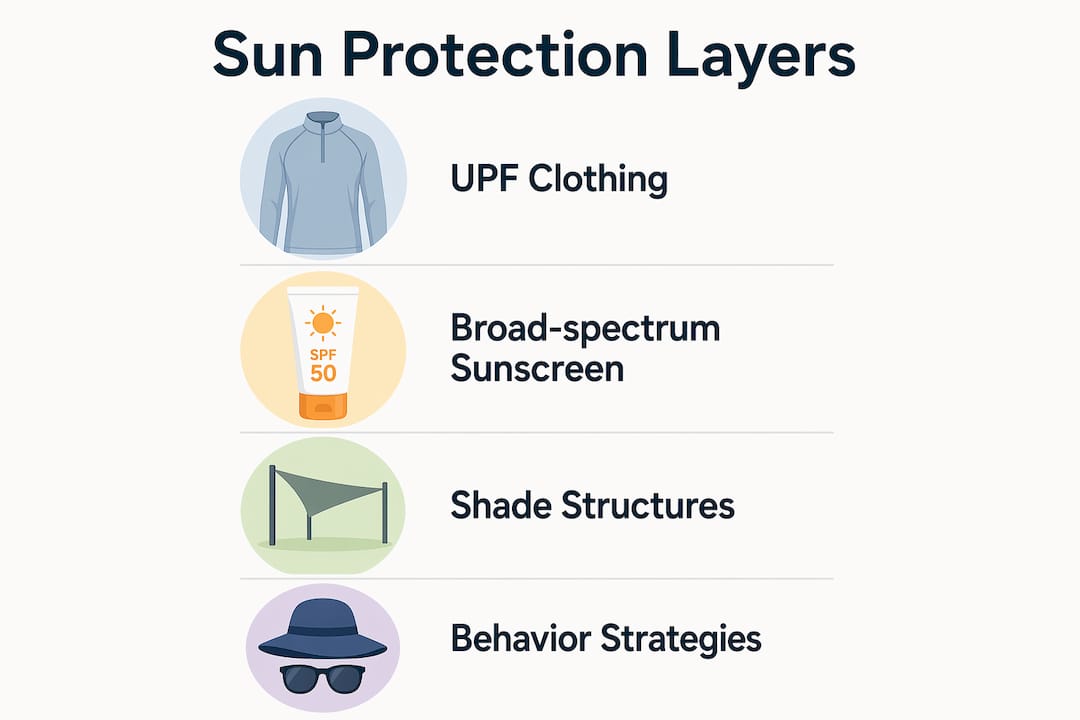
Sun protection camping is the practice of using physical barriers, topical products, and behavioral strategies to prevent UV radiation damage during outdoor stays. Multi-day camping trips expose your skin to far more cumulative UV than a typical afternoon outside, making a layered approach non-negotiable. UPF 50+ clothing blocks at least 98% of UV rays, while broad-spectrum SPF 30+ sunscreen adds a critical second line of defense. Combining clothing, sunscreen, shade, and smart timing is what separates a safe camping trip from a painful one. Thrillofit covers all of it here.
What is sun protection camping and why does it matter?
Sun protection camping is the systematic use of UPF-rated clothing, broad-spectrum sunscreen, UV-blocking shade structures, and timed activity planning to prevent skin damage from ultraviolet radiation in outdoor environments. The term covers both the gear you bring and the habits you build. Most campers think about sunscreen and stop there. That single-layer approach fails on multi-day trips where sweat, friction, and forgetting to reapply all chip away at your coverage.
UV exposure stays strong even on cloudy days and reflects powerfully off water, sand, and snow. That means a lakeside campsite or a snowfield hike carries serious UV risk even when the sky looks overcast. Campers who rely on “it doesn’t feel that sunny” as their protection strategy consistently get burned. A layered system removes that guesswork entirely.
The industry standard for measuring fabric UV protection is the Ultraviolet Protection Factor, or UPF. A UPF 50+ rating means the fabric allows less than 1/50th of UV radiation to pass through. SPF, by contrast, measures only UVB protection in sunscreen. Understanding both ratings helps you build a complete defense rather than patching gaps after the fact.
What are the best types of sun protection clothing for camping?
UPF-rated clothing is the most reliable form of UV protection for campers because it works without reapplication, does not wash off in sweat, and covers large skin areas consistently. A long-sleeve UPF 50+ shirt protects your arms all day without a single touch-up. That reliability matters enormously on a three-day backpacking trip where sunscreen reapplication is easy to skip.
Key clothing features to look for
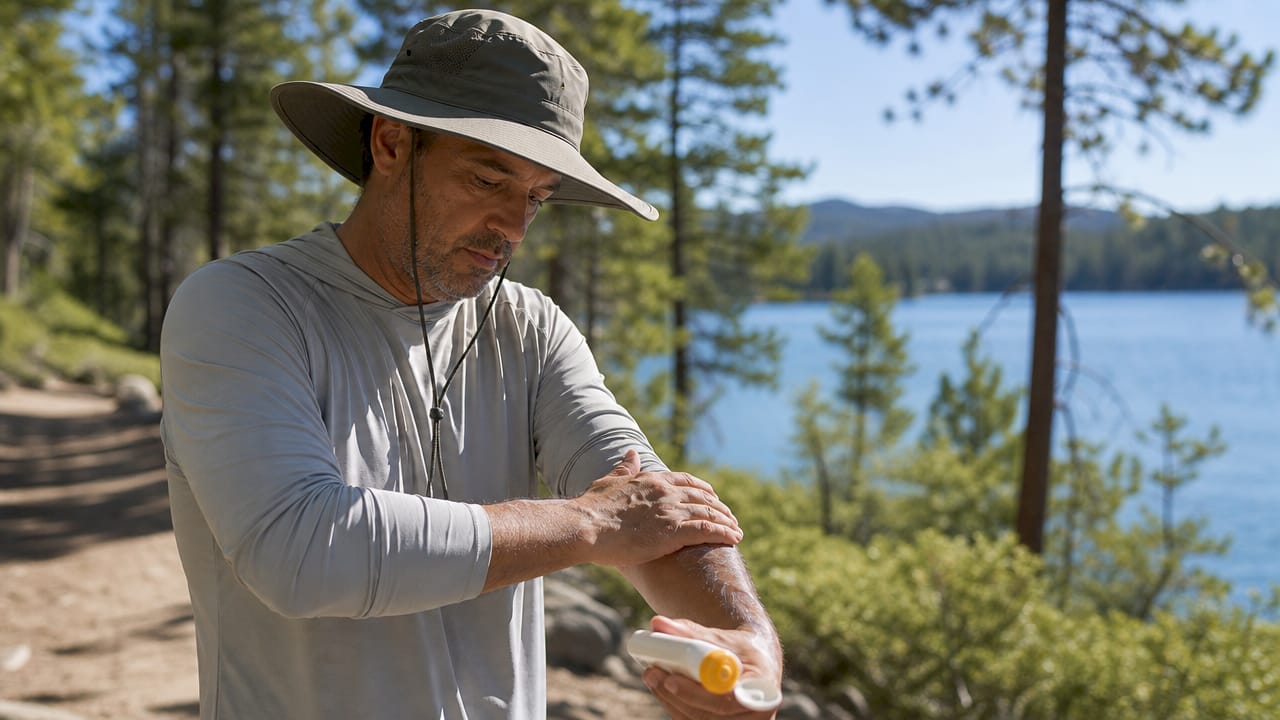
The best camping sun protection clothing combines UPF 50+ ratings with lightweight, moisture-wicking fabrics. Polyester and nylon blends dominate this category because they dry fast, resist odor, and maintain their UPF rating wash after wash. Cotton, by contrast, loses most of its UV-blocking ability when wet, which makes it a poor choice for active camping.
Long-sleeve shirts: UPF 50+ woven shirts cover your arms and neck without trapping heat when made from breathable synthetic fabrics.
Convertible pants: Zip-off legs give you flexibility between full coverage and ventilation as temperatures change through the day.
Wide-brim hats: A brim of at least 3 inches shields your face, ears, and the back of your neck, which are among the most commonly burned areas.
UV-blocking sunglasses: Look for lenses labeled UV400, which block 100% of UVA and UVB rays reaching your eyes.
Neck gaiters: Lightweight UPF-rated gaiters protect the neck and lower face during exposed ridge walks or open-water paddling.
Physical protection through clothing outperforms sunscreen alone because it requires no reapplication and covers areas campers routinely miss. Ears, the back of the neck, and the tops of feet are classic sunburn spots that clothing eliminates entirely.
Pro Tip: Layer a UPF 50+ base layer under a vented hiking shirt on hot days. The base layer handles UV protection while the outer shirt manages airflow, so you stay cool without sacrificing coverage.
How to choose and apply sunscreen effectively while camping?
Broad-spectrum sunscreen protects against both UVA and UVB rays, and both matter for camping. UVB causes the visible burn you feel the next morning. UVA penetrates deeper into the skin and drives longer-term damage. A sunscreen labeled “broad-spectrum SPF 30+” addresses both threats simultaneously.
Mineral vs. chemical sunscreen for camping
Physical, or mineral, sunscreens outperform chemical formulas in camping conditions because they work immediately upon application and resist breakdown from heat and sweat. Mineral sunscreens use zinc oxide or titanium dioxide to physically deflect UV rays. Chemical sunscreens absorb UV and convert it to heat, but that process degrades faster under heavy sweating and high temperatures. For a full day on the trail, mineral formulas hold up better.
Applying sunscreen correctly matters as much as choosing the right formula. Follow these steps every morning before heading out:
Apply before dressing. Putting sunscreen on before your clothes helps you cover the skin near clothing edges, which are the spots most likely to get missed.
Use a full ounce per application. One ounce, roughly the size of a shot glass, is the correct amount to cover an adult body. Most people apply far less and get far less protection as a result.
Cover every exposed area. Ears, the back of the neck, tops of feet, and the part in your hair all need attention. These spots get burned consistently because campers forget them.
Reapply every two hours. Set a phone alarm or watch timer. Sweat, wiping your face, and friction from pack straps all remove sunscreen faster than you expect.
Reapply immediately after swimming or heavy sweating. Water-resistant labels do not mean waterproof. Treat any water contact as a reset on your sunscreen clock.
Consistent reapplication of SPF 30 matters more than chasing higher SPF numbers. SPF 50 and SPF 100 offer only marginal additional UVB protection over SPF 30, but they cost more and often feel heavier on the skin. Campers who buy SPF 30 and reapply it religiously get better real-world protection than those who apply SPF 100 once and forget it.
Pro Tip: Pack sunscreen in a small belt pouch or hip pocket, not buried in your main pack. If reapplying requires digging through gear, you will skip it.
What role do camping shade structures and tents play in sun protection?
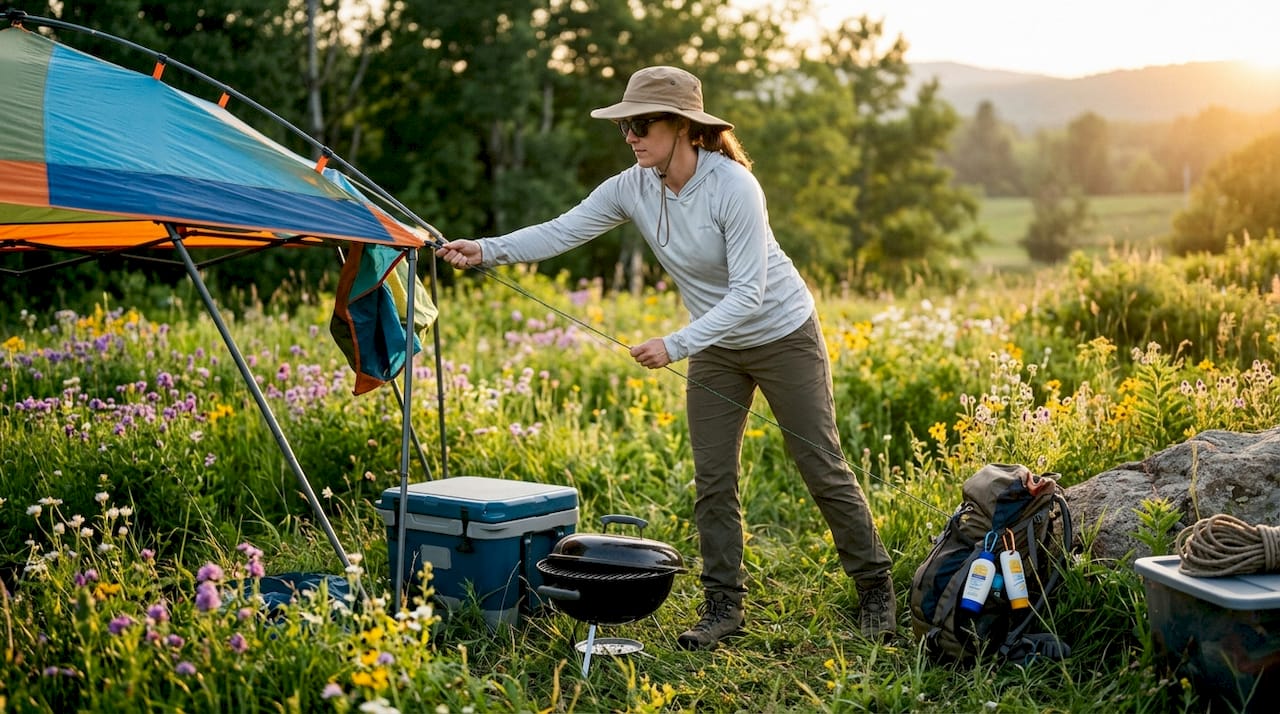
Shade structures are the third pillar of camping sun protection, and most campers underestimate how much the quality of that shade matters. Not all shade blocks UV equally. A loosely woven canopy casts a shadow but may allow significant UV radiation to pass straight through the fabric.
Camping shade structures need a UPF 50+ rating to block more than 98% of UV. A UPF 15 canopy, by comparison, blocks only around 93% of UV. That gap sounds small but adds up over a full day of sitting under it. When building the perfect campsite, selecting a UPF-rated gazebo or canopy is as important as picking a level tent site.
UPF ratings and shade structure effectiveness
Shade structure type | Typical UPF rating | UV blocked |
UPF 50+ rated canopy | 50+ | 98%+ |
Standard nylon tent | 15–25 | 93–96% |
Loosely woven canopy | Under 15 | Under 93% |
Portable UV umbrella | 50+ | 98%+ |
Standard nylon tents block only 50–80% of UV, and that protection degrades further with extended sun exposure. Fabric UV-blocking ability can drop significantly after two weeks of direct sunlight. On longer trips, supplement your tent with a dedicated UPF 50+ tarp or canopy for daytime shade.
Position your shade structure to track the sun’s movement. A canopy that shades your cooking area at 9 a.m. may leave it fully exposed by noon. Adjust orientation at midday or use multiple overlapping shade sources. Portable UV umbrellas work well for this because you can reposition them quickly as the sun moves.
What are effective sun safety behaviors and timing strategies for camping?
Behavior is the most underrated layer of camping sun protection. You can wear perfect gear and still accumulate dangerous UV exposure by being outside at the wrong time without breaks. Timing and habits close the gaps that clothing and sunscreen leave open.
Peak UV hours run from 10 a.m. to 4 p.m., and planning strenuous activities outside that window cuts your UV exposure dramatically. Schedule summit attempts, long paddles, or open-field hikes for early morning or late afternoon. Use the midday window for camp chores under your shade canopy, meal prep, or rest.
Hydration ties directly into sun safety. Drinking 2–3 liters of water daily with electrolytes supports your body’s ability to regulate temperature under heat and UV stress. Dehydration accelerates heat illness, and heat illness and sunburn often arrive together on hot camping days. Carry a hydration reservoir and add electrolyte tabs on days with heavy exertion.
Build these habits into your daily camping routine:
Check the UV index for your location each morning using a weather app. A UV index of 6 or higher warrants full protection measures.
Take a shade break for at least 15 minutes every 90 minutes during peak hours.
Reapply sunscreen after every swim, even if you feel dry.
Keep children in UPF-rated clothing and full shade during peak hours. Sunburns in children are especially common during camping because cloud cover creates a false sense of safety.
Treat any redness as a warning sign and move to shade immediately rather than pushing through.
Pair these habits with the gear advice in Thrillofit’s summer trail guide for a complete outdoor safety system that covers both UV and terrain risks.
Key takeaways
Effective sun protection camping requires layering UPF 50+ clothing, broad-spectrum SPF 30+ sunscreen, UV-rated shade, and timed activity planning to prevent cumulative UV damage across multi-day trips.
Point | Details |
UPF 50+ clothing is most reliable | It blocks 98%+ of UV without reapplication, outperforming sunscreen alone on long trips. |
Apply one full ounce of sunscreen | Most campers under-apply; use a shot-glass amount and reapply every two hours. |
Choose mineral sunscreen for camping | Zinc oxide and titanium dioxide formulas resist heat and sweat better than chemical types. |
Shade structures need UPF ratings | Loosely woven canopies allow UV through; only UPF 50+ structures block 98%+ of radiation. |
Avoid peak UV hours when possible | Schedule exposed activities before 10 a.m. or after 4 p.m. to cut UV exposure significantly. |
What I’ve learned from getting it wrong outdoors
The first time I got a serious camping sunburn, I was wearing a hat and had applied sunscreen that morning. I thought I was covered. What I missed was the reapplication window after a long swim, the reflection off the lake doubling my UV exposure, and the fact that my cotton shirt offered almost no real UV protection once it was damp with sweat.
Most campers I talk to have a version of that story. They did something. They just did not do enough of it, consistently enough, across the full day. The gap is almost never knowledge. It is habit. Knowing you should reapply sunscreen every two hours is very different from actually doing it when you are mid-hike and your pack is on your back.
The shift that actually worked for me was treating sun protection like water and food. You do not debate whether to drink water on a hot day. You just do it on a schedule. Once I set a two-hour alarm for sunscreen and packed it in an accessible hip pocket, my compliance went from occasional to automatic. The gear matters, but the system around the gear matters more.
One thing I push back on is the idea that serious sun protection makes camping less enjoyable. A lightweight UPF 50+ shirt is cooler than a cotton tee in direct sun because it reflects heat. A wide-brim hat cuts glare and makes the whole experience more comfortable. The right gear does not burden you. It removes discomfort you were tolerating without realizing it.
— S
Thrillofit’s resources for safer camping adventures
Thrillofit brings together expert-curated gear guides and practical safety advice built specifically for campers and outdoor adventurers. Whether you are gearing up for your first overnight trip or a week-long backcountry expedition, the site covers UPF-rated gear picks, sunscreen recommendations, and complete camping safety essentials to keep you prepared for every condition.
Sun protection is one piece of a larger outdoor safety picture. Thrillofit’s camping hacks and tips cover everything from shelter setup to heat management, giving you a full toolkit for staying safe and comfortable in the field. Explore the guides, build your kit, and head out with confidence.
FAQ
What does sun protection camping mean?
Sun protection camping is the practice of using UPF-rated clothing, broad-spectrum sunscreen, UV-blocking shade structures, and timed activity planning to prevent UV skin damage during camping trips.
What SPF sunscreen should I use for camping?
Broad-spectrum SPF 30+ is the recommended minimum for camping. Consistent reapplication every two hours matters more than choosing a higher SPF number.
Does a tent protect you from UV rays?
Standard nylon tents block only 50–80% of UV radiation, and that protection degrades with extended sun exposure. A dedicated UPF 50+ canopy or tarp provides significantly better coverage.
What should I wear camping for sun protection?
Wear UPF 50+ long-sleeve shirts, convertible pants, a wide-brim hat with at least a 3-inch brim, and UV400 sunglasses. Avoid cotton, which loses UV-blocking ability when wet.
When is UV exposure most dangerous while camping?
UV exposure peaks between 10 a.m. and 4 p.m. Plan strenuous or exposed activities outside that window and take regular shade breaks during midday hours.
Recommended
Comments