

Camping Food Ideas That Make Every Trip Better
TL;DR:
Effective camping food strategies prioritize meal planning based on perishability, focusing on shelf-stable staples and minimal cooking. Foil packet cooking offers quick, easy, and cleanup-free meals, making it ideal for most camp settings, while proper cooler organization and food safety practices are essential for health. Tailoring food choices to your camping style—car, backpacking, or group—ensures balanced nutrition, reduced effort, and a more enjoyable outdoor experience.
The best camping food ideas balance taste, portability, and food safety without requiring a professional kitchen or a heavy pack. Whether you’re car camping with a full cooler or backpacking with a 30-liter pack, what you eat directly shapes how much energy you have, how much you enjoy the trip, and how smoothly camp life runs. The right outdoor meal plan draws on campfire cooking recipes, no-cook options, and smart prep done at home. This guide covers everything from quick camping snacks to full foil packet dinners, organized so you can build a real plan before you leave the driveway.
1. Best camping food ideas for every meal of the day
The strongest camp menus cover all four meal slots: breakfast, lunch, dinner, and snacks. Skipping any one of them creates energy gaps that hit hardest on the trail.
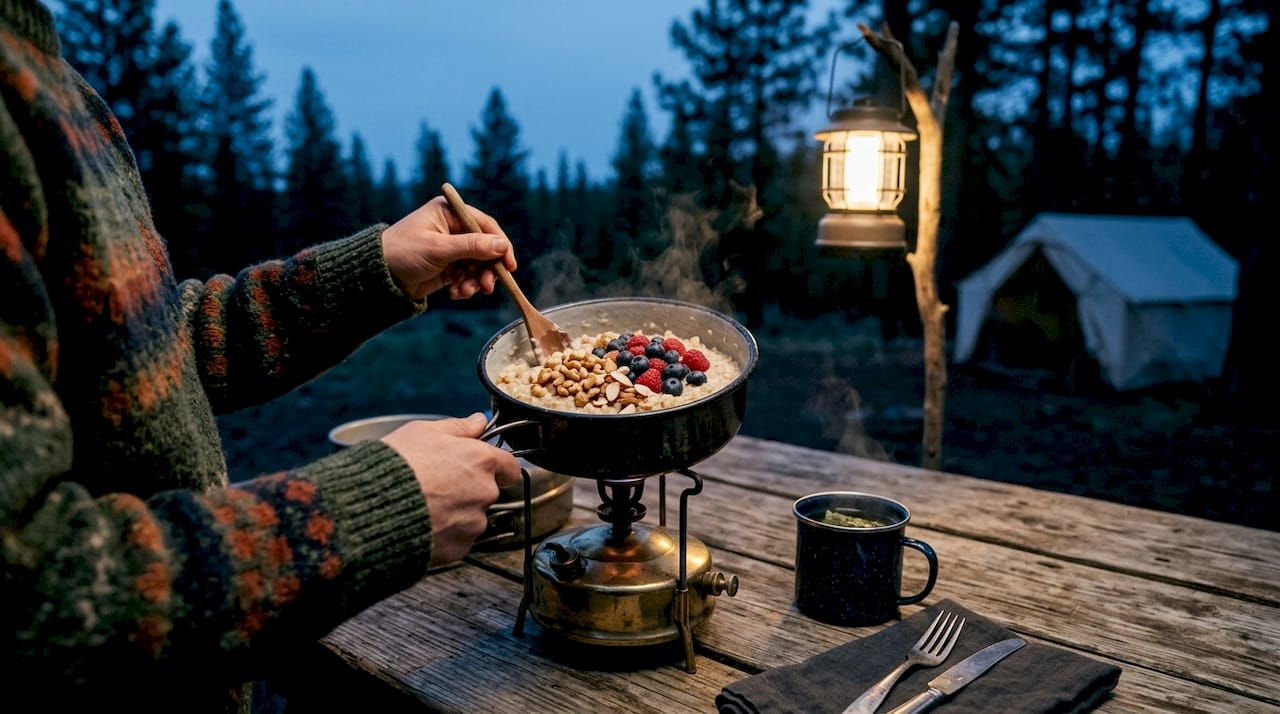
Breakfasts that work well outdoors include oatmeal topped with dried fruit and nut butter, breakfast burritos made with pre-scrambled eggs and sausage, and yogurt parfaits layered with granola and fresh berries. Oatmeal is the most forgiving option because it requires only boiling water and packs flat. Breakfast burritos can be assembled at home, wrapped in foil, and reheated directly on a camp grate.
Lunches should require zero cooking whenever possible. Wraps with hummus, roasted red peppers, and spinach hold up well without refrigeration for several hours. Pasta salad made the night before travels in a sealed container and stays satisfying cold. Chickpea salad sandwiches and tinned fish on crackers are protein-rich, shelf-stable lunch options that earn their place in any pack.
Dinners are where you can invest a little more effort. One-pot chili, sausage and vegetable skillets, and foil packet chicken with sweet potatoes are all proven campfire cooking recipes that deliver real flavor with minimal cleanup. PlanEat AI’s 2026 menu specifically recommends chili and sausage skillet dinners for three-day car camping trips because they reheat well and use ingredients that pack efficiently.
Snacks are the unsung heroes of any outdoor trip. Jerky, mixed nuts, granola bars, apples, pears, and carrots require no refrigeration and deliver steady energy between meals. Chef Jon Kung’s rule is that produce earns its cooler space only when it can survive in a bag without refrigeration. That standard cuts the right produce from the wrong produce every time.
Pro Tip: Pack one emergency no-cook dinner, such as peanut butter tortillas with honey and banana, for nights when weather or exhaustion makes cooking impossible. It takes up almost no space and removes a major stress point.
2. How to plan, pack, and store camping food safely
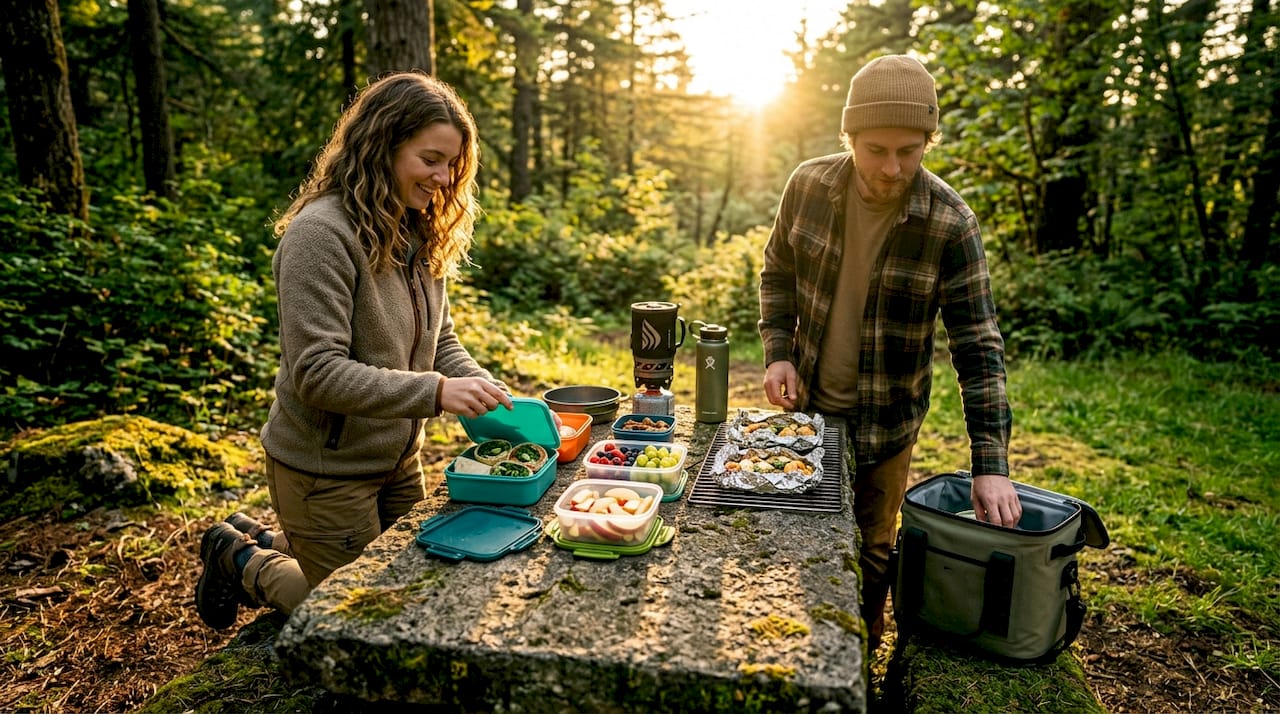
Effective camping meal planning starts before you buy a single ingredient. The sequence matters: plan meals in order of perishability, consume the most fragile foods first, and build the rest of the menu around shelf-stable staples.
The USDA’s two-hour rule states that perishable food left out at room temperature becomes unsafe after two hours, and after just one hour when ambient temperature exceeds 90°F. Reheating does not fix the problem because heat-stable toxins produced by bacteria survive cooking. That single rule should govern every decision you make about when food leaves the cooler and when it goes back.
Cooler packing follows a specific logic. Use frozen water jugs instead of loose ice to extend chill time and avoid soggy food. Place first-night proteins on top along with cheese, berries, and leafy greens. Dry goods and items needed later in the trip go on the bottom. Every time you dig through the cooler, you warm the contents and accelerate spoilage, so organize it so you rarely need to search.
Food safety at camp also requires basic hygiene infrastructure. Bring hand sanitizer, biodegradable soap, and two separate cutting boards: one for raw meat and one for produce. Keep raw meat in sealed, leak-proof bags at the bottom of the cooler, away from ready-to-eat foods. The temperature danger zone of 40°F to 140°F is where bacteria multiply fastest. Keeping food out of that range is the entire job.
For trips longer than three days, shift toward shelf-stable foods: tinned fish, instant noodles, dried beans, and hard cheeses. These options reduce cooler dependency and simplify packing significantly. The best camping meal prep combines a few perishable proteins for the first two nights with shelf-stable backup meals for the rest of the trip.
3. Why foil packet cooking belongs in every camp kitchen
Foil packet cooking is the method that delivers the best return on effort at a campsite. You seal ingredients in heavy-duty aluminum foil, place the packet directly on coals or a grate, and the steam trapped inside cooks everything evenly without requiring you to stir, flip, or monitor closely.
The cleanup advantage alone justifies the method. Foil packets serve straight from the packet, which means zero pots, zero pans, and zero scrubbing. For group camping where cleanup is the most dreaded task, this matters enormously.
Strong foil packet combinations include:
Chicken with pineapple and bell peppers: Sweet, savory, and fully cooked in about 25 minutes over medium coals.
Cheesy potatoes with onion and garlic: A crowd-pleasing side that works alongside any protein.
Seafood boil packets: Shrimp, corn, sausage, and butter cook together in one sealed packet for a complete meal.
Banana dessert packs: Split a banana, stuff it with chocolate chips and mini marshmallows, wrap in foil, and cook until soft. It takes five minutes and requires no dishes.
The comparison below shows how foil packet cooking stacks up against the two other most common camp cooking methods:
Method | Cleanup effort | Ingredient flexibility | Skill required |
Foil packets | Very low | High | Low |
Cast iron skillet | High | Very high | Moderate |
Boil-only (pot) | Low | Moderate | Low |
Foil packets win on cleanup and accessibility. Cast iron delivers superior flavor development but demands more gear and effort. For most campers, foil packets are the right default method, with cast iron reserved for one or two special meals per trip.
Pro Tip: Pair foil packet meals with shelf-stable sides like crackers, crusty bread, or instant rice to round out the meal without adding extra pots or utensils.
4. Matching your food choices to your camping style
Car camping, backpacking, and group camping each demand a different food strategy. Using the wrong approach for your situation creates unnecessary weight, waste, or frustration.
Car camping gives you the most freedom. You can bring a full cooler, a two-burner camp stove, cast iron cookware, and fresh ingredients. This is where healthy camping recipes with real vegetables, eggs, and fresh proteins make sense. The only real constraint is cooler space, which you manage through smart packing rather than ingredient restriction.
Backpacking flips every priority. Weight and calories per ounce become the dominant metrics. Freeze-dried meals from brands like Mountain House or Backpacker’s Pantry, instant oatmeal, nut butter packets, and hard salami are the core of any serious backpacking food strategy. The goal is 100 to 125 calories per ounce of food. Anything heavier than that requires a strong justification. Check out Thrillofit’s hiking tips for beginners for more on managing nutrition and energy on the trail.
Group camping introduces a logistics challenge that individual campers never face: feeding eight or twelve people efficiently without creating a mountain of dishes or requiring one person to cook for an hour. The solution is repeatable, scalable meals. One-pot chili, foil packet stations where everyone builds their own packet, and taco bars with pre-cooked meat all work well at scale. Vegetarian camping food options like black bean tacos or veggie foil packets make it easy to accommodate dietary differences without cooking separate meals.
Pro Tip: For group trips, assign one person per meal as the lead cook and one as the cleanup lead. Rotating responsibility prevents burnout and keeps the camp kitchen running without conflict.
Key takeaways
The most effective camping food strategy combines pre-trip meal prep, strict cooler organization, and situation-specific food choices to eliminate stress and keep everyone fed safely.
Point | Details |
Plan by perishability | Eat the most fragile foods first and build the rest of the menu around shelf-stable staples. |
Follow the two-hour rule | Perishable food left out over two hours (or one hour above 90°F) is unsafe, even after reheating. |
Use foil packets as your default | Foil packet meals require minimal cleanup and work for meats, vegetables, and desserts. |
Match food to camping style | Car camping allows fresh ingredients; backpacking demands calorie-dense, lightweight options. |
Prep at home to save time | Pre-cooked proteins and pre-chopped produce reduce campsite effort and mental load significantly. |
What I’ve learned from years of eating well outdoors
Most camp cooking advice focuses on what to eat. The harder lesson is how to stop overthinking it. I spent years trying to recreate restaurant-quality meals at a campsite, and the result was always the same: too much gear, too much cleanup, and a cook who was too tired to enjoy the fire afterward.
The shift that changed everything was committing to prep at home. Taco meat cooked and stored in a sealed container. Chili made two days before the trip and frozen solid so it doubles as a cooler block. Vegetables pre-chopped and bagged. When you arrive at camp, you’re assembling and reheating, not cooking from scratch. That distinction cuts campsite prep time by more than half and eliminates most of the cleanup.
The other mistake I see constantly is treating the cooler like a refrigerator. A cooler is a delay device. It slows heat gain. It does not stop it. Once you accept that, you start making smarter decisions: you stop opening the cooler every ten minutes, you eat the right foods on the right nights, and you stop wondering why your food went bad on day three.
My personal favorite camp meal is still a simple sausage and vegetable skillet cooked in cast iron over a wood fire. It takes twenty minutes, uses one pan, and tastes better than anything I’ve made in a kitchen. That’s the real promise of good camp cooking. Not complexity. Simplicity done right.
— S
Plan your next outdoor adventure with Thrillofit
Thrillofit covers the full picture of outdoor adventure, from campfire cooking techniques to wilderness safety and gear selection. If you want to go deeper on outdoor meal preparation, the campfire cooking hacks guide covers fire management, heat control, and cooking methods that make a real difference at camp. For broader trip planning, the camping hacks section pulls together practical tips that experienced campers use to make every outing smoother. Visit Thrillofit to explore the full library of guides built for campers, hikers, and outdoor enthusiasts who want to spend less time struggling and more time enjoying the outdoors.
FAQ
What are the easiest no-cook camping meals?
No-cook camping meals include wraps with hummus and vegetables, tinned fish on crackers, peanut butter tortillas, and trail mix with dried fruit. These options require no heat source and work as reliable backups when fire restrictions apply or energy is low.
How do you keep food safe in a cooler while camping?
Keep cold foods below 40°F, use frozen water jugs to extend chill time, and minimize cooler openings to slow heat gain. Place the most perishable items on top so you can access them quickly without digging through the cooler.
What are the best backpacking food options for long trips?
Freeze-dried meals, instant oatmeal, nut butter packets, hard salami, and shelf-stable crackers are the strongest backpacking food options because they are lightweight, calorie-dense, and require minimal preparation. Target 100 to 125 calories per ounce to maintain energy without carrying excess weight.
Can you make vegetarian camping food that’s filling enough?
Yes. Black bean tacos with pre-cooked beans, chickpea salad wraps, lentil soup, and vegetable foil packets with cheese all deliver enough protein and calories for active outdoor days. Pair any vegetarian meal with nuts or nut butter to increase calorie density without adding bulk.
How far in advance should you prep camping meals?
Prep cooked proteins and sauces one to two days before the trip, and freeze them solid so they serve as cooler blocks during transit. Pre-chop vegetables the day before and store them in airtight bags to reduce campsite prep time to assembly only.
Recommended
Comments