
Desert Survival Basics: Stay Alive in the Heat

TL;DR:
In desert survival, water conservation and shade are essential to prevent rapid dehydration and heat illness. Moving only during cooler parts of the day and signaling effectively with visual or auditory methods improve rescue chances. Myths such as cactus water safety and strict water rationing can be deadly; proper planning and calm decision-making are vital for survival.
Desert survival basics are defined as the core set of skills and decisions that keep you alive in extreme heat, including securing water, finding shade, controlling movement, and signaling for rescue. These are not optional extras for a desert trip. They are the difference between walking out and not walking out. Calm decision-making beats physical toughness every time in arid environments. Thrillofit covers these techniques because the desert punishes the unprepared fast and forgives nothing.
What is desert survival basics, and why does water come first?
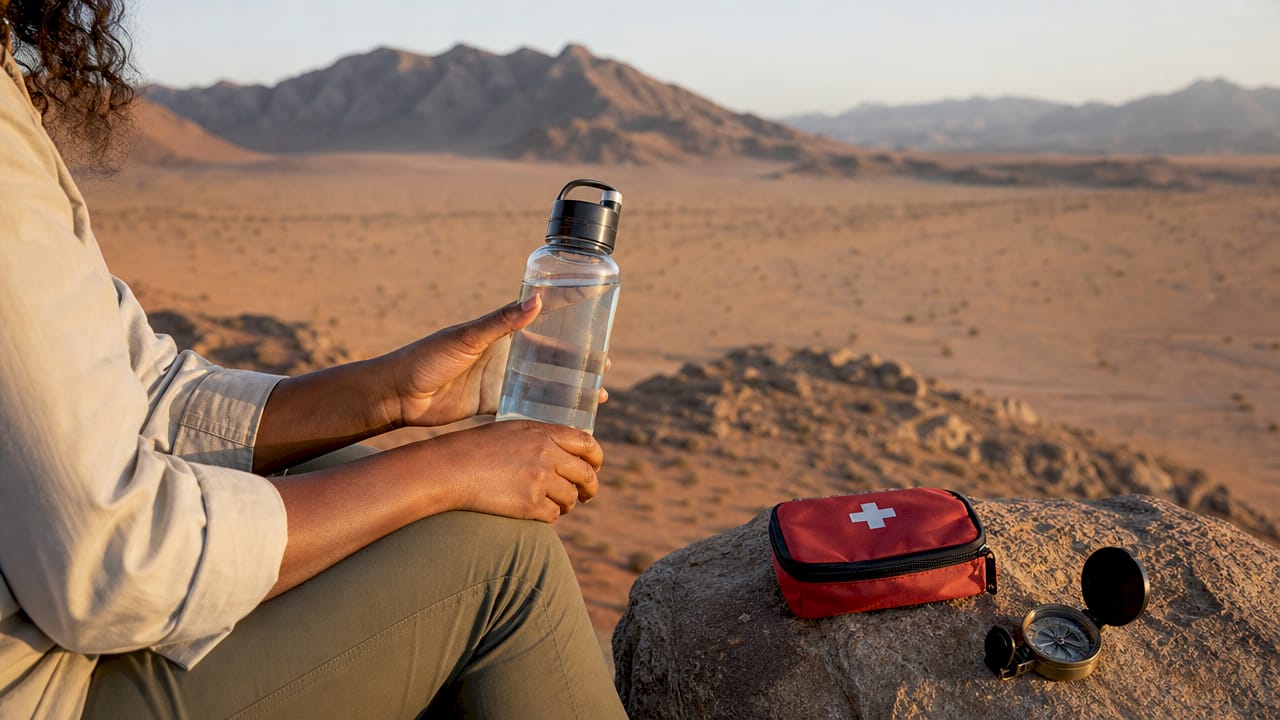
Water is the single most critical resource in any desert survival situation. The National Park Service recommends drinking at least 1 gallon (4 liters) of water per person per day in high desert environments. That number assumes you are resting in shade. If you are moving in direct sun, your actual need is higher.
Most people underestimate how fast dehydration sets in. At 95°F air temperature, your body can lose more than a liter of sweat per hour during moderate activity. Dehydration impairs judgment before you feel seriously thirsty, which is exactly when you need your thinking to be sharpest.
The rule that changes everything is this: ration your sweat, not your water. Resting in shade cuts your sweat rate dramatically. Drinking small, steady amounts keeps your core temperature stable. Strict water rationing while continuing to move causes your body to overheat, which accelerates organ stress and worsens your situation faster than thirst alone.
How to conserve water in the desert
Rest during peak heat hours and move only during cooler periods
Keep your mouth closed when walking to reduce moisture loss through breathing
Wear full-coverage, loose clothing to slow sweat evaporation from skin
Avoid alcohol, caffeine, and salty food, all of which increase fluid loss
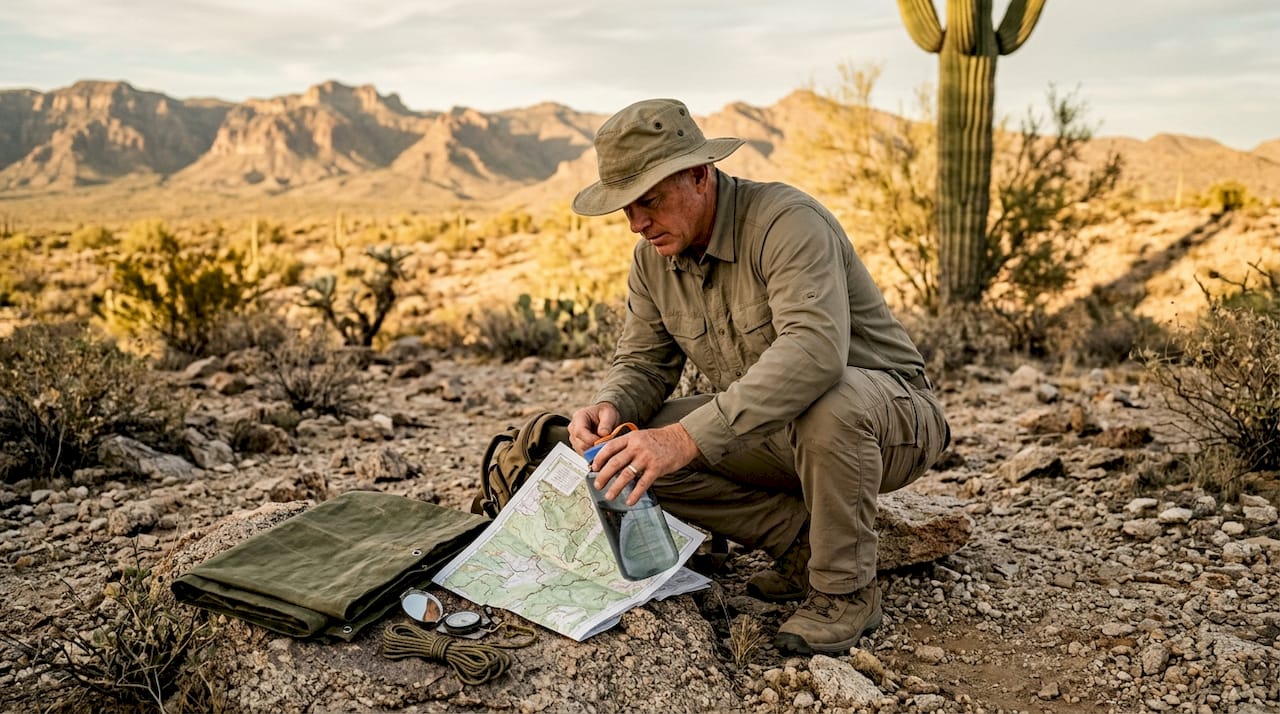
Use any available shade, including your vehicle, a tarp, or a rock overhang
Pro Tip: Traveling at night can save approximately 3 liters of water daily by dramatically cutting perspiration. If you must move, dawn and dusk are your best windows.
How does shelter protect you from heat illness?
Shade is not a comfort item in the desert. It is a survival tool. Direct solar radiation raises your body temperature faster than the air temperature alone suggests. A shaded rest spot can feel 20°F cooler than standing in open sun, and that difference directly reduces your sweat rate and water demand.
Ground temperature is a hidden danger most adventurers overlook. Desert ground can run 30°F hotter than the air above it. Lying or sitting directly on the desert floor accelerates heat gain through your body and speeds dehydration. Always elevate yourself on a pack, a branch, or any insulating layer you carry.
Clothing choices matter as much as shelter. Loose, light-colored, full-coverage clothing reflects solar radiation and slows moisture loss from your skin. Dark, tight, or synthetic fabrics trap heat and increase your core temperature. A wide-brimmed hat and a neck cover are not optional gear. They are part of your survival system.
Desert nights flip the danger entirely. Temperatures can drop below freezing after sunset, even in regions that hit 110°F during the day. Fire-building skills and a ferro rod belong in every desert kit. A ferro rod outperforms a lighter in high desert winds and works when wet.
Pro Tip: If you have a vehicle, use it as your primary shelter. The roof blocks direct sun, the interior holds shade, and the reflective surfaces can signal aircraft. Never abandon it unless it poses a direct safety risk.
Shelter checklist for desert adventurers
Natural shade: rock overhangs, canyon walls, dense shrub clusters
Improvised shade: tarp, emergency blanket, poncho, or vehicle
Elevated rest: sleeping pad, backpack, or any non-ground surface
Nighttime warmth: fire, insulating layers, emergency bivy sack
Head and neck protection: wide-brimmed hat, bandana, or buff
When should you move and when should you stay put?
Timing your movement is one of the most underrated essential desert survival techniques. Physical exertion during peak heat hours burns through your water reserves at a rate that no amount of rationing can offset. Avoid activity between 10 AM and 4 PM. That window is when solar radiation and air temperature combine to create the highest heat stress on your body.
The decision to stay or move depends on one key question: do rescuers know where you are? If you filed a trip plan with a friend, a ranger station, or a park service, staying put dramatically increases your odds of being found. Search and rescue teams work from last known locations. Moving away from your vehicle or campsite makes their job harder and yours more dangerous.
When to stay put
You have water for at least 24 hours
Rescuers know your planned route or location
Your vehicle or camp is visible and can serve as a signal platform
You are injured or showing signs of heat exhaustion
When to move
Your water supply is gone and no rescue is expected
You can see a known water source, road, or structure within a short distance
Staying in place poses a direct threat, such as flash flood risk
You have a clear, planned route and the energy to complete it
Pro Tip: Your vehicle is your best survival asset. It provides shade, shelter, and a signaling platform. Stay with it unless it is on fire or in a flood zone.
Desert wildlife adds another layer to movement timing. Scorpions, snakes, and spiders are nocturnal. Night travel reduces heat stress but increases wildlife encounters. Wear boots, watch where you step, and use a headlamp to scan the ground ahead.
What are the key navigation and signaling techniques?
Navigation in featureless desert terrain relies on sun tracking, shadow sticks, and star positioning. A shadow stick planted in the ground at midday casts a shadow pointing roughly west. Thirty minutes later, the shadow tip moves east. A line connecting those two points gives you an east-west axis. The North Star, Polaris, sits directly above true north and is visible on clear desert nights.
Signaling is what gets you rescued. Three repeated signals are the internationally recognized distress pattern. Three fires in a triangle, three blasts on a whistle, or three flashes with a mirror all communicate distress to search teams and aircraft. Space your signals clearly and repeat them at regular intervals.
Signaling method | Best use case |
Mirror or reflective surface | Daytime, clear sky, aircraft or distant observer |
Three fires in a triangle | Nighttime or low visibility, wide search area |
Bright clothing or tarp on ground | Aerial search, open flat terrain |
Whistle (three blasts) | Close-range search teams, canyon environments |
Large ground symbols (SOS, X) | Aerial search, sandy or flat terrain |
Share your trip plan before you leave. Tell someone your route, your expected return time, and the nearest trailhead. That single action is the most effective desert survival tip you can follow before you ever set foot in the desert.
Which desert survival myths actually get people killed?
The most dangerous myth is that cactus water is a safe emergency hydration source. Most desert cacti contain toxic liquids that cause vomiting and accelerate dehydration. Hollywood has sold this image for decades. Acting on it in a real survival situation makes your condition worse, not better.
The second deadly myth is that strict water rationing is smart survival. Holding back on water while continuing to move causes your core temperature to rise unchecked. The result is heat exhaustion, then heat stroke, then organ failure. The correct approach is to rest in shade, reduce sweat output, and drink steadily.
“Survival isn’t about endurance. It’s about stopping early to prevent heat exhaustion and preserve your water reserves.” — Deserts of the World
Walking without a plan is the third mistake that kills people. Wandering in random directions burns water, increases heat exposure, and moves you away from your last known location. If you do not have a clear destination and the water to reach it, staying put is the correct choice.
Myth: Cactus water hydrates you. Fact: Most cactus liquid is toxic and causes vomiting.
Myth: Ration water strictly to make it last. Fact: Ration sweat by resting. Drink steadily.
Myth: Walking toward the horizon finds help. Fact: Wandering without a plan worsens your situation.
Myth: Desert survival is about toughness. Fact: Mental discipline and calm decisions determine outcomes.
Key Takeaways
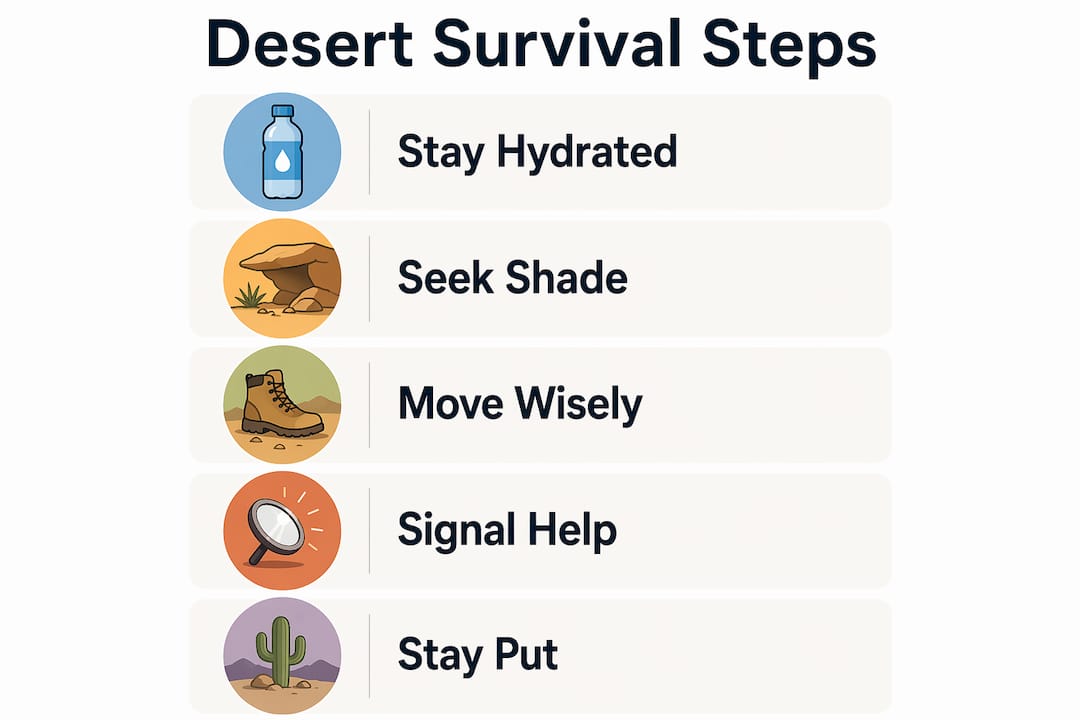
Desert survival depends on managing water, shade, movement timing, and signaling, not on physical toughness or improvised hydration sources.
Point | Details |
Water is non-negotiable | Drink at least 1 gallon (4 liters) per day; ration sweat by resting, not water by drinking less. |
Shade saves water | Ground runs 30°F hotter than air; stay elevated and seek shade to cut sweat rate. |
Timing movement matters | Avoid exertion from 10 AM to 4 PM; travel at dawn, dusk, or night to conserve water. |
Stay with your vehicle | Your vehicle provides shelter, shade, and a signaling platform; leave it only as a last resort. |
Signal with three repeats | Three fires, three whistle blasts, or three mirror flashes is the universal distress signal. |
What I’ve learned from taking desert survival seriously
Most people treat desert preparation as a checklist. Pack water, check. Bring sunscreen, check. What they miss is the mental side of it. The desert does not care how fit you are. It cares whether you make good decisions under stress, when you are thirsty, tired, and scared.
The biggest shift in my thinking came from understanding that survival is about stopping activity early, not pushing through. Every time you feel the urge to keep moving during peak heat, that urge is the enemy. Sitting in shade and drinking water feels passive. It is actually the most productive thing you can do.
I carry a multi-tool with a ferro rod, a signal mirror, and a water purification method on every desert trip. Not because I expect disaster, but because preparation changes how you think. When you know you have the tools, you stay calmer. Calm thinking is what keeps you alive long enough to be rescued.
The camping first aid essentials you pack matter too. Heat exhaustion and heat stroke require immediate response. Knowing the difference between the two, and having the supplies to act, is part of any serious desert kit.
My honest recommendation: do not wait for an emergency to learn these skills. Practice fire-starting, practice navigation, and practice staying calm when things go wrong. The desert rewards preparation and punishes improvisation.
— S
Thrillofit has the resources to keep your desert adventures safe
Planning a desert hike or backcountry trip takes more than good intentions. Thrillofit brings together gear guidance, survival techniques, and practical outdoor knowledge built for adventurers who want to go further without taking unnecessary risks.
From starting a fire without matches to building a complete emergency kit, Thrillofit covers the skills that matter most when conditions turn serious. Whether you are heading into the Sonoran Desert for the first time or planning a multi-day backcountry route, the right preparation starts before you leave the trailhead. Visit Thrillofit for gear picks, survival guides, and adventure tips written for people who take the outdoors seriously.
FAQ
How much water do you need per day in the desert?
The National Park Service recommends at least 1 gallon (4 liters) of water per person per day in high desert environments. Active movement in direct sun increases that requirement significantly.
Is it safe to drink water from a cactus?
Most desert cacti contain toxic liquids that cause vomiting and worsen dehydration. Drinking cactus water is dangerous and should be avoided in a survival situation.
Should you stay with your vehicle if stranded in the desert?
Yes. Your vehicle provides shade, shelter, and a signaling platform. Survival experts recommend staying with it unless it poses a direct safety risk, such as fire or flooding.
What is the best time to travel in the desert for survival?
Travel at dawn, dusk, or nighttime to reduce heat exposure and conserve water. Avoid physical exertion between 10 AM and 4 PM, when heat stress peaks.
What is the universal distress signal in the desert?
Three repeated signals, whether fires, whistle blasts, or mirror flashes, form the internationally recognized distress pattern. Space them clearly and repeat at regular intervals to attract rescuers.
Recommended
Comments