
How to Purify Water Outdoors: A Survivalist's Guide

TL;DR:
Outdoor water purification involves selecting clean sources, pre-filtering turbid water, and using boiling, filters, chemical disinfectants, or UV pens to eliminate pathogens. Combining methods and preventing cross-contamination ensures safe drinking water during outdoor activities; always treat water from upstream sources and store it properly. Relying on multiple techniques and proper storage reduces the risk of illness from waterborne pathogens in wilderness environments.
Outdoor water purification is the process of removing or inactivating bacteria, viruses, and parasites from natural water sources to make them safe to drink. Knowing how to purify water outdoors is a non-negotiable skill for any camper, hiker, or survivalist. Clear mountain streams can carry Giardia. Slow ponds can harbor Cryptosporidium. Even water that looks clean can make you seriously ill within hours. The most reliable approach combines source selection, pre-filtration, and a primary treatment method such as boiling, a portable filter paired with chemical disinfection, or a UV pen like SteriPen.
How to purify water outdoors: start with the right source
The source you choose determines how hard your purification work will be. Flowing water from springs and fast-moving streams carries fewer pathogens than stagnant ponds or slow-moving pools. Stagnant water concentrates sediment, algae, and biological waste, which means more work for your filter and more chemical disinfectant consumed.
Avoid collecting water near campsites, agricultural fields, or mine runoff. Fertilizer and heavy metal contamination from these areas can survive standard filtration. A good rule: collect water upstream from any human activity, and always check for dead animals or visible waste nearby before filling your bottle.
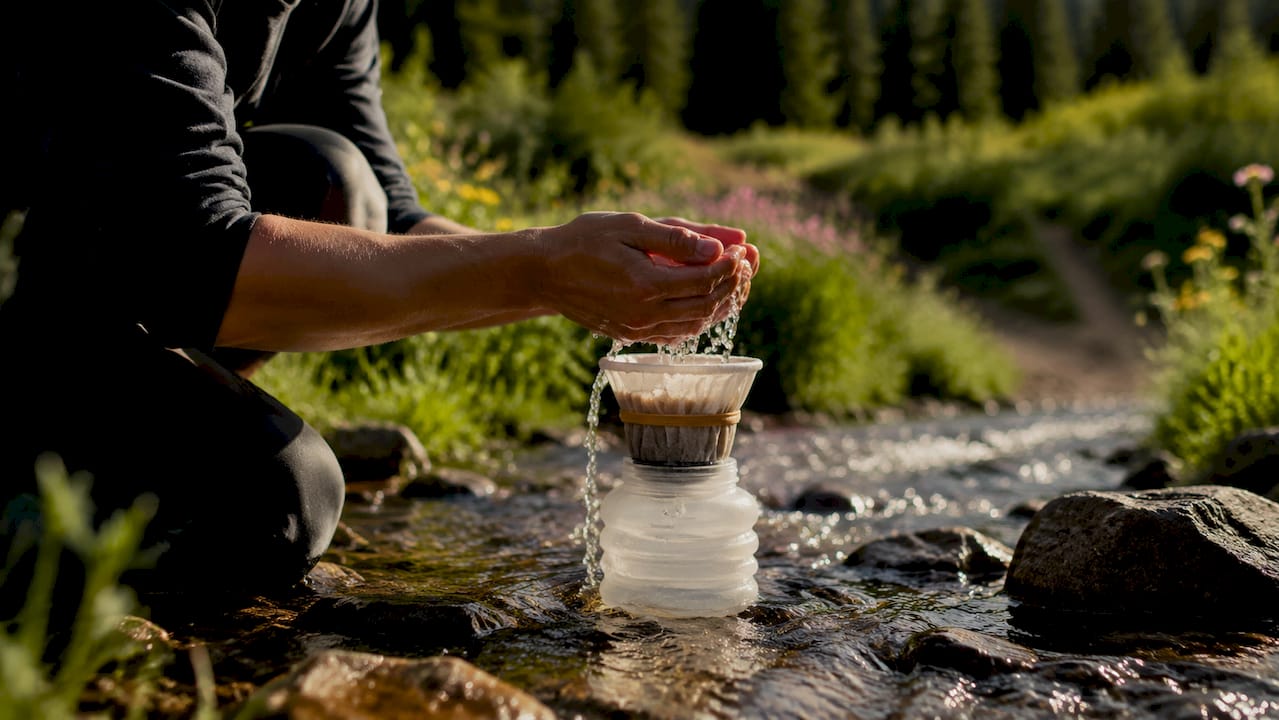
Before applying any treatment, reduce turbidity. Suspended sediment can cut a filter’s lifespan by 50%, block UV light, and consume chemical disinfectants. That means cloudy water actively works against every method you use. Pre-filter through a bandana, a coffee filter, or a dedicated pre-filter accessory before running water through your main system.
Key sources ranked by quality:
Fast-moving mountain springs (best choice)
Flowing streams away from human activity
Rainwater collected in a clean container
Slow rivers with visible current
Stagnant ponds or lakes (last resort, requires extra treatment)
Pro Tip: Carry a small squeeze bottle with a coffee filter rubber-banded over the opening as a dedicated pre-filter. It weighs almost nothing and extends the life of your main filter significantly.
What are the main outdoor water purification methods?
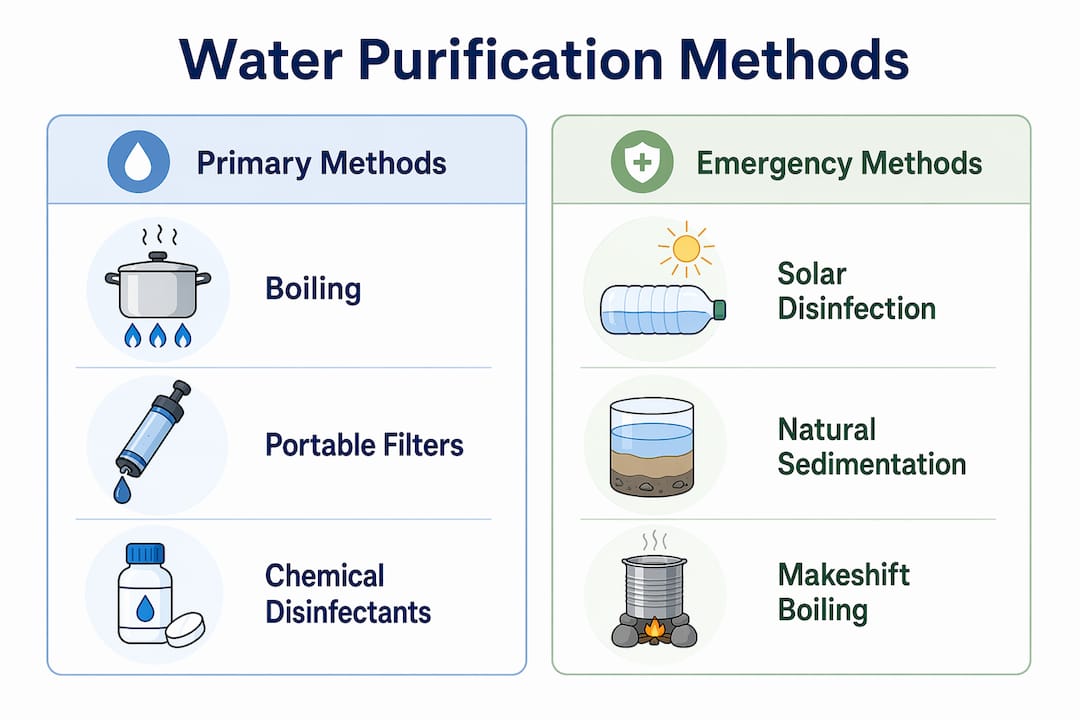
Each method targets different threats. No single technique covers every scenario, which is why experienced outdoors enthusiasts carry at least two options.
Boiling
Boiling is the most reliable method available anywhere with fire. Bringing water to a rolling boil for 1 minute kills all bacteria, viruses, and parasites. At elevations above 6,500 feet, water boils at a lower temperature, so extend boiling time to 3 minutes. Boiling costs nothing beyond fuel and works regardless of water clarity. The downside is time and fuel consumption, which matters on multi-day trips. Pair boiling with campfire cooking to maximize your fuel efficiency.
Portable filters
Hollow-fiber portable filters like those from Sawyer or LifeStraw remove bacteria and protozoa effectively. The critical limitation: standard portable filters do not remove viruses. In North American backcountry, viral contamination is rare, but in international destinations or post-flood environments, viral risk is real. Always follow filtration with chemical disinfection when viral protection is needed.
Filters also have a cold-weather vulnerability. Freezing water inside a filter creates micro-tears that allow pathogens to bypass filtration entirely. The damage is invisible to the eye. Keep your filter inside your sleeping bag on cold nights.
Chemical disinfectants
Chlorine dioxide tablets are the gold standard among chemical options. A 250ml bottle of chlorine dioxide can treat up to 625 liters of water. They add a 30-minute wait time but provide broad-spectrum protection against bacteria, viruses, and most protozoa. Iodine tablets work but are less effective against Cryptosporidium. Chemical disinfectants are a lightweight insurance policy when your primary filter fails or freezes.
UV light pens
UV pens like SteriPen treat small amounts of clear water quickly, typically within 90 seconds per liter. They are ideal for solo travelers with access to clear water. UV light is ineffective in turbid water because suspended particles shield pathogens from the light. For groups or murky conditions, a gravity filter system is more practical.
Method | Removes bacteria | Removes viruses | Works in turbid water | Weight |
Boiling | Yes | Yes | Yes | None (fuel only) |
Hollow-fiber filter | Yes | No | Reduced | Light |
Chlorine dioxide tablets | Yes | Yes | Reduced | Very light |
UV pen (SteriPen) | Yes | Yes | No | Light |
Distillation | Yes | Yes | Yes | Heavy setup |
Pro Tip: In cold climates, store chemical tablets and your UV pen battery in an inner pocket. Cold temperatures slow chemical reactions and drain batteries faster than you expect.
Step-by-step guide to treating water in the field
A consistent routine prevents mistakes. Follow these steps every time, regardless of how clean the water looks.
Choose your source. Select fast-moving water upstream from any human activity, farms, or trails.
Pre-filter turbid water. Pour water through a bandana, coffee filter, or cloth into a collection container. Let visibly cloudy water settle for 30 minutes before pre-filtering.
Apply your primary treatment. Boil for 1 minute (3 minutes above 6,500 feet), run through a portable filter, or use a UV pen on clear water.
Add chemical backup if needed. After filtering, add chlorine dioxide tablets and wait the full 30 minutes before drinking. Do not skip the contact time.
Store treated water safely. Use a dedicated clean container that has never held untreated water.
Prevent cross-contamination. Label or color-code your containers to separate dirty and clean water. Never let the threads of a clean bottle touch a dirty surface.
Common mistakes to avoid:
Skipping pre-filtration on cloudy water, which clogs filters and reduces chemical and UV effectiveness
Drinking from a filter that was left outside overnight in freezing temperatures
Using iodine tablets as the sole treatment against Cryptosporidium, which iodine does not reliably kill
Forgetting to treat the outside threads of your water bottle after filling from an untreated source
Assuming fast-moving water is automatically safe without treatment
Safe storage matters as much as treatment. A treated water bottle left open near a dirty water source can be recontaminated within minutes. Keep lids on, keep clean containers separate, and wash your hands before handling any treated water container. For a broader look at field hygiene, Thrillofit’s guide to camping first aid essentials covers contamination prevention in detail.
What are the best emergency purification methods for survival?
When gear is lost or broken, alternative methods can keep you alive. These techniques require more time and effort but work with minimal equipment.
Solar disinfection (SODIS) is one of the most accessible backup methods. Filling a clear PET plastic or glass bottle with water and leaving it in direct sunlight for 6 or more hours reduces bacterial contamination by 99.9%. The water must be clear, not turbid, and the bottle must be PET plastic or glass, not colored or opaque. SODIS does not work on cloudy days or in shaded environments.
Distillation is the only field method that removes salt, heavy metals, and chemicals in addition to pathogens. Boiling water and collecting the steam removes contaminants that filtration and chemical treatment cannot touch. This makes distillation the right choice in coastal survival scenarios where only ocean or brackish water is available. The setup requires a heat source, a collection vessel, and a way to condense steam, which makes it slow and fuel-intensive.
Other emergency techniques:
Transpiration bags: tie a clear plastic bag around leafy branches in sunlight to collect condensation
Dew collection: wipe dew from grass or leaves with an absorbent cloth and wring it into a container
Rock seep collection: look for water seeping from rock faces, which has been naturally filtered through stone
These methods produce small volumes and are not substitutes for proper purification gear. Use them as a last resort and treat any collected water with whatever chemical tablets or boiling capability you have left. Thrillofit’s survival resources cover additional emergency techniques for wilderness scenarios.
Emergency method | Removes pathogens | Removes chemicals/salt | Practical volume |
SODIS | Bacteria (99.9%) | No | 1–2 liters per day |
Distillation | Yes | Yes | Very low |
Transpiration bag | No (treat after) | No | Very low |
Dew collection | No (treat after) | No | Very low |
Key Takeaways
The most effective outdoor water purification combines source selection, pre-filtration to reduce turbidity, and a primary treatment method backed by chemical disinfection or boiling for complete pathogen coverage.
Point | Details |
Choose the right source | Fast-moving springs and streams carry fewer pathogens than stagnant ponds. |
Pre-filter before treating | Turbidity cuts filter lifespan and blocks UV and chemical treatments. |
Boiling covers everything | A rolling boil for 1 minute (3 minutes above 6,500 feet) kills all pathogens. |
Filters need chemical backup | Hollow-fiber filters do not remove viruses; add chlorine dioxide tablets in high-risk areas. |
Prevent cross-contamination | Use separate, labeled containers for treated and untreated water at all times. |
What I’ve learned from years of field purification
Most purification failures I’ve seen in the field come down to overconfidence in a single method. A hiker trusts their Sawyer Squeeze, skips the chemical backup, and ends up sick three days into a trip because the water source had viral contamination. Or someone leaves their filter in the vestibule of their tent on a cold night and drinks through a compromised filter the next morning without knowing it.
The combination approach is not paranoia. It is the standard that the CDC recommends for good reason. A filter handles the bulk of the work. Chemical tablets cover what the filter misses. Boiling covers everything when the other two fail. Carrying all three adds less than four ounces to your pack and removes virtually all risk.
Pre-filtration is the step most outdoors enthusiasts skip because it feels like extra work. It is not optional. Turbid water destroys filters faster than any other factor and makes chemical and UV treatments unreliable. A coffee filter or bandana takes ten seconds to use and extends your gear’s life across an entire season.
My personal rule on multi-day trips: treat every water source as if it is contaminated, regardless of how remote or pristine it looks. The most beautiful alpine lake can still carry Giardia from wildlife. The clearest spring can run through soil contaminated by upstream mining. Assume the worst, treat accordingly, and you will never spend a trip day sick in your tent.
— S
Thrillofit’s resources for safer outdoor adventures
Staying hydrated in the backcountry means more than carrying a filter. It means knowing how to use it, maintain it, and back it up when conditions change.
Thrillofit covers the full picture of outdoor safety, from water treatment to trail prep and wilderness first aid. Whether you are planning your first overnight trip or a multi-week expedition, the site’s guides on beginner hiking tips and campsite setup give you the practical knowledge to stay safe and prepared. Visit Thrillofit for gear recommendations, survival techniques, and field-tested advice built for outdoors enthusiasts who take preparation seriously.
FAQ
What is the safest way to purify water outdoors?
Boiling water at a rolling boil for 1 minute kills all bacteria, viruses, and parasites, making it the most reliable single method. Combining a portable filter with chlorine dioxide tablets provides the same coverage without requiring fire.
Do portable water filters remove viruses?
Standard hollow-fiber filters remove bacteria and protozoa but do not remove viruses. Adding a 30-minute chlorine dioxide treatment after filtering provides full viral protection in high-risk areas.
How long does SODIS solar disinfection take?
Filling a clear PET or glass bottle with water and placing it in direct sunlight for at least 6 hours reduces bacterial contamination by 99.9%. SODIS requires clear water and does not work effectively on cloudy days.
Can you drink river water after filtering it?
Filtered river water is safe from bacteria and protozoa but may still contain viruses in some regions. Follow filtration with chemical disinfection when traveling internationally or after flooding events.
How do you keep a water filter from freezing?
Store hollow-fiber filters inside your sleeping bag overnight in cold weather. Freezing creates invisible micro-tears in the filter membrane that allow pathogens to pass through undetected.
Recommended
Comments