

What Is a Go Bag? Your Emergency Prep Guide

TL;DR:
A go bag is a prepared emergency kit meant to support your household for at least 72 hours during a crisis. It contains essential supplies like food, water, first aid tools, important documents, and communication devices, all packed for quick access. Regular maintenance and household-specific customization ensure your kit remains functional and ready when needed.
A go bag is a pre-packed emergency kit designed to sustain you and your household for at least 72 hours during a crisis, whether that means a wildfire evacuation, a flood, or a sudden power grid failure. Both FEMA and the U.S. Department of State recommend every household maintain one. The formal term used by emergency management agencies is a “72-hour kit” or “evacuation kit,” though “go bag” is the widely recognized shorthand. This guide covers what to pack, how to customize it for your family, and how to keep it ready when you actually need it.
What is a go bag and why does it matter?
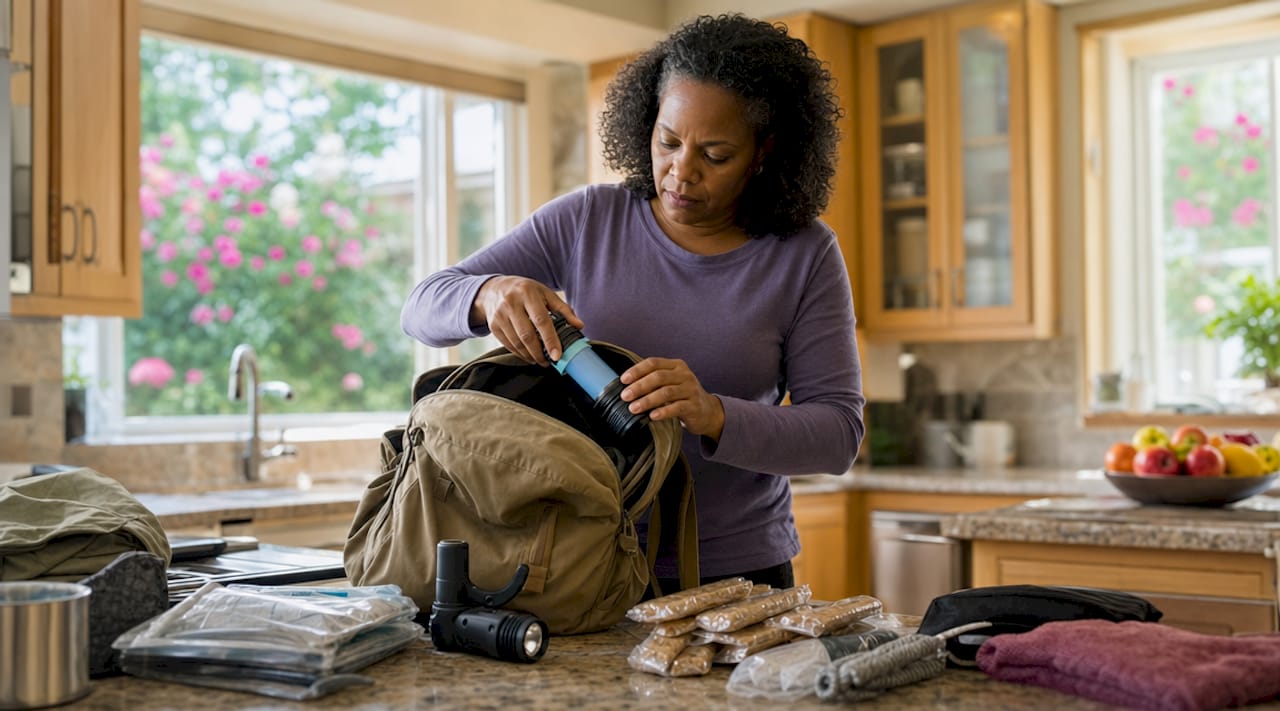
A go bag is a ready-to-grab bag stocked with survival supplies you can carry out the door in under two minutes. The core purpose is simple: when disaster strikes, you do not have time to search for your passport, count out medications, or find a flashlight. Everything you need is already packed and waiting.
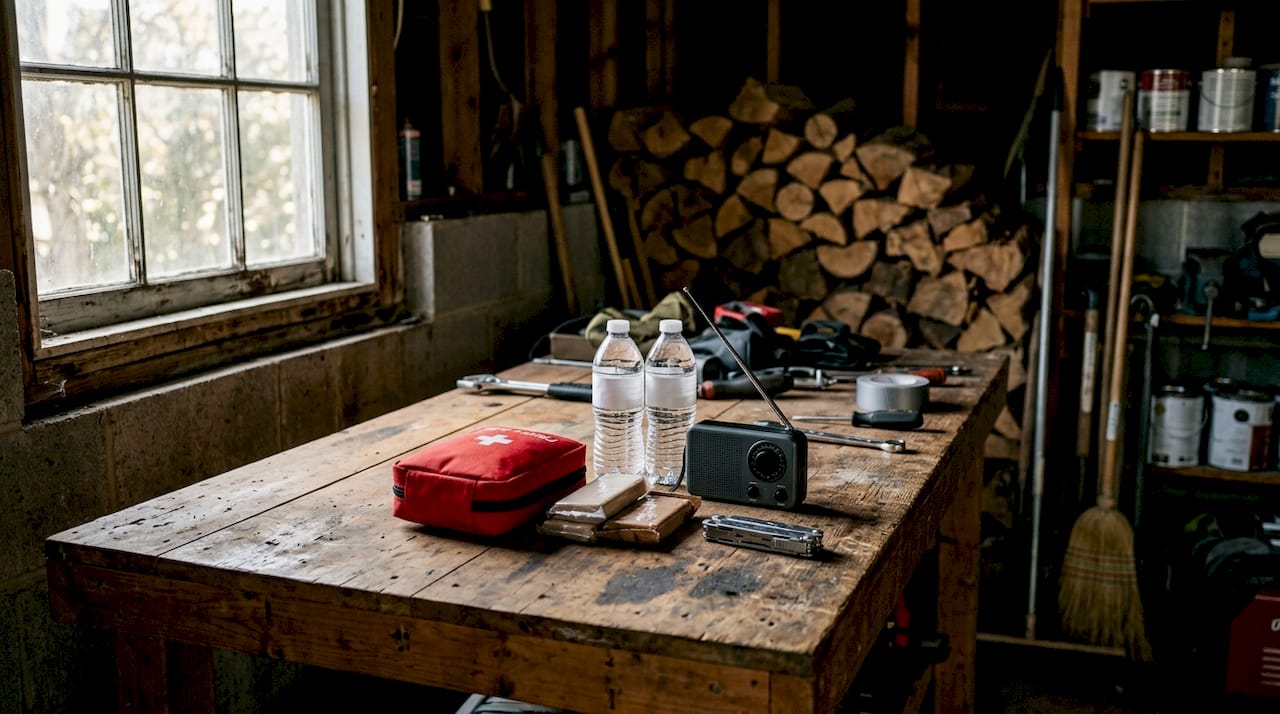
FEMA and the U.S. Department of State treat the 72-hour window as the critical gap between a disaster event and the arrival of organized emergency services. That is three full days where you are responsible for your own food, water, shelter, and communication. Most people underestimate how quickly normal infrastructure collapses after a major earthquake, hurricane, or wildfire.
The go bag concept is not just for survivalists or preppers. The Nevada Department of Public and Behavioral Health, ReadyWisconsin, and NPR have all published guidance on building one. This is mainstream emergency preparedness, backed by government agencies and public health organizations.
What essential items should be in a go bag?
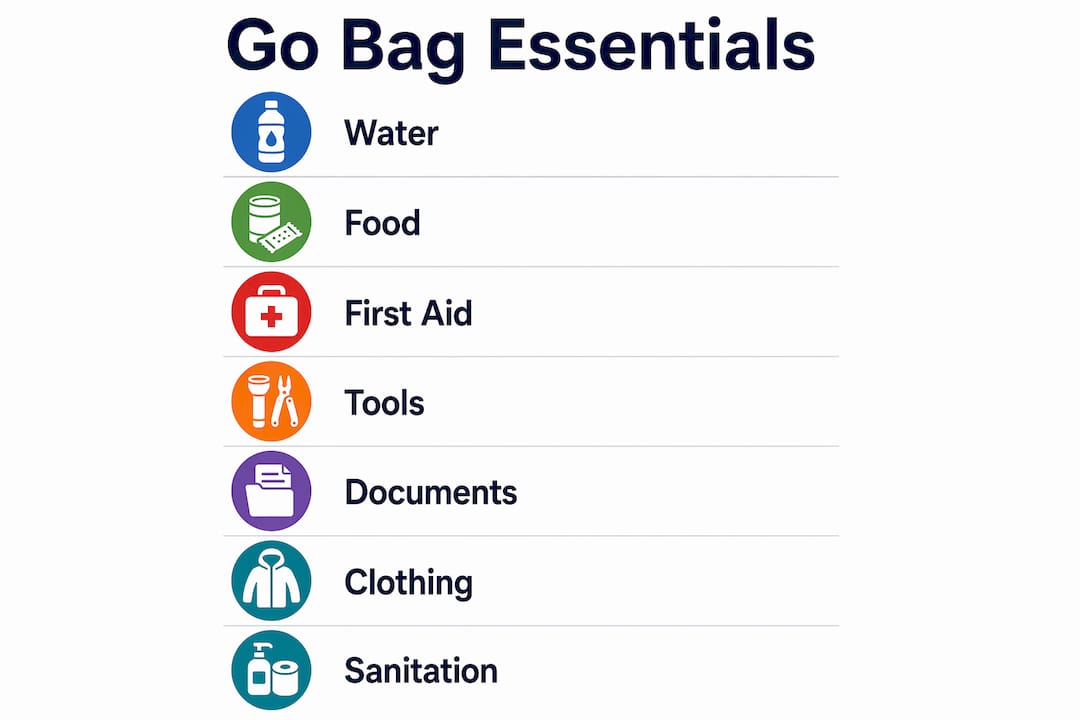
The foundation of any emergency go bag is food, water, first aid, documents, and communication tools. One gallon of water per person per day for three days is the standard recommendation. For a family of four, that is 12 gallons total, which is heavy. Water purification tablets or a LifeStraw filter can reduce that weight significantly while maintaining safety.
Food and water
Calorie-dense, non-perishable foods: think CLIF Bars, peanut butter packets, freeze-dried meals from Mountain House, and canned goods with a pull tab
Three-day supply per person, targeting at least 1,200–2,000 calories per day
Water: 1 gallon per person per day, or a compact filter like a Sawyer Squeeze as a backup
Manual can opener if you include canned food
First aid and medical supplies
A full camping first aid kit with bandages, antiseptic wipes, and gauze
Trauma supplies: tourniquet, hemostatic gauze, and a chest seal
A 7-day supply of any prescription medications
Copies of prescriptions and medical records in a waterproof bag
Documents and communication
Copies of your ID, passport, insurance cards, and bank account information in a waterproof container
Hand-crank or solar-powered radios are critical when cell networks go down. A Midland ER310 or Kaito KA500 covers NOAA weather alerts and AM/FM without needing batteries or a charge.
A portable battery pack like an Anker PowerCore for charging phones while power lasts
A written contact list, because phone memory is useless if your device dies
Survival gear and sanitation
Multi-tool such as a Leatherman Wave or Gerber Suspension
Headlamp with extra batteries, or a hand-crank model
Emergency mylar blankets, a lighter, and waterproof matches
Sanitary items: hand sanitizer, wet wipes, feminine hygiene products, and a small roll of toilet paper
Dust masks or N95 respirators, especially relevant for wildfire regions
Pro Tip: Choose foods with the highest calorie-to-ounce ratio. Peanut butter delivers roughly 167 calories per ounce. Freeze-dried meals from Mountain House weigh almost nothing and rehydrate with minimal water. Prioritize caloric density over variety to keep your bag light and functional.
How do you customize a go bag for your household?
A generic go bag checklist is a starting point, not a finish line. Each household member needs individualized items that a one-size-fits-all list will miss entirely. Children need comfort items, formula, or diapers. Seniors may need hearing aid batteries, mobility aids, or specific cardiac medications. Pets need food, water, a leash, vaccination records, and a carrier.
Tailoring for location-specific risks
Your geographic risk profile shapes what goes in your bag. If you live in California or Colorado wildfire country, include N95 masks, goggles, and a printed evacuation route map. If you are in a flood zone along the Gulf Coast or Mississippi River basin, add waterproof bags for electronics and a small inflatable life vest. Earthquake-prone areas like the Pacific Northwest call for heavy-duty work gloves and a whistle to signal rescuers under debris.
Choosing the right container
The bag itself matters as much as what is inside it. A 40–60 liter backpack like the 5.11 Tactical Rush 72 or a Osprey Farpoint 40 keeps your hands free during a foot evacuation. Wheeled duffels work well for car evacuations but become a liability on stairs or rough terrain. Whatever you choose, test the packed bag’s weight by wearing it for 20–30 minutes. If it is uncomfortable after 10 minutes, you will not make it far on foot.
Pro Tip: Build a separate, smaller “personal pouch” for each family member that clips inside the main bag. Each pouch holds that person’s medications, documents, and comfort items. If the group gets separated, each person has their critical supplies.
How often should you update your go bag?
Go bags expire. Food, water, medications, and batteries all have shelf lives, and an outdated kit can fail you at the worst possible moment. Inspect and refresh your bag every 6 months at minimum. Many preparedness experts tie this to daylight saving time changes in March and November as a built-in reminder.
Here is a practical maintenance schedule to follow:
Check food expiration dates. Rotate out anything expiring within 3 months and replace it immediately.
Replace stored water. Commercially sealed water has a 2-year shelf life, but water you stored yourself in containers should be replaced every 6 months.
Test batteries and electronics. Power up your radio, flashlight, and battery pack. Replace any batteries that have lost charge.
Review medications. Check expiration dates and update prescriptions. Confirm your 7-day supply is still accurate for current dosages.
Update documents. Replace expired IDs, update emergency contact lists, and add any new insurance or medical information.
Reassess household needs. A baby born since your last update changes your kit significantly. So does a new prescription, a new pet, or a move to a different risk zone.
“Building a go bag gradually from household items and small purchases reduces stress and expense while keeping the kit functional.” — NPR Emergency Preparedness
You do not need to rebuild your kit from scratch every six months. Incremental restocking, replacing one or two items per month, keeps costs manageable and the task from feeling overwhelming.
Where should you store your go bag?
Location determines whether your bag is actually useful. Store your go bag near exits, under beds, in vehicles, or at your workplace. The goal is to grab it without thinking, even in the dark, even in a panic.
Storage Location | Benefits | Drawbacks |
Near front or back door | Fastest grab-and-go access | Visible to guests; may be moved |
Under the bed | Out of the way; easy to reach at night | Requires crawling; can collect dust |
In your vehicle | Always with you during commutes | Heat and cold can degrade food and batteries |
At your workplace | Covers you during workday emergencies | Harder to update and maintain regularly |
In a hall closet | Protected from elements; central location | Can get buried under other items |
The vehicle option is worth serious consideration if you commute. A smaller secondary kit in your car, covering 24 hours rather than 72, means you are never caught completely unprepared away from home. Explore survival gear options to find compact items that fit a vehicle kit without taking up your entire trunk.
Pro Tip: Label your go bag clearly with a bright tag or colored tape so every household member can identify it instantly. Keep a laminated card on the outside listing the bag’s last update date and a brief contents summary.
The honest truth about go bags most people skip
Most people who build a go bag make the same two mistakes. They overpack it until it weighs 50 pounds and becomes impossible to carry, or they build it once and forget about it for three years until the granola bars turn to dust and the batteries corrode.
I have seen both scenarios play out. The overpacked bag sits by the door looking impressive until someone actually tries to lift it and realizes they cannot run with it. The neglected bag gets opened during a real emergency and half the contents are expired or broken. Neither version helps you when a wildfire is 10 miles out and moving fast.
The fix is simpler than most people think. Start with a bag you can actually carry. Pack the non-negotiables first: water, food, first aid, documents, and a radio. Then add personal items for each household member. Test the weight. If you cannot wear it comfortably for 20 minutes, pull something out. A lighter bag you can actually move with beats a perfect bag you leave behind.
Maintenance is the part nobody talks about but everyone needs to hear. Set a calendar reminder every six months. Make it a 30-minute household task, not a weekend project. The families who stay prepared are the ones who treat it like an oil change, routine, scheduled, and non-negotiable.
The hiking gear principles that outdoor enthusiasts already know apply directly here: pack light, pack smart, and know your kit before you need it.
— RESOURCES
Build your go bag with Thrillofit
Thrillofit covers the full spectrum of outdoor survival and emergency preparedness, from first aid essentials to gear reviews built for real conditions. If you are putting together your first emergency kit or upgrading an existing one, the right bag makes a real difference.
A durable, well-designed pack like this insulated shoulder backpack handles both food storage and gear organization in one compact unit. Thrillofit’s survival content library covers everything from trauma first aid to wilderness navigation, giving you the knowledge to back up whatever you pack. Browse the full site at Thrillofit to find guides, gear picks, and practical prep strategies built for people who take readiness seriously.
Key takeaways
A go bag is only useful if it is packed correctly, customized for your household, and maintained on a regular schedule.
Point | Details |
Core definition | A go bag sustains your household for 72 hours with food, water, first aid, and communication tools. |
Packing priorities | Include calorie-dense food, 1 gallon of water per person per day, trauma supplies, and a hand-crank radio. |
Household customization | Build individual pouches for children, seniors, and pets with their specific medications and comfort items. |
Maintenance schedule | Inspect and refresh food, water, batteries, and documents every 6 months without exception. |
Storage placement | Keep your bag near an exit or under a bed so you can grab it in under two minutes during an evacuation. |
FAQ
What is a go bag used for?
A go bag is used to sustain you and your household for at least 72 hours during an emergency evacuation or disaster. It contains food, water, first aid supplies, documents, and communication tools so you can leave quickly without searching for essentials.
How heavy should a go bag be?
Your go bag should be light enough to carry comfortably for 20–30 minutes on foot. Overpacking is the most common mistake, and a bag you cannot carry defeats its entire purpose.
How do i start building an emergency go bag on a budget?
Build your kit gradually by pulling supplies you already own from your home and making small purchases over time. NPR recommends this incremental approach as the most budget-friendly and least stressful method for assembling a functional kit.
What documents should go in an evacuation bag?
Include copies of your ID, passport, insurance cards, bank account information, medical records, and a written emergency contact list. Store all documents in a waterproof container or sealed plastic bag inside your kit.
How often should i update my go bag?
Update your go bag every 6 months. Check food and water expiration dates, test batteries and electronics, refresh medications, and update any personal documents or contact information that has changed.
Recommended
Comments