

Wilderness Self-Rescue: What It Is and How to Do It

TL;DR:
Self-rescue in the wilderness involves solving emergencies using only personal skills and resources. It emphasizes practicing essential techniques and making calm, informed decisions before moving toward safety.
Self-rescue in the wilderness is defined as resolving an emergency using only your own skills, knowledge, and resources to reach safety or stabilize your condition without outside help. The industry term used by Search and Rescue (SAR) professionals is “self-rescue,” and it applies any time you act independently to exit a dangerous situation in a remote environment. SAR protocols prioritize staying put in 90% of cases, recommending self-rescue only when you are confident in your path to safety or in immediate danger. Understanding what is self-rescue wilderness means grasping both the practical techniques and the critical judgment behind them.
What are the fundamental wilderness survival skills for self-rescue?
The Rule of Threes is the foundation of all wilderness survival skills: you can survive roughly three minutes without air, three hours without shelter in harsh weather, three days without water, and three weeks without food. That order tells you exactly what to prioritize when an emergency hits. Shelter comes first, not food, not water.
Shelter building
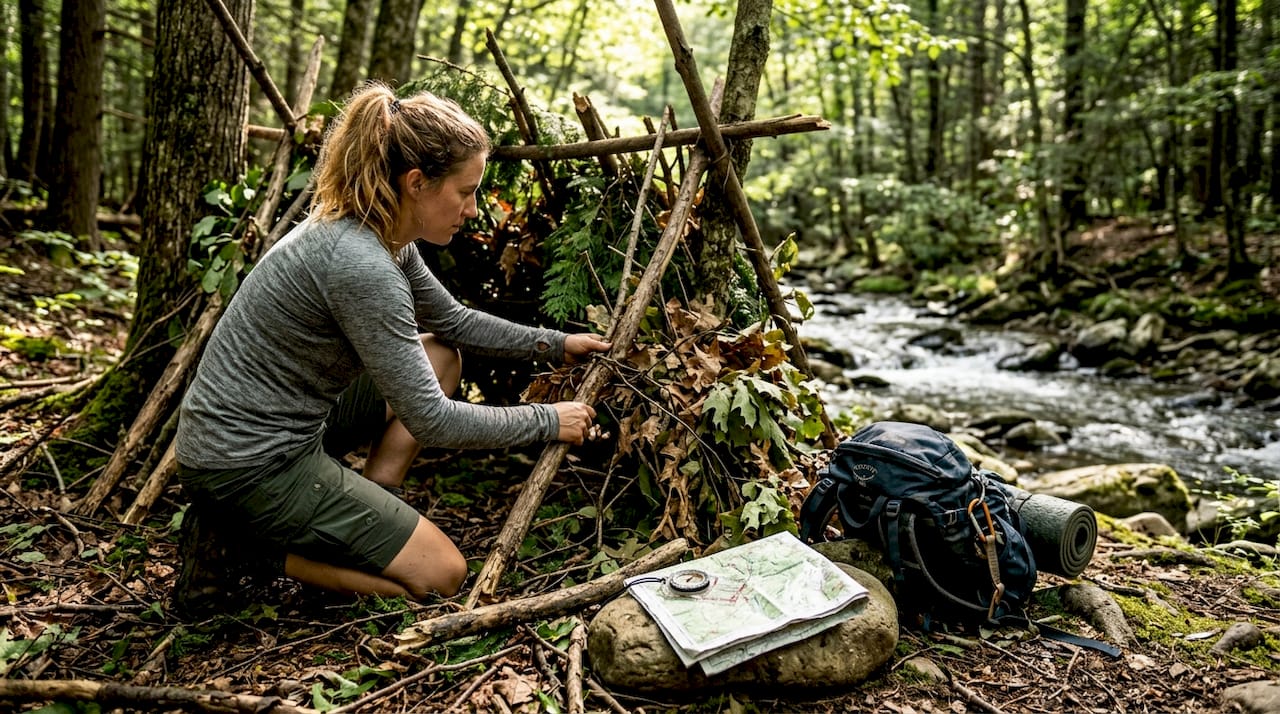
A well-built debris hut can maintain a 50°F temperature differential compared to outside air. That gap is the difference between hypothermia and survival on a cold night. Pile dry leaves, pine needles, and bark at least two feet thick over a simple frame of branches. The body heat you trap inside does the rest. Thrillofit covers campsite shelter basics in depth for anyone building this skill from scratch.
Fire starting
Fire provides warmth, signals rescuers, purifies water, and lifts morale. Practiced fire-starting methods show 90% success after three or more repetitions in controlled settings. That statistic matters because stress degrades fine motor skills. If you have only practiced once, your hands may fail you when it counts. Learn the bow drill, flint and steel, and friction methods so at least one works for you reliably. Thrillofit’s guide on starting a fire without matches walks through each method step by step.
Water procurement
Dehydration impairs judgment within hours, which is why water procurement ranks just below shelter in urgency. Collect rainwater, find moving streams, and always purify before drinking using boiling, iodine tablets, or a portable filter. Drinking untreated water risks giardia and other pathogens that will worsen your condition fast.
Navigation without electronics
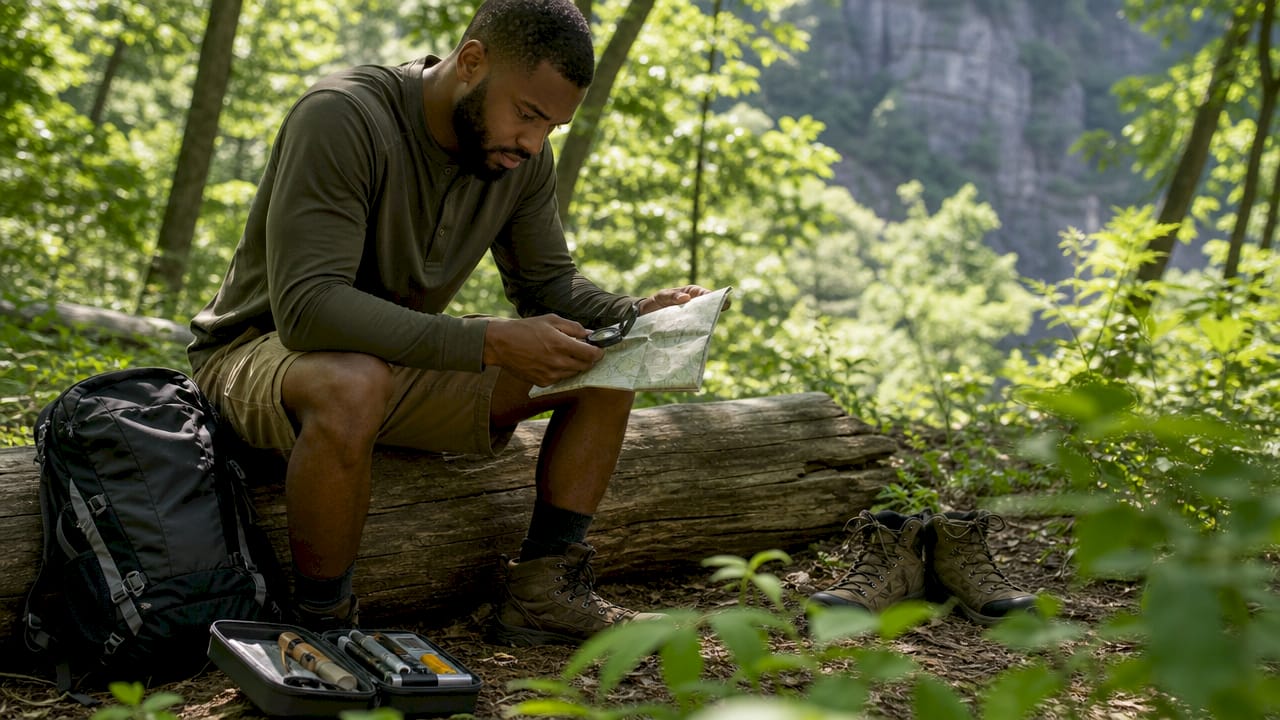
A dead phone is not a plan. Learn to read a topographic map, use a baseplate compass, and identify terrain features like ridgelines and drainages. When electronics fail, these skills become your only way to move with purpose rather than wander.
Pro Tip: Practice each skill in your backyard or a local park before you need it in the field. Muscle memory built in calm conditions transfers directly to high-stress emergencies.
How do you adopt the right mindset for wilderness emergencies?
Self-rescue is a proactive mindset, not a reckless impulse to move. It means planning and training as if outside help is unlikely, so you are capable of acting independently when it matters. The mindset shift is subtle but critical: you stop waiting to be saved and start solving the problem yourself.
The STOP protocol
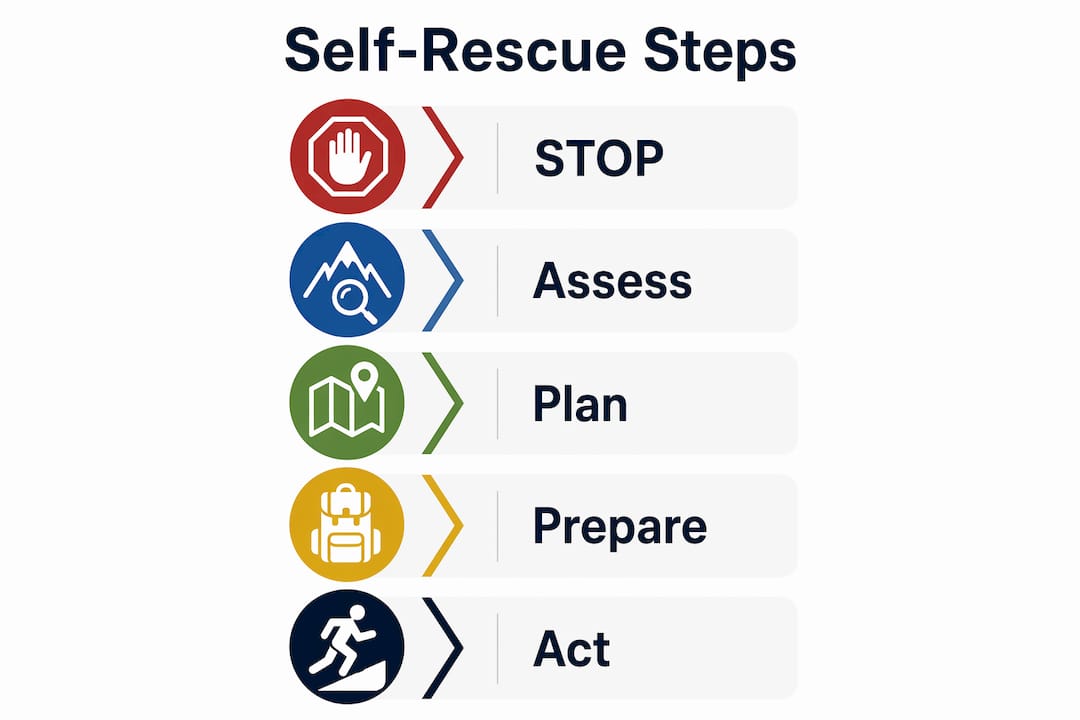
STOP stands for Stop, Think, Observe, Plan. When you realize you are lost or injured, the instinct is to move fast. That instinct kills people. Sitting down and running through STOP forces your brain out of panic mode and into problem-solving mode. Calm, methodical thinking combined with practiced skills consistently produces better outcomes than frantic action.
The stay-or-go decision
The decision to stay or go depends on four factors:
Skill level: Can you navigate to a known landmark without getting more lost?
Physical condition: Are you injured, exhausted, or dehydrated?
Terrain and weather: Is travel safe, or will darkness or a storm arrive soon?
Supplies: Do you have enough water and calories to sustain movement?
If the answer to any of these is uncertain, staying put is almost always the safer call. SAR teams search from the last known point. Moving unpredictably makes their job harder and your situation worse.
Stabilize before you move
Stabilizing metabolic priorities precedes movement. Drink water, eat something, treat any wounds, and build a fire before you take a single step toward self-rescue travel. Attempting to walk out while dehydrated or hypothermic compounds the emergency rather than solving it.
Pro Tip: File a detailed trip plan with a trusted contact before every backcountry trip. Include your route, campsites, and expected return time. That information dramatically improves SAR response if you do need outside help.
What are practical self-rescue techniques for the backcountry?
Effective self-rescue techniques in the wilderness treat movement as a navigation problem, not a random walk toward civilization. Every step you take should be deliberate, documented, and reversible if conditions change.
Mark your trail
Leave clear notes, cairns, and broken branches as you move. Write your name, the date, the time, and your intended direction on paper and attach it to a visible spot at your last camp. SAR teams use these markers to track your movement and narrow their search area. Without them, you are invisible.
Travel rules that keep you alive
Move only during daylight hours. Darkness multiplies the risk of falls, wrong turns, and exposure.
Head toward known landmarks: a road, a river, a ridgeline you can follow downhill to lower terrain.
Stop and reassess every hour. If progress is slow or supplies are dropping fast, switch back to staying put.
Signal continuously. Use a whistle (three blasts is the universal distress signal), a signal mirror, or a bright-colored tarp spread in an open area.
Emergency shelter types
Shelter type | Best conditions | Build time |
Debris hut | Cold, dry forest | 1–2 hours |
Lean-to | Mild weather, wind protection needed | 30–45 minutes |
Snow trench | Winter, above treeline | 20–30 minutes |
Tarp shelter | Any, with gear available | 10–15 minutes |
Each shelter type solves a specific problem. Matching the shelter to your conditions saves energy and time, both of which are finite resources in an emergency.
Signaling for rescue
SAR effectiveness improves significantly when survivors signal actively. Three of anything is a universal distress signal: three whistle blasts, three fires in a triangle, three rocks arranged in a line. A signal mirror can reflect sunlight to aircraft miles away. Bright colors visible from above, like an orange rain jacket spread flat, increase your chances of aerial detection.
How does self-rescue differ in technical wilderness activities?
Technical wilderness activities like rock climbing, mountaineering, and canyoneering require a separate layer of self-rescue skills beyond basic backcountry survival. Wilderness is defined as 60 or more minutes from definitive medical care, which means a climbing accident on a remote wall is a true self-rescue scenario with no margin for error.
Climbing-specific techniques
The core technical self-rescue skills for climbers include:
Escaping the belay: Transferring the load from your belay device to an anchor so you can move freely to assist an injured partner.
Hauling systems: Using a Z-pulley or C-pulley system to lift an incapacitated partner up a pitch.
Rope ascent with Prusik hitches: Rope ascent averages 3–4 feet per cycle using Prusik knots, which grip the rope under load and release when unweighted.
Improvised harnesses: A bowline knot can create a chest harness in an emergency, but improvised harnesses are not substitutes for commercial ones and require solid knot proficiency to be safe.
Wilderness First Aid integration
Wilderness First Aid (WFA) training teaches you to assess and manage injuries when evacuation is hours or days away. Knowing how to splint a fracture, treat shock, or manage a head injury changes the outcome of a technical self-rescue. A well-stocked camping first aid kit is the physical complement to that training.
Pro Tip: Take a Wilderness First Aid course before any multi-day technical climb. The skills transfer directly to self-rescue scenarios and give you a clear framework for decision-making under pressure.
Key Takeaways
Self-rescue in the wilderness requires a combination of practiced physical skills, honest self-assessment, and calm decision-making before and during any emergency.
Point | Details |
Definition is clear | Self-rescue means resolving emergencies with your own skills and resources, not waiting for outside help. |
Survival priorities follow the Rule of Threes | Address shelter, water, and fire before attempting any movement toward safety. |
Stay-or-go requires honest assessment | Evaluate skill level, physical condition, terrain, and supplies before deciding to move. |
Mark your trail always | Leave written notes, cairns, and direction markers so SAR teams can track your movement. |
Technical activities need extra skills | Climbing self-rescue requires Prusik hitches, hauling systems, and Wilderness First Aid training. |
Why I think most people misunderstand self-rescue
Most outdoor enthusiasts treat self-rescue as a last resort, something you do when everything else has failed. That framing is backwards. Self-rescue is a preparation mindset you build before you ever leave the trailhead. The skills only work if you have practiced them repeatedly in low-stakes settings.
The hardest lesson I have seen people learn is that confidence and competence are not the same thing. Plenty of experienced hikers have wandered for days because they were confident they could navigate without a map. Honest self-assessment, including knowing what you cannot do, is the skill that saves lives more than any knot or fire technique.
The other thing most guides skip is the emotional side. Panic is not a character flaw. It is a physiological response to threat. The STOP protocol exists precisely because your brain needs a structured interrupt to override the fight-or-flight response. Practice STOP at home, in your car, anywhere. Make it automatic so it fires when you need it most.
Self-rescue training is not about becoming a survival expert. It is about closing the gap between where you are and where help can reach you, with enough skill and calm to make good decisions along the way.
— S
Build your wilderness skills with Thrillofit
Thrillofit is a resource built for outdoor enthusiasts who want practical, field-tested knowledge on survival, safety, and adventure.

Whether you are refining your fire-starting technique, learning to read terrain, or preparing for your first backcountry trip, Thrillofit covers the skills that matter. The survival skills library covers everything from navigation fundamentals to emergency shelter construction. If you are newer to the backcountry, the beginner hiking guide is a strong starting point for building the foundation that makes self-rescue possible. Preparation is not optional in the wilderness. It is the plan.
FAQ
What is self-rescue in a wilderness context?
Self-rescue is the process of resolving a wilderness emergency using only your own skills and resources to reach safety or stabilize your condition. SAR professionals recommend it when you are confident in your path to safety or in immediate danger.
When should you attempt self-rescue versus staying put?
Stay put when you are injured, disoriented, or low on supplies, since SAR teams search from your last known location. Attempt self-rescue only when you have the navigation skills, physical condition, and supplies to move safely toward a known landmark.
What is the STOP protocol in wilderness emergencies?
STOP stands for Stop, Think, Observe, Plan. It is a four-step mental reset that interrupts panic and forces systematic assessment before any action is taken.
What knots are used in technical wilderness self-rescue?
The Prusik hitch, bowline, and figure-8 are the core knots for technical self-rescue. Prusik hitches allow rope ascent at roughly 3–4 feet per cycle, while bowlines can improvise emergency harnesses when commercial gear is unavailable.
How do you signal for rescue during self-rescue?
Use three of any signal: three whistle blasts, three fires in a triangle, or three rocks in a line. A signal mirror and a brightly colored tarp spread in an open clearing also increase visibility to aerial search teams.
Recommended
Comments