
Hikers: Spot Altitude Sickness Symptoms Before HAPE or HACE, Field Checklist
- Wesley Coldwell
- 12 minutes ago
- 8 min read

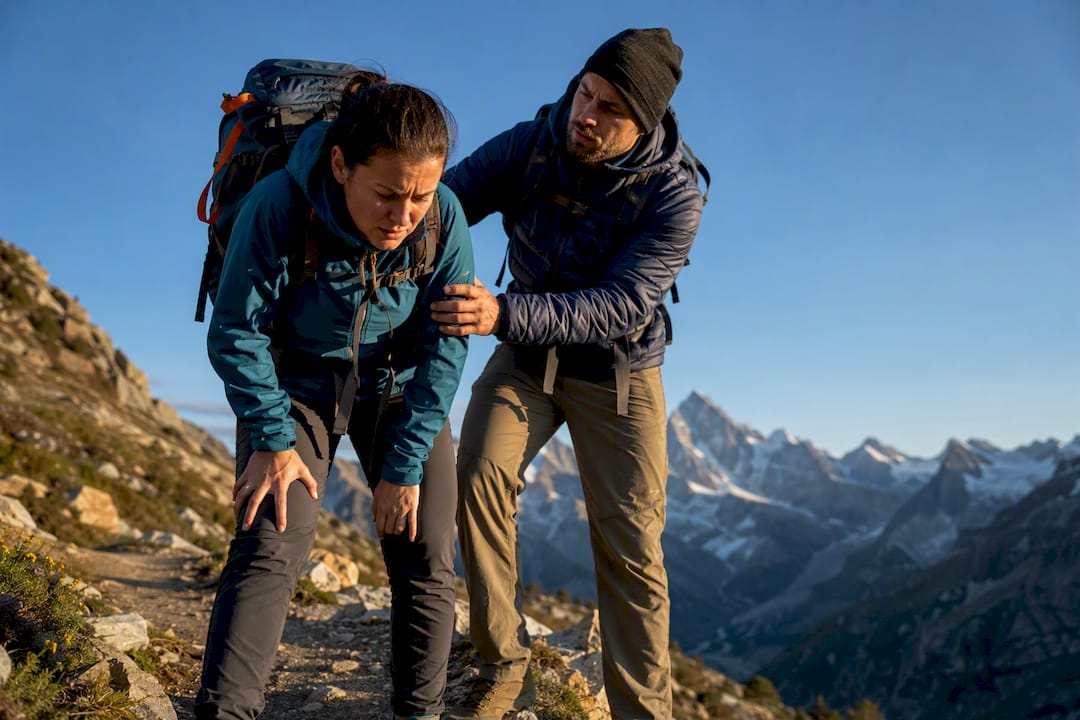
Altitude sickness usually starts with a headache, then adds nausea, dizziness, and fatigue within a day or so of climbing high. The single most important response is simple: stop ascending. If symptoms worsen instead of easing with rest, descend. Two rarer but far more dangerous forms, HAPE and HACE, can follow if warning signs get ignored, highlighting the importance of knowing the red-flag symptoms before you pack your bags.
TL;DR:
Rapid ascent, especially without rest days or gradual elevation gain, significantly increases the risk of severe altitude illnesses like HAPE and HACE.
Symptoms worsening after initial relief, such as severe shortness of breath or confusion, require immediate descent and medical evaluation.
Using supplemental oxygen or medications like acetazolamide can aid but do not substitute for timely descent when symptoms escalate.
Building in rest days and following the “climb high, sleep low” rule greatly reduces the likelihood of altitude sickness.
Recognizing early signs and planning descent before symptoms become severe is crucial to prevent fatal outcomes.
Table of Contents
What Are the Common Altitude Sickness Symptoms to Watch For?
Headache is the giveaway. It’s the cardinal sign of acute mountain sickness, and if it’s throbbing, worsens with exertion, or doesn’t respond to ibuprofen or acetaminophen, treat it as more than a routine travel headache. Everything else tends to cluster around it.
Headache, often the first symptom noticed
Nausea, vomiting, or a sudden loss of appetite
Dizziness or lightheadedness, especially standing up fast
Fatigue and general malaise that feels disproportionate to your exertion
Trouble sleeping, including restless or shallow breathing at night
Less common: mild swelling in the hands or face, occasional nosebleeds, or subtle visual changes
Symptoms typically show up within 8 to 36 hours of arriving at elevations above 8,000 feet, often on the first night. That timing matters. A headache that hits you the moment you step off the plane is probably something else; one that builds over your first night at a mountain lodge fits the classic pattern.
When Do Mild Symptoms Turn Into HAPE or HACE?
Acute mountain sickness (AMS) is uncomfortable but usually manageable. High Altitude Pulmonary Edema (HAPE) and High Altitude Cerebral Edema (HACE) are different animals: fluid building in the lungs or brain, and both can turn fatal within 24 hours if left untreated. HAPE tends to appear on the second or third night at altitude; HACE can follow severe AMS that was ignored or downplayed.
Watch for these HAPE red flags:
Shortness of breath even at rest, not just on exertion
A cough that produces pink, frothy sputum
Tightness in the chest
Bluish lips or fingertips (cyanosis)
And these HACE red flags:
Ataxia, meaning a staggering, drunk-like gait
Confusion or sudden personality changes
Hallucinations or slurred speech
Declining consciousness or extreme drowsiness
The danger isn’t the symptom itself. It’s the delay. Someone who blames the cough on dry air or writes off the stumbling as tiredness can lose the window where descent still works. Any of these signs means immediate descent and medical evaluation, no exceptions.
What Should You Do the Moment Symptoms Appear?
Stop climbing. Don’t gain any more elevation, even if the group plan says otherwise.
Rest and reassess after a few hours. Mild AMS often improves with rest, fluids, and time; if it doesn’t, that’s your signal.
Descend if things worsen or don’t improve. A drop of at least 300 meters, roughly 1,000 feet, is the standard benchmark for symptom relief, and descent becomes mandatory once symptoms progress rather than plateau.
Use supplemental oxygen if it’s genuinely available. Handheld compressed oxygen cans are not sufficient for treating serious altitude illness due to their limited oxygen content, offering only brief relief.
Consider medication for symptom relief, not as a substitute for descent. This is a field decision, not a way to justify pushing higher.
Communicate and prepare to evacuate. Tell your group or guide what’s happening, check on each other regularly, and contact local emergency services or arrange transport down before things escalate.
Pro Tip: Never let one person hike down alone to “get help.” Altered judgment and ataxia are HACE symptoms, and a solo descent from someone already impaired is how bad situations turn into search-and-rescue calls.
How Do You Prevent Altitude Sickness Before It Starts?
Prevention beats treatment every time, and the evidence backs one strategy above all others: go up slowly. The Wilderness Medical Society’s guidance recommends limiting sleeping-elevation gains to roughly 500 meters per day above 3,000 meters, with a rest day built in every three to four days.
Follow “climb high, sleep low.” Where you sleep matters more than where you hike during the day, since your body does its acclimatizing overnight.
Build slack into your itinerary. An unplanned rest day is far cheaper than an evacuation, and Thrillofit’s high-altitude camping guide covers how to plan that buffer in.
Moderate your exertion during the first 48 hours, hydrate consistently, and skip alcohol and sedatives, both of which suppress breathing exactly when you need it working harder.
Prioritize sleep, even though periodic breathing at altitude is common and can make it feel elusive.
Talk to a clinician about acetazolamide before a high-elevation trip, especially if you’ve had AMS before or are ascending faster than recommended. It’s taken to speed acclimatization, not as an emergency fix once you’re already sick.
Solid pre-trip planning, including gear and pacing, pays off long before you reach elevation. Thrillofit’s beginner hiking guide is a reasonable starting point if you’re new to multi-day treks.
How Is Altitude Sickness Diagnosed and Monitored?
There’s no blood test for AMS. Diagnosis is clinical, built on the Lake Louise criteria: headache after ascent, plus at least one other symptom like nausea, dizziness, or fatigue. That scoring helps categorize mild, moderate, or severe illness and guides whether you rest, medicate, or descend.
A pulse oximeter can help you track trends, but there’s no single SpO2 number that applies at every elevation, so watch the pattern alongside how you feel, not just the readout.
Rule out mimics before assuming altitude: carbon monoxide poisoning near stoves or heaters, plain dehydration, or a viral infection can all produce similar fatigue and headache.
If you evacuate someone, give rescuers or clinicians a clear timeline: elevation gained, onset time, symptom progression, and any medication already taken.
Do Acetazolamide and Dexamethasone Actually Work?
Two medications come up constantly in altitude discussions, and they do different jobs. Acetazolamide is the standard for prevention, stimulating ventilation and genuinely speeding acclimatization. It can also improve nocturnal oxygen levels, which helps with the periodic breathing many people notice at altitude.
Acetazolamide: started before or at the onset of ascent, aids real physiological adjustment rather than just masking discomfort
Dexamethasone: works fast on moderate-to-severe AMS symptoms, but it doesn’t acclimatize you. It buys time; it doesn’t replace descent.
Ibuprofen or acetaminophen: reasonable for headache relief, but treating the symptom while continuing to climb is a mistake. They mask hypoxia; they don’t reverse it.
Discuss any of these with a clinician before your trip and carry written dosing instructions rather than relying on memory once you’re tired and foggy at 12,000 feet.
What Gear and Planning Reduce Your Risk in the Field?
A pulse oximeter, a basic first-aid kit, and clinician-prescribed acetazolamide or dexamethasone if your itinerary warrants it belong in every high-altitude pack. Thrillofit’s camping first aid kit guide breaks down what else to add, including antiemetics and analgesics for symptom control.
Share your itinerary and emergency contacts with someone off the mountain before you leave cell coverage.
Map your descent route in advance; knowing the terrain matters as much as knowing the symptoms, and Thrillofit’s map reading guide is a useful primer if route-finding isn’t second nature yet.
Skip the small compressed-oxygen cans for anything beyond brief symptom relief, and be sure to review the RV Packing List: Your Printable Trip Checklist before heading out to ensure you have all necessary gear. If a route regularly pushes above 4,000 meters, arrange access to real supplemental oxygen or a guide service that carries it.
Pro Tip: Run a five-minute emergency descent rehearsal with your group before you leave camp each morning, and check in on each other’s symptoms over breakfast. Catching a subtle change early is far easier than reversing a bad one at 2 a.m.
Thrillofit’s Field Checklist for Recognizing and Responding to Altitude Illness
A printable version of this belongs in every pack going above 8,000 feet. The sequence is deliberately simple: stop, assess, oxygen or reposition, communicate, plan descent.
Stop all further ascent the moment symptoms appear.
Assess severity using headache plus at least one other symptom as your threshold.
Apply supplemental oxygen if genuinely available; reposition the person seated upright, not lying flat, if breathing is labored.
Communicate status to your group, guide, or emergency contact immediately.
Plan and execute descent before nightfall if symptoms haven’t clearly improved.
Trip Type | Adjustment to the Checklist |
Solo traveler | Set a check-in schedule with someone off-mountain and carry a satellite communicator |
Group trek | Assign one person to run symptom checks each morning, not just when someone complains |
Remote/unserviced route | Pre-plan the descent route and nearest lower-elevation shelter before you start climbing |
Guided or serviced trip | Confirm in advance what oxygen and evacuation resources the operator actually carries |
The core decision heuristic doesn’t change: if there’s any ataxia, confusion, or breathlessness at rest, you get to lower elevation and call for help, and you don’t wait to see if it passes on its own.
Why the Standard Altitude Advice Gets One Thing Wrong
Most altitude guides treat medication and gear as the centerpiece, and that’s backwards. Acetazolamide helps. A pulse oximeter helps. But the single biggest predictor of who gets sick and who doesn’t is ascent rate, full stop. People who build in rest days and respect the “climb high, sleep low” rule rarely need dexamethasone at all.
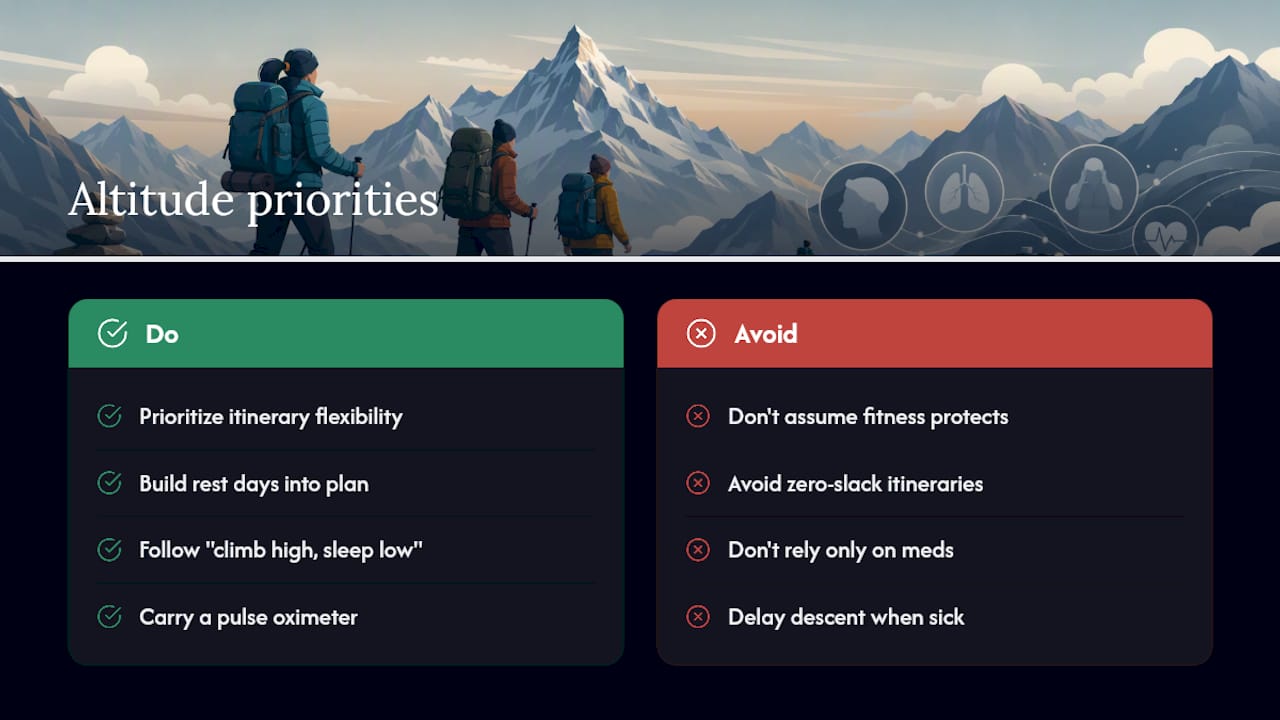
The gap I see most often is with confident, fit travelers who assume fitness protects them. It doesn’t. Altitude illness has almost nothing to do with cardiovascular conditioning and almost everything to do with how fast your body adjusts to lower oxygen pressure, which varies person to person regardless of how many miles you can run at sea level.
If you take one thing from this guide, prioritize itinerary flexibility over gear. A trip plan with zero slack for a rest day is a bigger risk factor than showing up without a pulse oximeter. Buy the oximeter too, but build the slack first. Recognition and pacing beat pharmacology every time descent is still an option, and descent is always the fallback that actually works when everything else stalls.
— S
This article is general information, not a substitute for advice from a qualified doctor. Consult a qualified healthcare professional about your own circumstances before acting on anything here.
Sources
Recommended
Comments