

Keep Pets and Gear Safe: 0.5% Permethrin for Hikers' Clothing
- Wesley Coldwell
- 4 hours ago
- 12 min read

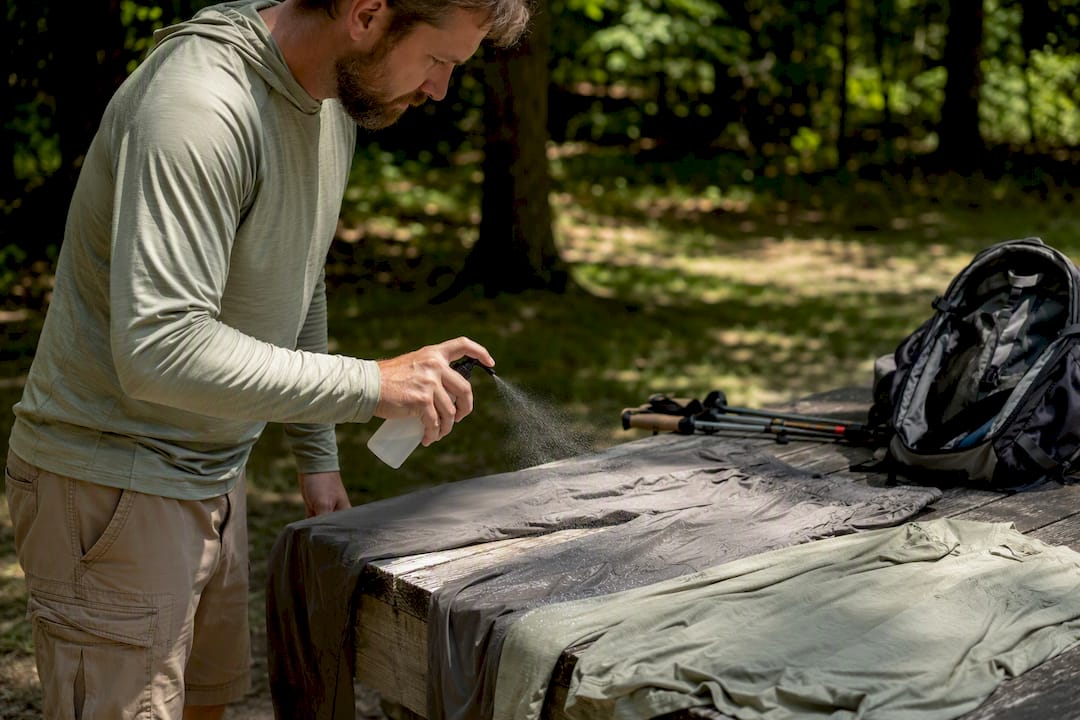
Use a product labeled 0.5% permethrin on outer clothing and gear, never on skin. Spray works fine for a handful of items; soaking makes more sense for bulk gear like tents, socks, and multiple pairs of pants. Either way, let everything dry completely before you wear it, typically a few hours, and expect protection to hold for several weeks or multiple washes before you need to treat again.
TL;DR:
Spray treatment should be applied in calm outdoor conditions with gloves, holding the nozzle 6 to 8 inches from the fabric until it looks damp.
Permethrin retains efficacy for about six weeks or six washes, so re-treat garments accordingly and launder treated clothing separately.
Focus on outer layers like shirts, pants, socks, and gear, while avoiding base layers, headwear, or items with delicate coatings, and test unfamiliar fabrics first.
Never apply permethrin directly to skin or pet bedding; always treat outside and keep pets and children away until fully dry.
Pair treated clothing with skin repellents on uncovered skin areas, and treat lower legs, cuffs, and sock lines regularly during prolonged outdoor exposure.
Table of Contents
What Is Permethrin Clothing Treatment?
Permethrin clothing treatment is the process of applying a diluted permethrin insecticide directly to fabric so it kills or repels ticks and mosquitoes on contact, rather than relying only on skin-applied repellent. It’s a distinct category from bug spray you put on your arms. Permethrin binds to fibers, and that’s what separates it from anything you’d spray on your body.
Before you touch a bottle, get your setup right. A rushed treatment session outdoors, with no plan for drying or storage, is how people end up with patchy protection or a mess in the garage.
Here’s what to have on hand and sort out before you start:
A permethrin product labeled specifically for clothing and gear at 0.5% concentration
Disposable gloves (nitrile works well; permethrin isn’t something you want on bare skin for an extended period)
Hangers or a flat drying rack, ideally ones you don’t mind smelling faintly chemical for a day
A dust mask if you’re sensitive to aerosols or working in a small space
A calm, well-ventilated outdoor spot, away from pets, kids, and anything you’d hate to overspray
Read the label on the specific bottle you bought before doing anything else. Labels vary by brand and formulation, and the EPA requires specific hang-tag and label language for a reason. Decide upfront whether you’re spraying a few items or soaking a whole pile of gear. That choice determines how much product you need, how much time you’ll spend, and where you should be standing when you do it. Also plan your drying spot and figure out how you’ll launder treated items separately later. Skipping that last part is a common reason people end up washing new fragrance into a permethrin-treated shirt they were counting on for a five-day trip.
What Permethrin Is and When You Actually Need It
Permethrin is a synthetic insecticide, chemically related to compounds found in chrysanthemum flowers, that binds tightly to fabric fibers instead of soaking in and evaporating like most skin repellents do. Once it’s dry on a garment, it stays put through normal handling and disrupts the nervous system of insects that land on the fabric.
The two targets that matter most for hikers and campers are ticks and mosquitoes. Permethrin-treated clothing kills or repels both, and it’s a meaningful layer in preventing tick-borne illnesses like Lyme disease and mosquito-borne viruses, especially in wooded or brushy terrain where ticks brush off vegetation onto your legs. The CDC recommends permethrin-treated clothing and gear as part of a layered prevention strategy, and it’s not an exotic or fringe recommendation. It’s mainstream field advice for anyone spending real time outdoors.
That said, treated clothing only protects the clothing. Nothing about permethrin on your shirt does anything for your exposed hands, neck, or face. You still need a skin-applied repellent for anything not covered by fabric. Think of permethrin clothing treatment as the outer wall, not the whole fortress.
How to Spray-Treat Individual Garments Safely and Effectively
Spraying is the right call when you’re treating a handful of items: a couple of shirts, hiking pants, socks, maybe a hat brim (never the part that touches your face). It’s fast, doesn’t require mixing anything, and most consumer permethrin products come ready to spray straight from the bottle.
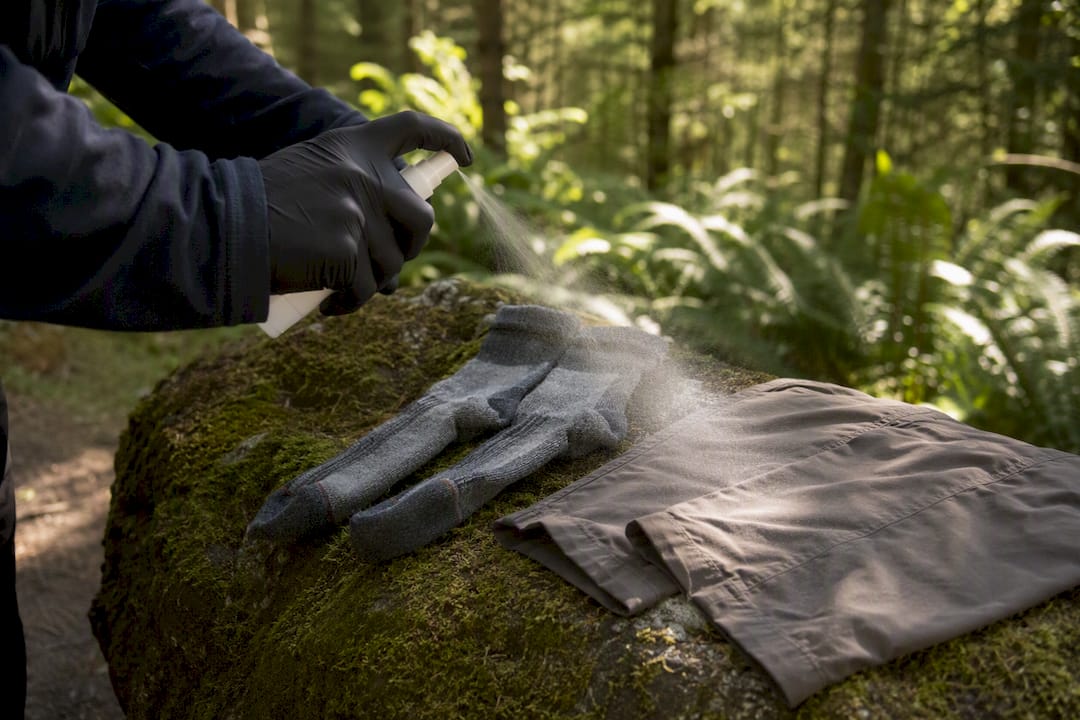
1. Read the label first. Every product has slightly different spray distance and coverage instructions. Don’t assume the last bottle you used works the same as this one.
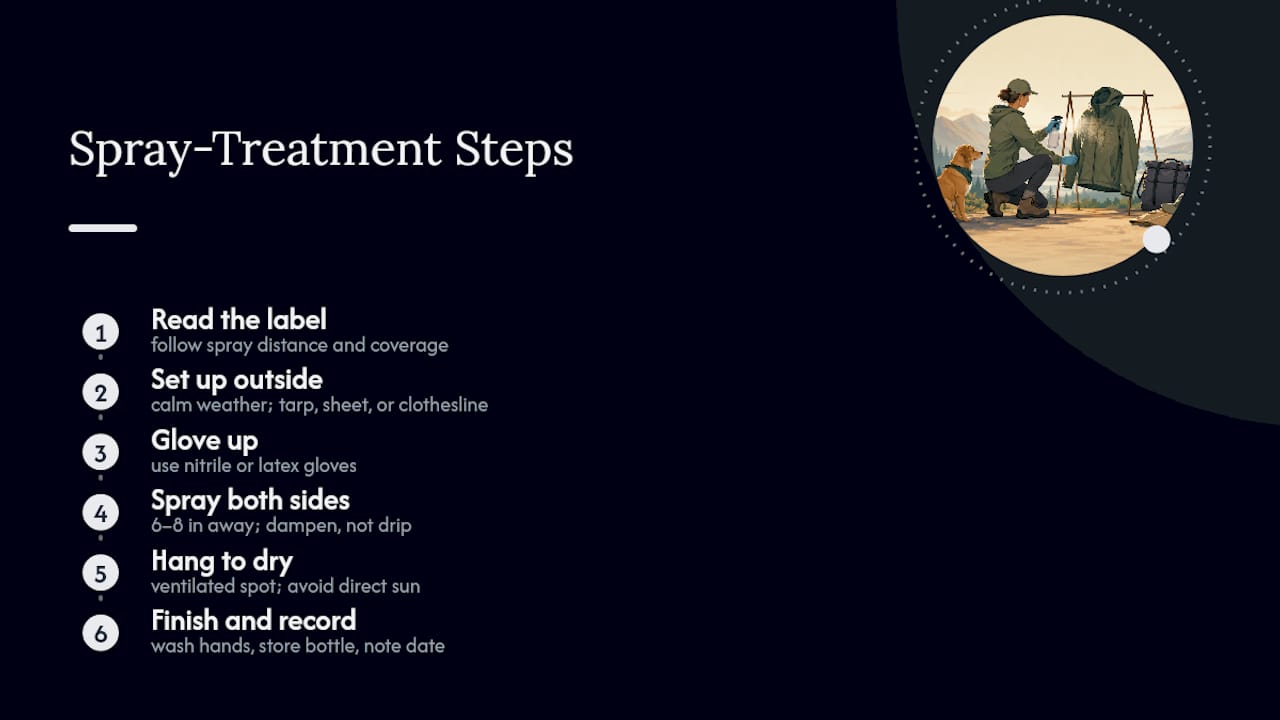
2. Set up outside, in calm weather. Wind carries overspray onto surfaces (and people) you didn’t intend to treat. Lay garments flat on a tarp, an old sheet, or a clothesline where overspray won’t matter.
3. Glove up. Permethrin is low in acute toxicity to humans compared to many pesticides, but repeated skin contact during application isn’t something you want to normalize. Nitrile or latex gloves solve this in seconds.
4. Hold the nozzle 6 to 8 inches from the fabric. Spray in slow, even passes until the material looks slightly damp and the color darkens a shade. That’s your visual cue that you’ve applied enough. Penn State Extension’s application guide is specific on this point: damp, not dripping.
5. Flip it and treat the other side. Ticks climb up pant legs and cuffs from the outside, but they can find seams and folds on either surface. Don’t skip the inside of pockets, cuffs, and collars.
6. Hang to dry in a ventilated spot, out of direct sun if possible. Heat can degrade the treatment while it’s curing, so shade is the safer bet.
7. Wash your hands when you’re done, even with gloves on. Store the bottle upright, sealed, and out of reach of kids.
8. Write the treatment date somewhere you’ll see it, a tag, a note on your phone, whatever sticks. You’ll want that date later to know when re-treatment is due.
Pro Tip: Treat your boots and pant cuffs with extra care. Most tick contact starts at ankle and calf height when you’re brushing through tall grass or low scrub, so that’s the zone doing the most work to keep bites off your body.
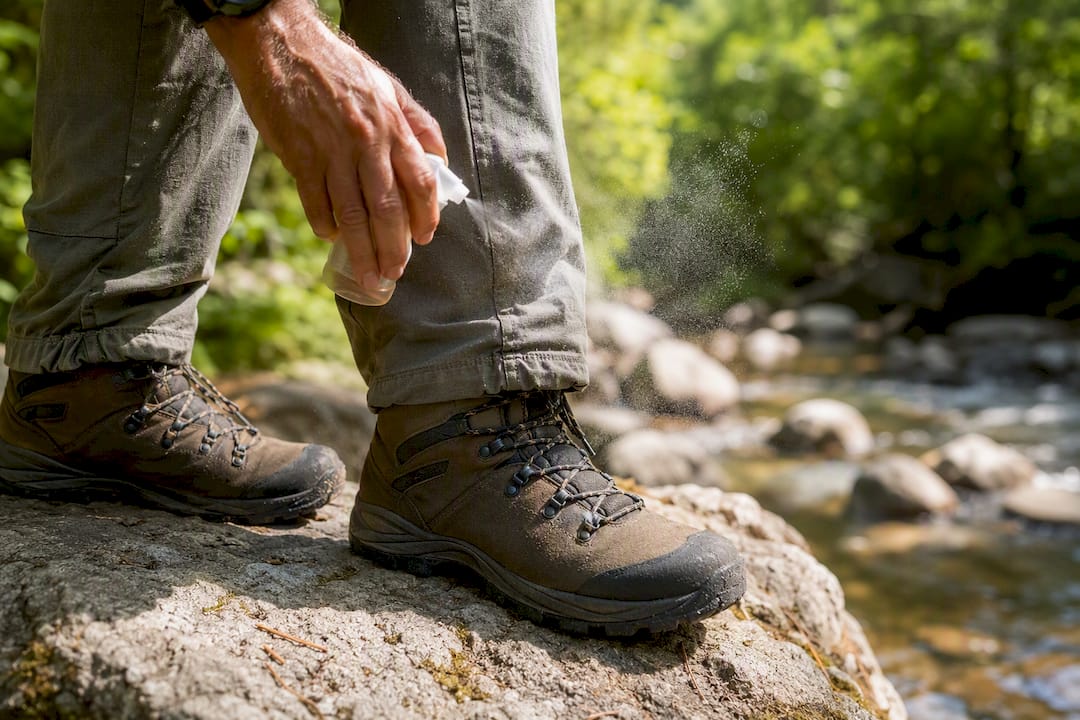
The mistakes that undercut spray treatment are almost always about impatience. People spray while wearing the garment (don’t, permethrin isn’t meant for skin contact even briefly). They under-coat, giving one light pass instead of enough to visibly dampen the fabric. They spray indoors in a closed bathroom, which concentrates fumes unnecessarily. And they treat underwear or ball caps with face-contact brims, both of which the NPIC guidance specifically flags as inappropriate for treatment. Keep it to outer layers only.
Soaking Gear: The Bulk Treatment Method
Soaking is the better option when you’ve got a stack of gear to treat at once: multiple pairs of socks, a tent’s exterior mesh, a mosquito net, or a season’s worth of hiking pants before a long trip. It’s more work upfront but far more efficient per item than standing there with a spray bottle for an hour.
Some soak-oriented permethrin products come as a concentrate you dilute yourself, which is where people get into trouble. Never repurpose agricultural-grade permethrin or guess at a dilution ratio. The label on the specific bottle you bought tells you the exact measurement, and going off-label isn’t just a performance issue, it can be a legal one too.
Here’s the general soak process:
Set up outside on a stable surface. A large sealable bag, a plastic tub, or a five-gallon bucket all work.
Measure the permethrin concentrate and water according to the label ratio, mixing directly in the container you’ll soak the clothes in.
Submerge the garments and roll or massage the bag/tub so the solution reaches every fold and seam.
Let the items sit for the contact time the label specifies. This varies by product, so don’t eyeball it.
Remove garments with gloved hands and wring out excess liquid over the same container.
Hang everything to dry fully before packing or wearing.
A few things to get right on disposal and handling:
Never pour leftover solution into a sink, storm drain, or waterway. Permethrin is toxic to aquatic life and to bees, and runoff is a real environmental hazard.
Check with your local hazardous-waste program if you have a significant amount of unused concentrate left over.
Keep the soaking container out of reach of curious pets while the solution sits.
Label and store any leftover premixed solution the same way you’d store the original product, sealed and out of general circulation.
Soaking a tent’s mesh panels or a bed net follows the same logic as clothing, just on a bigger scale. If you’re treating something that also touches the ground or gets folded into a stuff sack daily, give it extra drying time before you pack it away.
Which Items to Treat (and Which to Skip)
Permethrin clothing treatment works best on outer layers that spend real time in tick and mosquito habitat. Shirts, hiking pants, socks, boots, backpacks, tent exteriors, and bed nets are all solid, appropriate candidates. These are the surfaces bugs actually land on and crawl across before they ever get near your skin.
Some items should stay off your treatment list entirely:
Underwear and base layers worn directly against skin for extended periods, since the point is to keep permethrin away from prolonged skin contact.
Hats with brims or any headwear that regularly touches your face, since sweat and friction can transfer more product than you’d want near your mouth or eyes.
Leather or specialty-coated fabrics without testing first. Waterproofing treatments and certain leather finishes can react unpredictably with permethrin solvents.
Pet bedding, unless the specific product label explicitly permits it. Most don’t, and cats in particular are highly sensitive to permethrin.
If you’re treating anything with a technical coating, a delicate finish, or fabric you’re not sure about, test a small hidden patch first, an inside seam or a cuff fold, and check it after drying for discoloration or texture change before committing the whole garment.
Safety Rules Every Person and Pet in the House Should Follow
Permethrin is registered and reviewed by the EPA for this exact use, which means it’s been assessed under realistic exposure scenarios for people handling and wearing treated clothing. That’s a meaningful trust signal, but it doesn’t mean the product is risk-free if you get careless with it.
The core rules are short and worth memorizing:
Wear gloves during application, every time, no exceptions for “just a quick spray.”
Treat clothing outdoors or in a well-ventilated space, never in a closed bathroom or bedroom.
Never apply permethrin directly to skin. It’s formulated and labeled for fabric only.
Keep cats away from wet, treated fabric. Cats metabolize permethrin poorly compared to dogs and humans, and NPIC’s guidance specifically calls out feline sensitivity as a reason to keep treated items away from cats until fully dry.
If you or a family member has a known allergy to pyrethroids or pyrethrins, medical literature flags a real risk of reaction, and it’s worth checking with a doctor before using permethrin products in your home.
If skin or eye contact happens during application, wash the area with soap and water right away. For anything beyond minor contact, symptoms that don’t resolve or eye irritation that persists, seek medical attention and bring the product label with you so a clinician can see the exact formulation involved.
Environmentally, permethrin is toxic to fish, aquatic invertebrates, and bees. That’s not a minor footnote. Rinse water and leftover solution should never reach a storm drain, pond, or stream, and that rule applies just as much to spray overspray on your patio as it does to a full soak-tub disposal.
Drying, Handling, and Storing Treated Gear
Give treated garments a full 2 to 4 hours to dry completely before anyone wears them, longer in humid conditions where moisture lingers in the fibers. Wearing damp treated fabric increases skin contact with wet product, which defeats the point of treating clothing instead of skin in the first place.
Once dry, treated clothing behaves like any other clothing for storage purposes: fold it, hang it, toss it in your pack. Just keep the original product container sealed and stored somewhere kids and pets can’t get into it, and don’t decant it into an unlabeled bottle that someone might mistake for something else later.
On multi-day trips, it helps to keep treated and untreated clothing somewhat separated in your pack, especially if you’re traveling with an infant or young child who might chew on fabric. A dedicated stuff sack or dry bag for treated items keeps things simple and avoids any accidental mouth contact with gear that wasn’t meant for that kind of exposure.
How Long Does Permethrin Last on Clothes?
Most labeled consumer products hold up for about six weeks of regular wear or six washings, whichever comes first, though the exact number depends on your specific product’s label. That’s a solid window for a week-long backpacking trip or a full month of weekend day hikes, but it’s not indefinite protection you can forget about.
Check your label for the exact figure rather than assuming every brand matches that six-week benchmark. Some factory-treated garments, permethrin bonded into the fabric during manufacturing rather than sprayed on afterward, are rated for dozens of washes and last considerably longer than a home spray treatment.
When it’s time to re-treat, don’t just spray over old product. Launder the garment first if your label calls for it, then apply a fresh treatment following the same steps as before. Re-treating more often than the label allows doesn’t add extra protection; it just adds unnecessary chemical exposure. Gentle wash cycles and air-drying, instead of high heat in a dryer, tend to preserve the treatment longer between applications.
Laundering and Disposal Done Right
Wash treated clothing separately from your regular laundry when you can. It’s a small habit that avoids any cross-contamination with items you never intended to treat, and it keeps your treatment schedule easier to track per garment.
Stick to whatever washing and drying instructions are printed on your specific product’s label. Some formulations tolerate machine washing and tumble drying fine; others hold up better with gentle cycles and air-drying. Guessing here is how people accidentally shorten their six-week window to two.
For anything left in the bottle you don’t plan to use, follow the disposal instructions on the label exactly. Most residential trash disposal isn’t appropriate for pesticide concentrate, and pouring it down a drain is never the right move. If your label points you toward a hazardous-waste program, check your local municipality’s guidelines rather than guessing.
Pairing Treated Clothing with Skin Repellent
Permethrin on your shirt does nothing for your hands, neck, or face. That’s where a skin-applied repellent, DEET, picaridin, or oil of lemon eucalyptus, does the rest of the job. Consumer Reports and other testing groups consistently point out that the two are meant to work together, not as substitutes for each other.
The order matters: treat and fully dry your clothing first, days ahead of a trip if you can manage it, then apply your skin repellent on exposed areas right before you head out. Never apply permethrin directly to skin as a shortcut, and never treat clothing as a substitute for repellent on your hands or face. Follow the label on whichever skin repellent you choose; concentrations and reapplication intervals vary by product just as they do with permethrin.
Field Notes: What Actually Trips People Up
Cuffs and sock lines deserve more attention than they usually get. Ticks climb, and the lower leg is where most of them make first contact with your body before they ever try to reach skin. A shirt sprayed perfectly but pants treated halfheartedly at the ankles is a common gap in otherwise careful prep.
If you’re hiking through high-exposure terrain for weeks at a stretch, monthly re-treatment of boots and lower pant legs is worth the extra effort, even inside your six-week window, since foot traffic and repeated brush contact wear treatment down faster there than on your shoulders or back.
Waterproofed or technically coated boots and jackets are worth a small patch test before a full treatment. Harsh laundering cycles can strip both the waterproofing and some of the permethrin faster than a normal cotton shirt would lose it, so don’t assume identical performance across every fabric type in your closet.
Pro Tip: Keep a small logbook, even a note on your phone, tracking which items you’ve treated and when. Six weeks goes by faster than you’d think during a busy trail season, and guessing at re-treatment timing defeats the purpose of tracking it at all.
Why I Treat My Own Gear the Way I Do
On a five-day backcountry trip, the difference between a tick check that takes two minutes and one that turns into a magnifying-glass ordeal usually comes down to what I did to my socks and pant cuffs weeks earlier. Treating gear changed how I pack, too. Treated items go in their own bag, separate from base layers, and I write the treatment date on painter’s tape stuck to the inside of my pack. None of it matters if you skip the label or let a cat near damp fabric, so that part never gets shortcuts.
— S
Find More Trip-Prep Guides Before You Head Out
Getting permethrin treatment right is one piece of a bigger prep puzzle, and Thrillofit builds guides around the whole picture: what to pack, how to layer, and what to do the moment you spot a tick that got through anyway.

If you’re still finalizing your kit, our hiking gear and trail guide covers what belongs in your pack alongside treated clothing, and our layering breakdown explains why the fabric under your treated shell matters just as much as the treatment itself. If a tick still gets past your defenses, our tick removal guide walks through the safe extraction steps step by step. For readers focused on general outdoor readiness, this injury prevention resource for outdoor athletes rounds out a solid trip-prep routine. Browse the full Thrillofit blog for more gear picks and trip-safety checklists before your next trip into tick country.
Sources
The guidance above draws on primary sources you can check yourself before your next trip:
Each source ties directly to a specific claim in this guide, from dosing language to drying time to pet exposure limits, so you can verify anything before you apply product to your own gear.
Recommended
Comments