

Emergency Preparedness Checklist for Families: 2026 Guide

TL;DR:
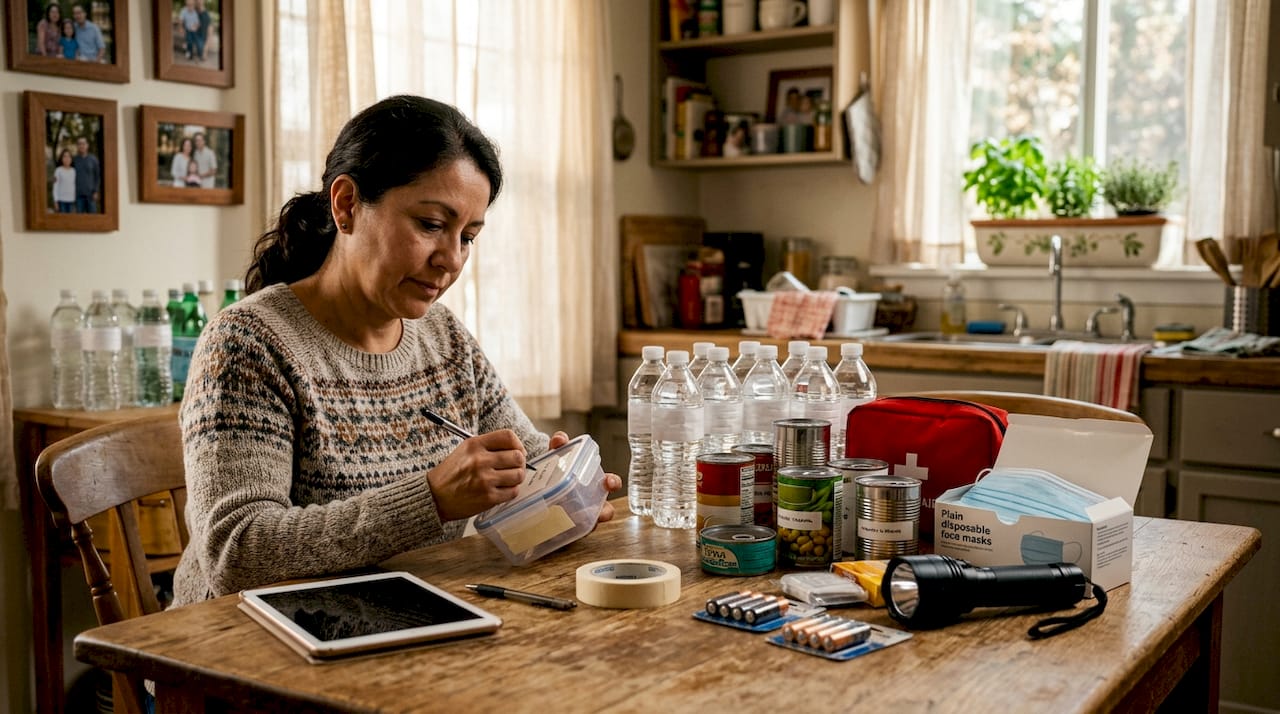
An emergency preparedness checklist includes essential supplies, plans, and actions to handle disasters effectively. Building tiered kits for 72 hours, two weeks, and long-term resilience enhances household readiness and adaptability. Regular review, drills, and community connections ensure preparedness remains current and effective during actual emergencies.
An emergency preparedness checklist is a structured survival tool that defines exactly what supplies, plans, and actions your household needs before disaster strikes. Government standards require 72-hour self-sufficiency as the baseline, with a minimum of 1 gallon of water per person per day for drinking and sanitation. The most effective approach goes further, building a tiered system that covers 72 hours, two weeks, and long-term resilience beyond three months. Families who treat preparedness as an evolving process rather than a one-time purchase are consistently better positioned when real emergencies occur.
1. What does every emergency preparedness checklist must include?
Every solid disaster readiness guide starts with the same non-negotiables: water, food, first aid, communication, and documents. These categories form the backbone of any crisis response plan, and skipping even one creates a gap that shows up at the worst possible moment.
Water
Store a minimum of 1 gallon per person per day, covering at least 72 hours. A family of four needs at least 12 gallons just to start. Authorities note that 2.5–3 liters daily is the true physiological minimum, but the 1-gallon standard accounts for sanitation and cooking. Use food-grade containers and rotate your supply every six months.
Non-perishable food
Stock at least a three-day supply of ready-to-eat or easy-to-prepare items. Think canned beans, tuna, peanut butter, crackers, and dried fruit. For food ideas that translate well from camping to emergency kits, Thrillofit’s guide on camping food ideas covers calorie-dense, shelf-stable options worth considering.
First aid kit
Your kit needs bandages, antiseptic wipes, gauze pads, medical tape, pain relievers, tweezers, and a CPR face shield at minimum. Review and restock it every six months. Thrillofit’s camping first aid essentials guide covers the full list of supplies worth keeping on hand.
Communication tools
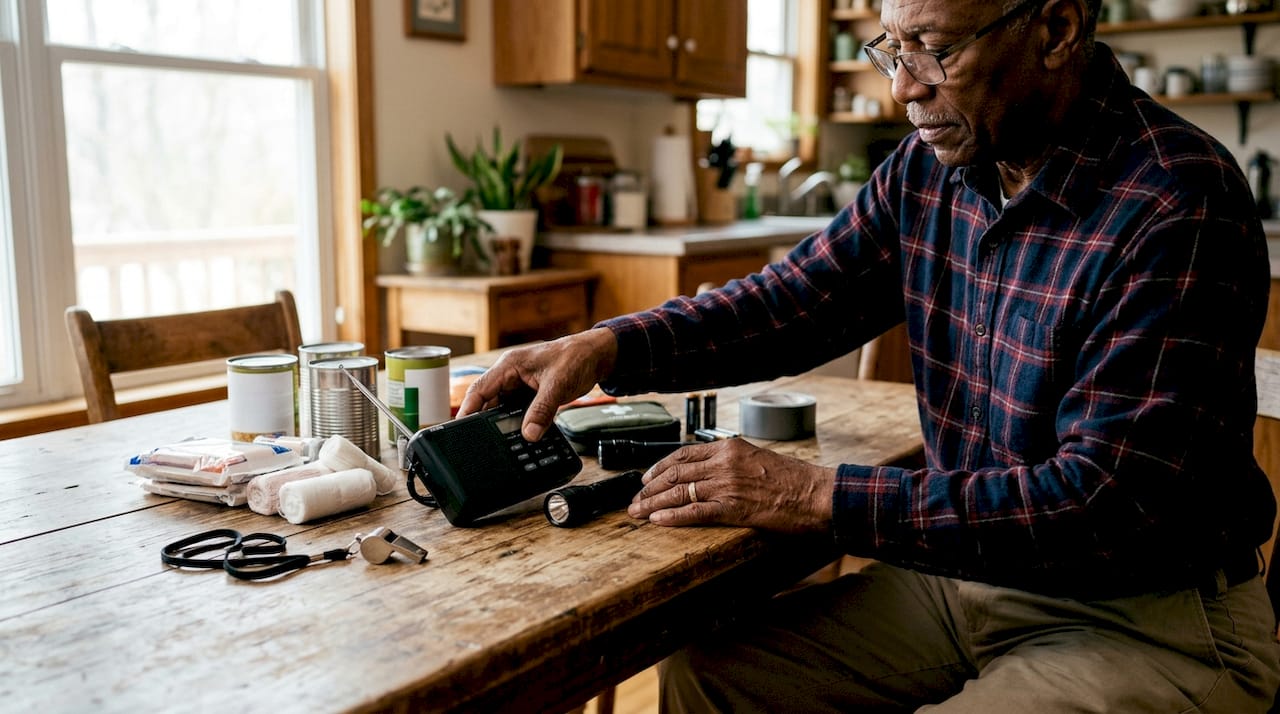
A battery-powered or hand-crank NOAA weather radio is non-negotiable. Add a whistle, signal flares, and a fully charged backup battery pack for your phone. Cell networks fail during major disasters, so plan for that reality now.
Lighting
Keep at least one battery-powered flashlight and one hand-crank or solar lantern. Store extra batteries in a sealed bag. Candles are a fire risk in chaotic conditions, so LED options are the safer default.
Personal hygiene and sanitation
Pack hand sanitizer, moist towelettes, garbage bags, plastic ties, and a portable toilet option if you have young children or elderly family members. Sanitation failures cause secondary health crises after disasters.
Personal protective equipment
N95 masks, nitrile gloves, and hand sanitizer belong in every kit. These protect against airborne hazards, contaminated debris, and biological risks that follow floods or structural damage.
Tools
Include an adjustable wrench, pliers, duct tape, plastic sheeting, and waterproof matches. A manual can opener is often forgotten but always needed.
Important documents
Store copies of IDs, insurance policies, bank account information, and medical records in a waterproof, fireproof container. Encrypted digital backups accessible from a mobile device add a second layer of protection.
Cash and special needs
ATMs go offline during power outages. Keep small bills on hand. Account for pets, infants, and anyone with medical equipment or prescription medications.
Pro Tip: Label every container in your kit with the contents and the date it was packed. You will save critical time during an actual emergency.
2. How tiered emergency supply kits enhance disaster preparedness
A tiered supply strategy is the single most effective framework for building real resilience. One kit does not fit every scenario. Three tiers do.
Tier 1: The 72-hour grab-and-go kit
This is your bug-out bag, packed and ready to leave in under two minutes. It holds water, food, first aid supplies, documents, cash, a flashlight, and a phone charger. Weight matters here. Keep it under 30 pounds per adult. Thrillofit’s go bag guide walks through exactly how to assemble one without overloading it.
Tier 2: The two-week home supply
This kit assumes you shelter in place. It expands your food and water stores, adds comfort items, and includes tools for extended power outages. A two-week water supply for a family of four requires at least 56 gallons. Collapsible water containers and a water purification method extend that supply significantly during prolonged outages.
Tier 3: Long-term resilience (3+ months)
This tier requires a different mindset. You are planning for infrastructure failure, not just a storm. Think bulk dry goods, a manual grain mill, a water filtration system, a generator or solar setup, and a deep knowledge of local hazards. Most families never reach this tier, but even partial progress matters.
Tier | Duration | Key focus |
Grab-and-go kit | 72 hours | Portability, speed, core survival items |
Home supply | 2 weeks | Shelter-in-place comfort and extended resources |
Long-term resilience | 3+ months | Infrastructure independence and local hazard planning |
Seasonal and geographic factors shape every tier. A family in Minnesota needs cold-weather gear and ice melt in their Tier 1 kit. A family in Phoenix needs heat management tools and extra water. Seasonal customization is not optional. It is what separates a useful kit from a generic one.
Pro Tip: Store your Tier 2 supplies in a dedicated closet or shelving unit, not scattered across the house. Chaos during a crisis makes scattered supplies nearly useless.
3. Best practices for emergency planning, communication, and drills
Physical supplies are only half the equation. A preparedness planning checklist without a communication and coordination plan fails the moment stress peaks.
Map your evacuation routes. Identify two routes out of your neighborhood. Drive them both so every adult in the household knows them by memory.
Assign household roles. Decide in advance who grabs the go bag, who accounts for children or pets, and who checks on elderly neighbors.
Establish two meeting points. One near your home (a neighbor’s driveway) and one farther away (a school or community center) in case the immediate area is inaccessible.
Create an out-of-state contact. Local phone lines jam during regional disasters. A single out-of-state contact who relays messages between family members is more reliable than trying to call each other directly.
Set up a digital group now. Pre-established Signal or WhatsApp groups with neighbors and family members are effective during localized crises when cell calls fail but data still works.
Drill at least twice a year. Biannual drills that include role assignments, meeting points, and communication protocols measurably improve family coordination under stress. Schedule them in april and october so they align with seasonal kit reviews.
Organize and secure your documents. Keep physical copies in a fireproof box and maintain encrypted digital backups on a cloud service accessible from your phone without special software.
Emergency plans are cognitive aids. When stress impairs clear thinking, a well-structured plan clarifies roles and priorities before the crisis hits. Gear alone does not do that.
Building relationships with neighbors before an emergency is one of the most underrated steps in any crisis response plan. Knowing your neighbors’ skills, whether someone has medical training, a generator, or mechanical knowledge, creates social capital that no supply kit can replicate. That network is often decisive during prolonged emergencies.
4. How to customize and maintain your checklist over time
A survival supplies list that never gets updated is a false sense of security. Preparedness is a lifecycle, not a one-time event.
Seasonal adjustments
Add hand warmers, wool blankets, and ice melt to your kit before winter.
Swap in sunscreen, electrolyte packets, and cooling towels before summer.
Check that medications stored in your kit have not been affected by temperature extremes.
Biannual audits
Auditing your kit twice a year catches expired food, dead batteries, and outdated documents before they become problems. Tie your audits to daylight saving time changes so you never forget.
Check expiration dates on all food, water, and medications.
Test flashlights, radios, and backup battery packs.
Verify that document copies are current (updated insurance policies, new IDs).
Confirm that children’s clothing and supplies still fit.
Household-specific needs
Generic kits miss critical items for specific households. A family with a diabetic member needs insulin storage solutions and extra supplies. A household with a dog needs food, a leash, and vaccination records. A home with an infant needs formula, diapers, and a portable crib option.
Document security
Encrypted digital storage of critical documents, accessible from a mobile device without special software, is the most reliable backup method available. Physical copies in a fireproof, waterproof container remain the primary layer.
Maintenance task | Frequency |
Food and water expiration check | Every 6 months |
Battery and electronics test | Every 6 months |
Seasonal gear swap | Every 6 months |
Document update review | Annually or after major life changes |
Full kit inventory audit | Annually |
Pro Tip: Take a photo of your full kit contents every time you audit it. That photo becomes your restock checklist after you use anything.
Key takeaways
A complete emergency preparedness checklist requires tiered supplies, a written communication plan, and biannual maintenance to stay effective when it matters most.
Point | Details |
Start with the 72-hour standard | Store 1 gallon of water per person per day and a three-day food supply as your baseline. |
Build in tiers | A grab-and-go kit, a two-week home supply, and a long-term plan each serve different disaster scenarios. |
Plan and drill, not just stock | Biannual drills with role assignments and meeting points improve real-world coordination under stress. |
Audit twice a year | Check expiration dates, test electronics, and swap seasonal gear every six months to keep your kit functional. |
Customize for your household | Generic kits miss medical devices, pet needs, infant supplies, and geographic hazards specific to your family. |
What I have learned about emergency preparedness after years in the field
The most common mistake I see is treating preparedness as a shopping trip. Families buy a kit, put it in a closet, and feel done. Two years later, the batteries are dead, the food expired in 2024, and nobody remembers where the kit is stored.
The second mistake is underestimating the cognitive load of a real emergency. When a wildfire evacuation order hits at 2:00 AM, you do not think clearly. Emergency plans function as cognitive aids, reducing stress-induced paralysis by giving every household member a defined role before the crisis begins. A checklist you have rehearsed is worth ten times more than one you have only read.
The third thing most articles skip is community. Your neighbors are a resource. The retired nurse down the street, the mechanic two doors over, the family with the generator. Social capital built before a disaster is often what gets people through the situations that supplies alone cannot solve.
Treat your preparedness checklist as a living document. Review it, drill it, and update it. That habit is what separates families who manage emergencies from those who are managed by them.
— S
Thrillofit resources for building your emergency kit
Thrillofit covers the practical side of outdoor survival and emergency readiness in depth. Whether you are assembling your first go bag or refining a two-week home supply, the guides on the site give you specific, tested advice rather than generic lists.
The Thrillofit survival and preparedness hub brings together articles on first aid, water purification, food selection, and gear choices built for real conditions. Each guide is written for people who want to be genuinely ready, not just feel ready. Start with the go bag guide, work through the first aid essentials, and build from there. Preparedness built piece by piece, with good information, holds up when it counts.
FAQ
What is the minimum water supply for an emergency kit?
The standard is 1 gallon per person per day for at least 72 hours, covering both drinking and sanitation needs. Some health authorities recommend 2.5–3 liters daily as the true physiological minimum.
How often should I update my emergency preparedness checklist?
Audit your kit at least twice a year, ideally timed to daylight saving time changes. Update documents annually or after any major life change such as a new family member, medical diagnosis, or home move.
What goes in a 72-hour grab-and-go kit?
A 72-hour kit holds water, ready-to-eat food, a first aid kit, a flashlight, a battery-powered radio, important documents, cash, and any medications or special supplies your household needs.
Why are family drills part of a crisis response plan?
Drills run at least twice a year improve coordination under stress by making roles, meeting points, and communication steps automatic. A plan rehearsed under calm conditions performs far better when real stress hits.
How do I customize my kit for my specific household?
Identify every person and pet in your home, then list their specific needs: prescription medications, medical devices, infant supplies, pet food, and vaccination records. Add seasonal gear based on your local climate and the most likely hazards in your region.
Recommended
Comments