

Flash Flood Safety: The Actions That Actually Save Lives
- Wesley Coldwell
- 11 minutes ago
- 10 min read

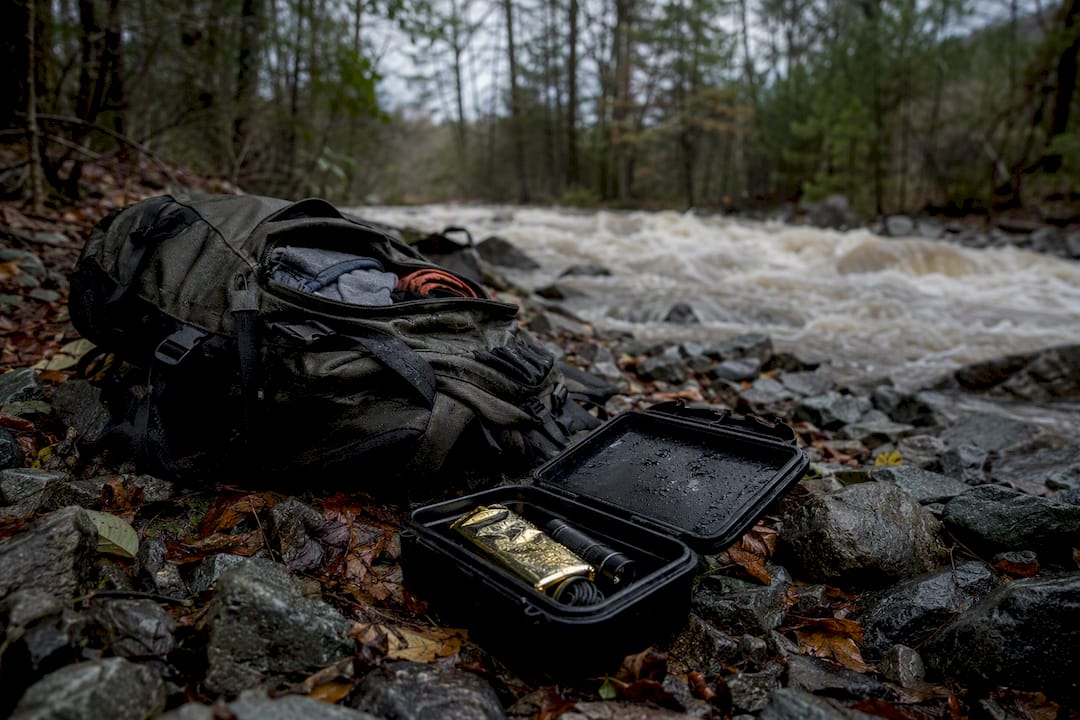
If a flash flood threatens you, move to higher ground immediately, and never drive into floodwater. Those two rules cover most of what determines whether you and your family walk away safe. The next priority is getting everyone out of basements, low rooms, and stalled vehicles before water rises another few inches.
At home: Get to the highest level, away from windows and low rooms.
In a car: Turn around. Never drive or walk into flowing water.
Outdoors: Climb away from washes, streambeds, and low trails toward high ground.
Just 6 inches of moving water can knock an adult off their feet, and 12 inches can float most passenger vehicles, according to the National Weather Service’s Turn Around Don’t Drown campaign. That’s the number that should end any debate about whether “it looks shallow enough to cross.”
Key Takeaways
Flash flood safety comes down to three things: leaving low ground before water arrives, never driving into floodwater, and having alerts and a go-bag ready before a warning is issued.
Point | Details |
Move to higher ground first | Don’t wait to confirm danger; six inches of moving water can knock down an adult. |
Never drive into floodwater | Twelve inches can float a car, and driving into water is a leading cause of flood deaths. |
Know your alert levels | A Watch means possible flooding; a Warning means act now; an Emergency means catastrophic danger. |
Pack a go-bag and vehicle kit | Include water, meds, a flashlight, a seatbelt cutter, and laminated documents. |
Wait for the all-clear before reentry | Downed lines and contaminated water make early return dangerous. |
Table of Contents
What to Do During a Flash Flood
Flash floods move fast, often in under an hour from first rain to rooftop-deep water, so your response has to be automatic, not improvised. Here’s the priority order depending on where you are when the water starts rising.
At home: Move upward, not sideways. Head to the highest level of the house and stay out of basements or garden-level rooms, which fill first and can trap you behind a locked-in current of water pressing against the door. If water is rising around the house but hasn’t entered yet, signal for help with a flashlight, bright fabric, or a whistle from an upper window rather than waiting silently.
In a vehicle: Never drive into flooded roads, even ones you cross daily. If your car stalls in rising water, get out immediately. Open the window before electrical systems fail, unbuckle seatbelts, and get children out first if it’s safe to do so, exiting through the windows before the car goes under. Waiting for a tow truck or hoping the engine restarts costs the minutes you don’t have.
Outdoors, hiking, or camping: Avoid dry washes and canyon bottoms entirely during storm season, especially at night or near recent burn scars, where runoff moves faster with less warning. Climb to high ground rather than trying to outrun water along a trail.
If you’re trapped and water keeps rising: Move to the roof only if you have physical access to it, not just an attic with no way out. An attic without a hatch or window to the roof is a trap, not a refuge. Call 911 and give your exact location once you’re somewhere rescuers can see or reach you.
If you’re swept into moving water: Rescue experts recommend floating on your back with your feet pointed downstream, using your legs to push off obstacles and steering toward calmer water at the edges. Experts are candid that once you’re in the current, surviving comes down to how well you can fight the water, which is exactly why avoidance beats every recovery technique.
Pro Tip: Never touch a fence, railing, or metal object in standing water near downed power lines. Water conducts electricity for a surprising distance, and floodwater frequently carries raw sewage and chemical runoff even when it looks clear.
How to Prepare for a Flash Flood Before It Hits
Preparedness is what turns those first-minute actions into muscle memory instead of panic. Start with alerts: enable Wireless Emergency Alerts on your phone, keep a battery or hand-crank NOAA weather radio in the house, and subscribe to your county’s local alert system. Knowing the difference between the three NWS alert levels changes how urgently you should move. A Watch means flash flooding is possible, so review your plan. A Warning means it’s occurring or imminent, so act now. A Flash Flood Emergency is reserved for rare, catastrophic, life-threatening events, meaning don’t wait for another update.
Build a go-bag and a separate vehicle kit. Both should include:
Bottled water and a few days of shelf-stable food
A flashlight, spare batteries, and a whistle
A first aid kit and any daily prescription medications
Laminated copies of ID, insurance documents, and cash in small bills
A seatbelt cutter and window-breaker tool, clipped somewhere you can reach it one-handed
Map your household’s evacuation route before you need it, and pick a specific higher-ground meeting point, not just “somewhere safe.” Assign roles: who grabs the pets, who helps a grandparent or a child with mobility limits, who drives. According to NPR’s reporting on flash flood preparedness, households with multiple overlapping alert methods and a pre-identified route consistently respond faster than those relying on a single phone notification. Thrillofit’s emergency preparedness checklist walks through building that kit room by room if you want a fuller list.
Preparation Step | Why It Matters |
Multiple alert channels | A dead phone battery shouldn’t be the reason you miss a warning. |
Pre-identified route | Deciding where to go during the flood wastes minutes you don’t have. |
Vehicle escape tools | A stalled car with no cutter or hammer becomes a trap fast. |
Household roles assigned | Pets and mobility-limited relatives need a named person, not a hope. |
What to Do After a Flash Flood Passes
Wait for local officials to declare an official all-clear before returning home. Downed power lines, weakened foundations, and washed-out road surfaces are common in the hours right after water recedes, and they’re often invisible under mud or standing puddles. If any part of your home was submerged, assume electrical systems are compromised. Don’t touch outlets, appliances, or breaker panels while anything is still wet.
Floodwater regularly carries sewage, fuel, and chemical runoff, so wear rubber boots and gloves during cleanup, per CDC guidance on protective equipment for flood response. Discard anything porous that touched contaminated water: carpets, mattresses, food, and medications. Call a licensed electrician or contractor before restoring power or reoccupying rooms with visible structural damage.
Photograph water lines and damage room by room before you clean anything, for insurance claims.
Watch for mold growth in the first 24 to 48 hours; call a remediation specialist if it spreads beyond a small patch.
Boil or purify tap water if there’s any chance of contamination before drinking it. Thrillofit’s guide to purifying water outdoors works just as well for a compromised home water supply.
Field Notes From Thrillofit on Surviving Fast Water
A few tactics rarely show up in official guidance but matter in the field. Keep a compact infrared strobe or a bright visual signal in your go-bag; it’s far more visible to search-and-rescue aircraft at night than a flashlight beam. Store your seatbelt cutter somewhere you can find it blind, not buried in a glovebox under other gear.
Practice the float-on-back, feet-first position in a pool so it’s not the first time you’ve tried it in real current.
Keep a small non-electric cutting tool accessible on upper floors in flood-prone homes, for roof access as an absolute last resort.
Pack a child-sized life vest if you live near flood-prone rivers or camp near seasonal washes.
Pro Tip: A whistle beats your voice for signaling every time. Three short blasts is the universal distress signal, and it carries over rushing water far better than shouting. For more on visual and audio signaling, Thrillofit’s emergency signaling guide covers strobe selection and technique in more depth.
Staying in Touch and Reuniting With Family
Cell towers get overloaded during major flooding events, so build redundancy into how your family communicates. Designate an out-of-area relative or friend as a check-in contact. Local lines often jam during a disaster, but a call routed through someone two states away frequently goes through when a local call won’t.
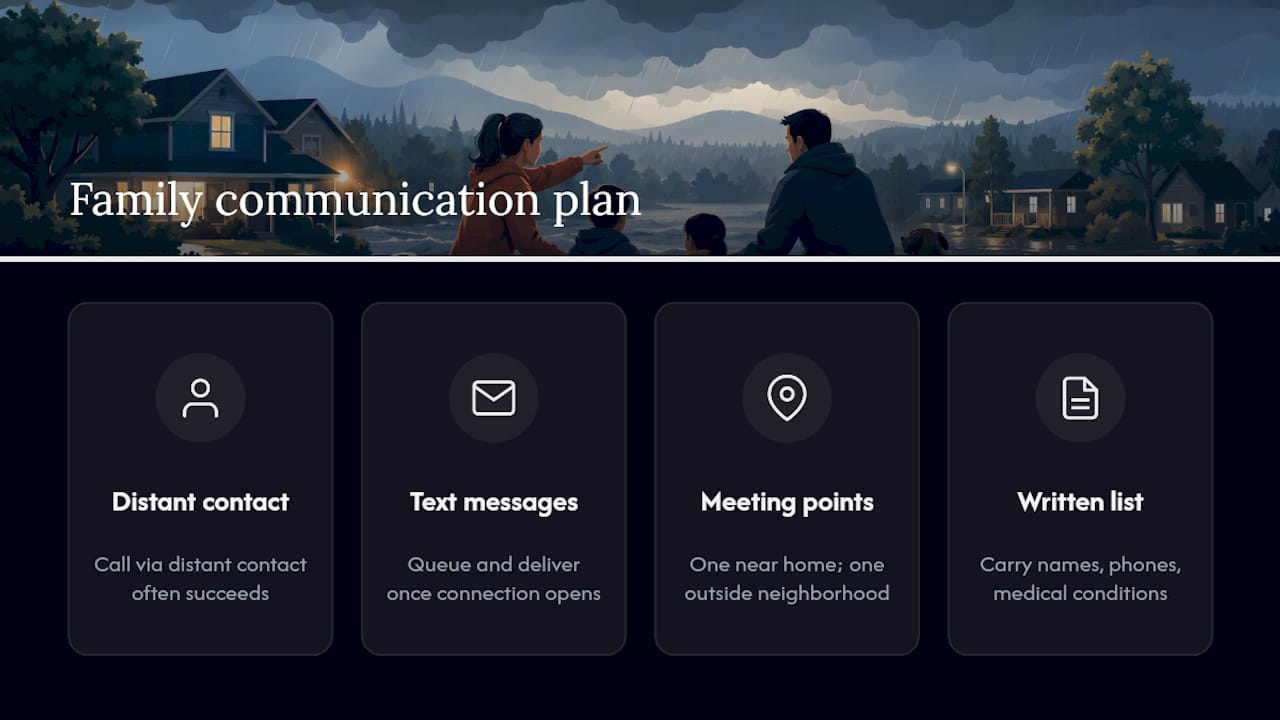
Text instead of call when networks are congested. Text messages queue and deliver once a connection opens, while voice calls often just fail outright. Agree in advance on two meeting points: one near home for a sudden event, and one outside the neighborhood in case roads are impassable or the area is evacuated entirely.
If your household gets separated during evacuation, that second meeting point matters more than any phone call. Assign one adult to carry a written list of everyone’s names, phone numbers, and any medical conditions, in case a phone is lost, dies, or gets wet. Consider a family group chat app that works over WiFi in case cell service drops but Internet access from a shelter or a neighbor’s generator remains available. After the immediate danger passes, register with the Red Cross Safe and Well site if you’re separated from anyone during an evacuation. It’s one of the fastest ways responders and family members find each other when local infrastructure is overwhelmed.
Protecting Children, Elderly, and Disabled Family Members
Flash floods don’t treat every household member the same way, and your plan shouldn’t either. A child’s low center of gravity means the six-inch threshold that merely staggers an adult can sweep a small kid off their feet entirely. Never let children walk through moving water alone, even water that looks calf-deep.

Elderly relatives and anyone with mobility limitations need extra evacuation time built into the plan, not squeezed out of it. If a family member uses a wheelchair, walker, or cane, identify in advance who is responsible for getting them out and which routes in the home or building are actually passable, since stairs become a serious obstacle once water starts rising through lower floors.
For anyone on daily medication, keep a spare seven-day supply in the go-bag alongside a written list of dosages and prescribing doctors, since pharmacies in flooded areas may be closed or inaccessible for days. Hearing-impaired family members may not hear a NOAA weather radio alert or a knock at the door, so a vibrating alert device or a visual strobe alarm tied to the same alert system closes that gap. Pets need a plan too: a carrier, leash, and a few days of food staged near the go-bag saves precious minutes when everyone is trying to move at once.
Securing Your Property Before Water Rises
If a flash flood watch is in effect and you have even 30 minutes of lead time, a few actions meaningfully reduce property damage. Move valuables, electronics, and important documents to the highest shelf or floor available; water damage to a filing cabinet is permanent, but a box moved upstairs costs nothing.
Shut off electricity at the breaker panel if water is entering the building and it’s safe to reach the panel without standing in water yourself. Turn off gas at the meter if you’re evacuating and flooding is likely, since a ruptured line combined with standing water creates a serious fire and explosion risk once the water recedes.
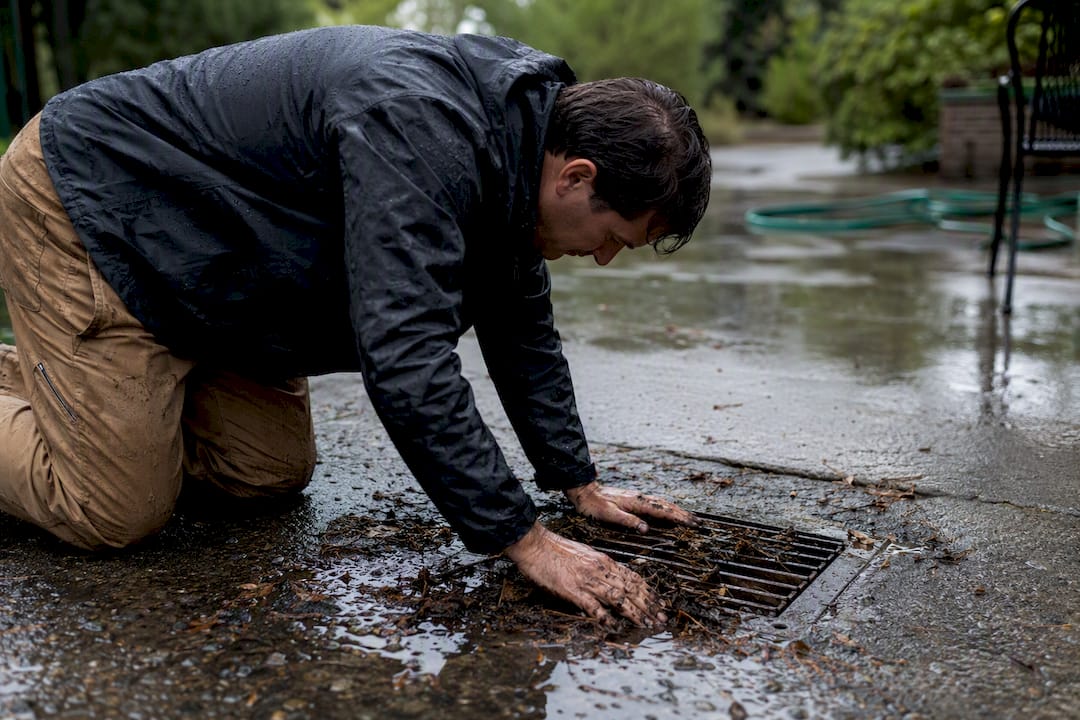
Outside, clear storm drains and gutters near your property of leaves and debris ahead of forecast heavy rain; a clogged drain redirects water straight toward your foundation instead of away from it. Anchor or bring in outdoor furniture, propane tanks, and anything that could float and become a projectile or block a drainage path. Sandbags placed at doorways and low entry points buy time but won’t stop deep water, so treat them as a delay tactic, not a barrier.
Recognizing the Early Warning Signs of a Flash Flood
Flash floods often develop with almost no visible warning where you’re standing, because the rain causing them can fall miles upstream. A sudden change in water clarity, from clear to muddy brown, or a noticeable rise in a creek or stream over just a few minutes are both signals that water is moving toward you faster than the local weather might suggest.
Listen for an unusual roaring sound, like an approaching train, in canyon or valley terrain. That sound often means a wall of water and debris is moving down a channel before you can see it. Heavy, sustained rain upstream, even under clear skies where you’re standing, is one of the most reliable predictors of flash flooding downstream within the hour.
Debris floating faster than normal, unusual amounts of foam or floating trash, or a sudden smell of mud and sediment in the air are all worth treating as your cue to leave, not wait and see. Thrillofit’s guide to weather awareness covers reading radar and interpreting upstream rainfall for hikers and campers who won’t get a phone alert in remote terrain. If you notice any of these signs, don’t wait for an official warning to reach your phone. Move to higher ground first and confirm the alert later.
For families who want a prebuilt option instead of assembling a kit item by item, StokdUp’s emergency preparedness resources cover kit adequacy and advanced supply planning if you’d rather buy a complete solution than build one from a list. Whichever route you take, the goal is the same: have what you need staged and ready before the water starts rising, not after.
Why Official Guidance Alone Isn’t Enough
Agency guidance gets the big calls right: get to high ground, don’t drive into water, know your alert levels. Where it falls short is the specific, physical stuff: where to actually store a seatbelt cutter, what it feels like to float feet-first in current, how fast a “shallow” flooded road actually moves. Ready.gov and the NWS tell you what to do. They rarely tell you how to practice it beforehand.
The biggest gap I see in typical flood advice is treating preparation as a one-time checklist instead of a rehearsed habit. A go-bag sitting in a closet for three years with expired meds and a dead flashlight battery isn’t preparedness, it’s a false sense of security. The families who do best are the ones who’ve actually opened the bag, tested the radio, and talked through who grabs the dog.
Prioritize this above everything else: multiple ways to receive a warning, and a rehearsed answer to “where do we go.” Everything else, the gear, the kit contents, the escape tools, matters less if those two things aren’t already solved.
— S
Sources
Recommended
Comments