

Types of Camping Tents: Your 2026 Buyer's Guide

TL;DR:
Dome tents are versatile and handle wind and rain well, making them ideal for most camping conditions. Choosing the right tent type depends on planned conditions, with dome, cabin, and geodesic tents suited for different seasons and environments. Proper setup, ventilation, and sizing are crucial for comfort and safety across all tent designs.
Dome tents are the most versatile type of camping tent, combining wind resistance, easy setup, and suitability for most conditions in a single shelter design. Campers planning any trip, from a weekend at a state park to a backcountry push, need to match their tent to their actual conditions. The four main tent designs, dome, tunnel, geodesic, and cabin, cover most campers’ needs despite the wide range of specialty options on the market. Choosing the wrong style means fighting your shelter instead of enjoying your trip. This guide breaks down every major tent category so you can make the right call before you leave the trailhead.
1. Types of camping tents: dome tents
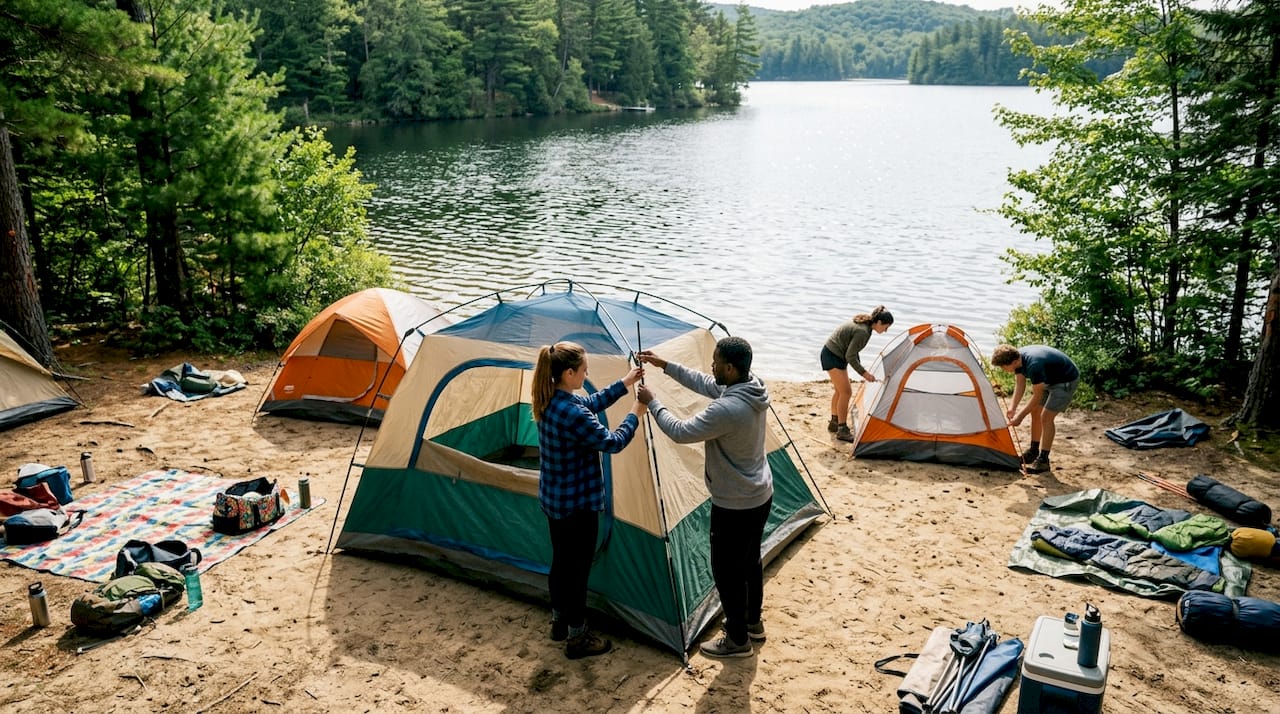
Dome tents are the best all-purpose option for most campers. Two crossing poles create a curved structure that sheds wind and rain naturally, without relying on perfect staking. They set up in under 20 minutes for most models, pack down small, and work across spring, summer, and fall conditions. Dome tents excel in wind because the curved walls deflect gusts rather than catching them flat. If you are buying your first tent, start here.
2. Cabin tents
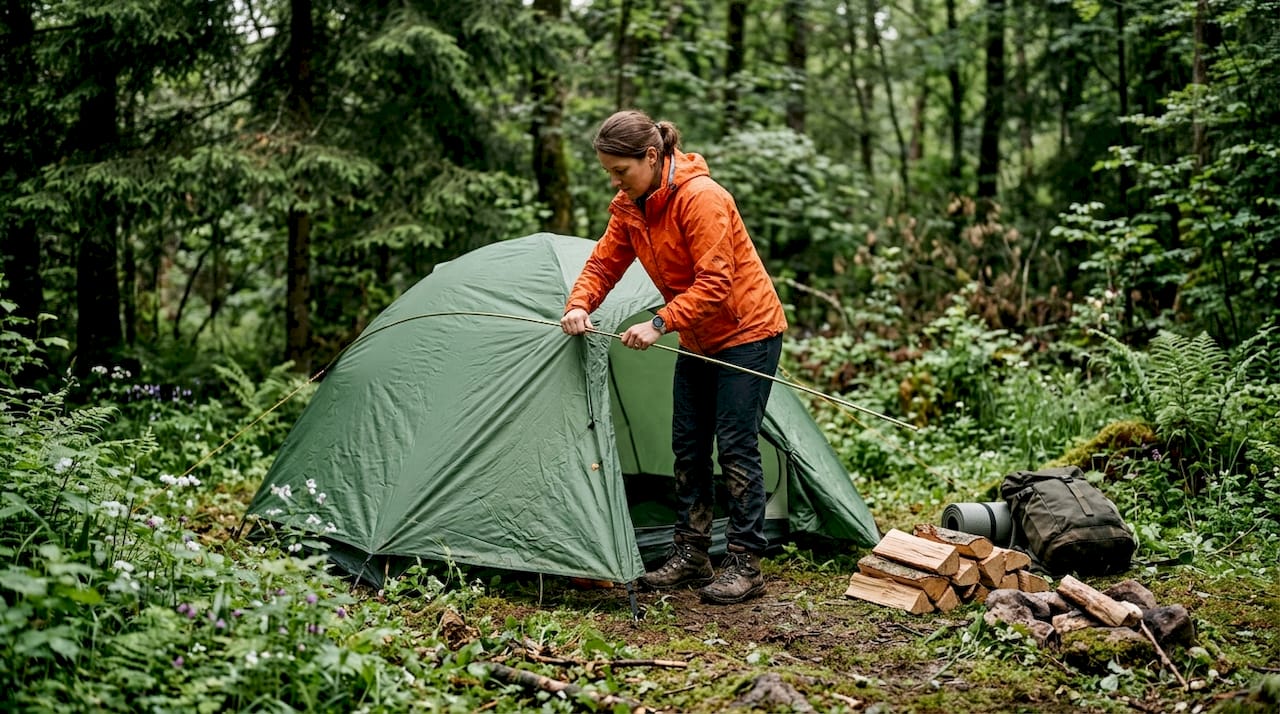
Cabin tents use near-vertical walls to create a box-shaped interior with genuine standing room. A family of four can move around, change clothes, and store gear without crouching. The trade-off is real: cabin tents perform poorly in exposed, windy locations and can flex or fail under sustained gusts. They belong at established campgrounds with windbreaks, not on ridgelines or open fields. For calm-weather car camping with kids, they are hard to beat.
3. Instant tents
Instant tents use pre-attached, spring-loaded poles that unfold and lock into position in roughly 60 seconds. They offer a reasonable balance of speed and structural integrity, making them popular for families who camp frequently but do not want to wrestle with pole sleeves. The downside is weight. Pre-attached poles add bulk that makes instant tents impractical for backpacking. Think of them as the minivan of shelters: not glamorous, but genuinely useful for the right trip.
4. Pop-up tents
Pop-up tents are the fastest shelter option available, springing into shape the moment you pull them from their bag. They work well for day festivals, beach trips, and fair-weather overnight stays where you need shade or a quick windbreak. Durability is the core weakness. Pop-up frames are not built to handle sustained rain, heavy wind, or repeated use across seasons. Treat them as a convenience tool, not a primary shelter for serious camping.
5. Geodesic tents
Geodesic tents use three or more crossing poles to create a dome-like structure with far more triangulated support points than a standard dome. Geodesic tents are the most stable option for high-wind conditions, which is why mountaineers and polar expedition teams rely on them. The extra poles add weight and cost, and setup takes longer than a standard dome. For three-season camping in mild conditions, geodesic tents are overkill. For alpine routes, winter camping, or exposed coastal sites, they are the right tool.
Pro Tip: If you are camping above treeline or in a location with no natural windbreaks, a geodesic tent is worth the extra weight and setup time.
6. Tunnel tents
Tunnel tents use a series of parallel hoops to create a long, low shelter with excellent interior volume relative to their weight. They are popular for car camping and family trips where space matters but you still want something lighter than a cabin tent. The structural weakness is directional: tunnel tents must be pitched with the end facing into the wind. Point them sideways and the walls collapse inward. When pitched correctly with guylines staked out, they handle moderate wind well.
7. Backpacking tents
Backpacking tents prioritize weight and packed size above everything else. The standard target is under 4 lbs for hiking use, with ultralight models pushing below 2 lbs for solo campers. That weight reduction comes from thinner fabrics, fewer poles, and smaller floor plans. Most backpacking tents sleep one or two people with minimal gear storage inside. If you are covering miles on foot, every ounce counts, and a backpacking tent earns its place in the pack.
Pro Tip: Check the packed weight listed on the spec sheet, not just the “minimum weight,” which often excludes stakes and guylines.
8. Bivy sacks
A bivy sack is the most minimal shelter option: a waterproof, breathable bag that fits directly over a sleeping bag. Bivy sacks weigh almost nothing and compress to the size of a water bottle. They are not comfortable for extended trips because there is no interior space to sit up or store gear. Emergency bivy sacks belong in every backcountry pack as a backup shelter. Purpose-built bivy sacks work for ultralight solo campers who prioritize speed and weight over comfort.
9. Hot tents
Hot tents are canvas or heavy-duty nylon shelters designed with a stovepipe port so you can run a wood-burning stove inside. They are the go-to shelter for winter camping, ice fishing, and cold-weather hunting trips. The stove creates a genuinely warm interior even in sub-zero temperatures, which no other tent type can match. The weight penalty is significant: canvas hot tents often weigh 20 lbs or more. They are a car-camping or sled-hauling solution, not a backpacking option.
How weather and season affect your tent choice
Seasonal conditions are the single biggest factor in tent selection. A tent that works perfectly in july can become a liability in october.
3-season tents (dome, tunnel, most cabin styles) use mesh panels and single-wall sections to maximize airflow. They handle rain and moderate wind but are not built for snow loads or sustained cold. Mesh ventilation reduces condensation overnight, which matters more than most campers realize. Condensation inside a tent is often mistaken for a leak, but it is actually moisture from your breath collecting on cold fabric.
4-season tents (geodesic designs) use heavier poles, denser fabrics, and minimal mesh to retain heat and resist snow accumulation. They sacrifice ventilation for structural strength.
Key weather factors to evaluate before buying:
Rainfly coverage: Full-coverage rainflies that reach close to the ground outperform partial flies in heavy rain.
Waterproof rating: Look for a hydrostatic head rating of at least 1,500mm for the floor and 1,200mm for the fly.
Guy-out points: More attachment points mean better wind stability. Guy-outs tether the tent to the ground and reduce deformation under wind pressure.
Ventilation design: Tents with vents near the floor and ceiling create a natural airflow cycle that keeps the interior drier.
Pro Tip: Always stake out your guylines before you go to sleep, not after the wind picks up. Most campers skip this step until it is too late.
Choosing tent size and capacity for families and solo campers
Tent capacity labels are optimistic by design. A “4-person” tent often fits 2–3 adults comfortably when gear is included. The standard recommendation is to size up by one or two people from the advertised capacity for any trip longer than one night.
Here is a practical sizing guide:
Camper type | Advertised capacity to buy | Key feature to prioritize |
Solo backpacker | 1-person | Weight under 4 lbs |
Couple | 3-person | Vestibule for gear storage |
Family of 3–4 | 6-person | Vertical walls or room divider |
Group of 6–8 | 10-person | Multiple doors, internal rooms |
For family trips, internal rooms and vestibule storage improve privacy and usability more than raw square footage. Separating sleeping areas from gear zones reduces clutter and makes longer trips genuinely manageable. A vestibule, the covered porch area outside the inner tent door, keeps muddy boots and wet rain gear out of the sleeping area.
Tent pricing in 2026 runs from $200–$350 for standard models, $350–$800 for premium comfort options, and over $800 for canvas or specialized expedition tents. Budget accordingly based on how often you camp and in what conditions.
How setup speed and ease influence your choice
Setup time varies dramatically across tent types, and it matters more than most buyers expect.
Pop-up tents: Under 30 seconds. Best for casual day use or fair-weather overnights.
Instant tents: 60–90 seconds. Good for frequent family campers who value convenience.
Dome tents: 10–20 minutes. The standard for most campers, with a reliable setup process.
Tunnel tents: 20–30 minutes. Require careful orientation into the wind before staking.
Cabin tents: 30–45 minutes. More poles and larger footprint mean more time on setup.
Geodesic tents: 45 minutes or more. Complex pole geometry rewards practice.
The proper use of guylines is the most neglected step in tent setup. Most campers skip them on calm nights and regret it when conditions change at 2 AM. Stake every guyline point on every setup, regardless of the forecast.
Pro Tip: Practice your full tent setup in the backyard before your trip. A tent you have never assembled in daylight becomes a real problem in the dark.
For beginners, the Thrillofit guide on building the perfect campsite covers tent placement, orientation, and staking strategy in practical detail.
Key takeaways
The dome tent is the best starting point for most campers because it balances wind resistance, setup speed, and versatility across three seasons better than any other design.
Point | Details |
Dome tents are the best default | They handle wind, rain, and varied conditions better than any other general-purpose design. |
Size up from the label | Advertised capacity is optimistic; buy one to two sizes larger for real comfort with gear. |
Match tent to season | Use 3-season tents for spring through fall; use geodesic designs for winter or alpine conditions. |
Stake your guylines every time | Guylines prevent structural failure in wind and should be deployed on every setup, not just in storms. |
Ventilation reduces condensation | Tents with high-low vents stay drier overnight and reduce moisture buildup on cold fabric. |
What I have learned from picking the wrong tent
The most common mistake I see is campers buying a cabin tent because it looks spacious in the store, then pitching it on an exposed site with no wind protection. Cabin tents are genuinely comfortable shelters in the right conditions. Those conditions are calm nights at established campgrounds, not ridgeline sites or open meadows.
My honest recommendation for anyone starting out: buy a dome tent in the 3-person range even if you are camping solo. The extra space costs almost nothing in weight or price at that size, and you will not regret the room. Once you know what conditions you actually camp in, you can specialize.
Ventilation is the detail most buyers ignore until their first cold, damp morning. A tent with good high-low airflow stays noticeably drier and warmer than one without it. Check the vent design before you buy, not after.
The multi-use camp gear guide on Thrillofit is worth reading alongside this article if you are building out a full kit. Tent choice does not happen in isolation from the rest of your gear.
— S
Gear up with Thrillofit for your next camping trip
Thrillofit covers the full range of outdoor gear decisions, from shelter selection to survival gear essentials, so you can head into the field with confidence.
Whether you are planning your first overnight or gearing up for a winter expedition, Thrillofit’s gear picks section cuts through the noise with practical, tested recommendations. The site covers tent types, layering systems, food planning, and first aid, everything you need to build a complete camp kit without second-guessing every purchase. Browse the full catalog at Thrillofit and find the right shelter for your next adventure.
FAQ
What is the best tent type for beginners?
Dome tents are the best starting point for new campers. They set up quickly, handle wind well, and work across most three-season conditions.
How do I choose between a 3-season and 4-season tent?
Use a 3-season tent for spring, summer, and fall camping in standard conditions. Choose a 4-season geodesic tent only if you plan to camp in snow, high wind, or alpine environments.
Are tent capacity ratings accurate?
Tent capacity labels are optimistic. A tent rated for four people typically fits two to three adults comfortably when gear is included, so sizing up by one to two people is the standard recommendation.
What is the lightest tent option for backpacking?
Backpacking tents under 4 lbs are the standard for hiking use, with ultralight solo models available below 2 lbs. Bivy sacks are lighter still but offer no interior living space.
Why does my tent feel wet inside even when it is not raining?
Condensation from your breath collects on cold tent fabric overnight. Tents with vents near the floor and ceiling create airflow that reduces this moisture buildup significantly.
Recommended
Comments