

Trail Etiquette: A Practical Guide to Sharing the Path
- Wesley Coldwell
- 10 minutes ago
- 10 min read

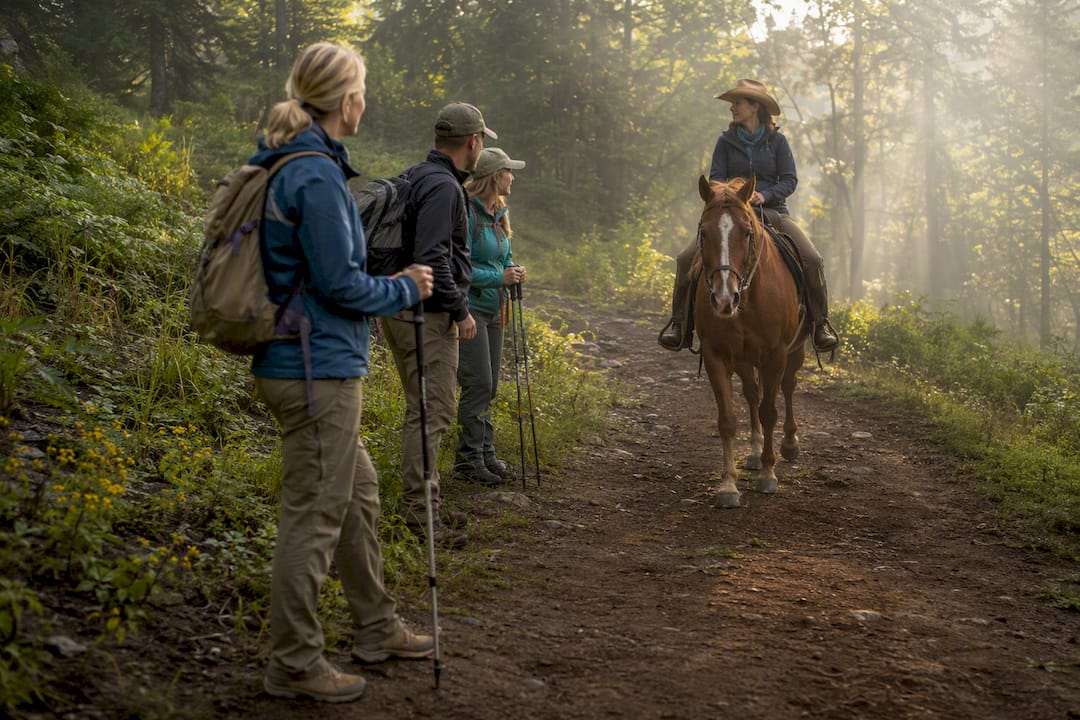
Trail etiquette is the set of courteous, safety-driven behaviors that let hikers, cyclists, equestrians, and their dogs share the same paths without conflict or damage to the land. It borrows from three sources you’ll see referenced throughout this guide: the Leave No Trace Center for Outdoor Ethics, the National Park Service, and state trail agencies like the Wisconsin DNR. Here’s the 30-second version before you head out:
Stay on the marked trail. No shortcuts, no cutting switchbacks.
Know the yield order: cyclists yield to hikers and horses, hikers yield to horses, downhill hikers yield to uphill hikers.
Announce yourself before passing. “On your left” works almost everywhere.
Pack out everything you bring in, including pet waste.
Keep dogs leashed and under control at all times.
When you’re not sure who has the right of way, yield. It costs you five seconds.
That last rule solves more arguments than any other item on this list.
Key Takeaways
Trail etiquette works because it replaces guesswork with a shared set of yield rules, communication habits, and Leave No Trace practices that everyone on the trail can rely on.
Point | Details |
Know the yield order | Cyclists yield to hikers and horses, hikers yield to horses, downhill hikers yield to uphill hikers. |
Speak before you pass | Calling out “on your left” prevents startled reactions from people, dogs, and horses alike. |
Stay on durable surfaces | Walking through mud instead of around it and never cutting switchbacks stops trail widening and erosion. |
Leash and clean up | Short leashes and packed-out waste protect your dog, wildlife, and other trail users. |
Yield when unsure | Stepping aside costs a few seconds and avoids nearly every trail conflict before it starts. |
Table of Contents
What Is Trail Etiquette and Why Does the Right-of-Way Order Matter?
Right-of-way on a shared trail isn’t a suggestion, it’s a hierarchy, and knowing it prevents the awkward standoffs that ruin a good hike. The order most trail systems recognize: equestrians first, then hikers on foot, then cyclists. Riders on horseback move slowest and manage an animal that can spook, so everyone else adjusts around them. Hikers come next because they’re on foot and can react quickly. Cyclists, who move fastest and have the most control over their speed, yield to both.
There’s a second rule layered on top of that hierarchy: uphill hikers generally get the right of way over hikers heading downhill. The logic is simple. Someone climbing has built momentum and a rhythm that’s harder to restart once broken, while someone descending can pause more easily. This same uphill-yields hierarchy shows up in guidance from Unity College, which frames it as one of the most consistently applied rules across multi-use trails nationwide.
Here’s how it plays out on the ground:
Cyclist meets hiker on a narrow single-track: the cyclist slows, calls out, and pulls off if there’s room, or waits for the hiker to pass at a wide spot.
Hiker meets a horse: the hiker stops, steps to the side (downhill if the terrain allows), and lets the horse pass calmly.
Downhill hiker meets uphill hiker: the downhill hiker steps aside, since the climber has earned the momentum.
On crowded trails, walk single-file when the path narrows, stay to the right when passing isn’t necessary, and never plant yourself or your group across a blind corner or the crest of a hill. Standing there blocks sightlines for everyone coming the other way, and on a bike-heavy trail that’s genuinely dangerous.
Pro Tip: If you’re hiking with a dog and meet a horse coming the other way, get your dog fully off the trail and hold a short leash. Horses react to sudden movement more than noise, so a lunging dog is far riskier than a barking one.
How Do You Pass Someone Safely on the Trail?
Passing etiquette comes down to two things: giving people warning and giving them room. Announce your approach well before you’re on top of someone, since a silent stranger appearing at your shoulder startles people and animals alike. Pass on the left when space allows, matching the convention most trail users already expect. If the trail is too narrow to pass safely, wait for a wider spot rather than squeezing by.
A few phrases cover almost every situation:
“On your left” — the standard call when overtaking a hiker or cyclist from behind.
“Passing on your left, thanks!” — friendlier, and it signals you’re not in a rush or annoyed.
“Riders coming through” — used by cyclists in groups to warn multiple hikers at once.
“May I pass?” — useful on a tight trail where you genuinely need the other person to make room.
If you wear earbuds, keep one ear open or your volume low enough to hear someone calling out behind you. This isn’t about etiquette alone. Riders and other hikers rely on being heard, and clear verbal communication is consistently identified as the single most effective safety tool on mixed-use trails, more effective than a bell, a wave, or hoping someone notices you. If you can’t hear the trail around you, you can’t respond to it.
What Leave No Trace Rules Apply to Everyday Trail Use?
The Leave No Trace principles that matter most for a day hike boil down to three habits: stay on the durable surface of the trail, pack out everything you bring, and resist the urge to create your own shortcut. Every one of these sounds obvious until you’re standing at a switchback with a faster route staring you in the face.
Cutting switchbacks is probably the single most common trail sin, and it’s also one of the most damaging. Each shortcut compresses soil, kills vegetation, and starts an erosion channel that widens with every season of rain. Multiply that by a few thousand hikers a year and a maintained trail turns into a braided mess of social trails that land managers then have to close and rehabilitate.
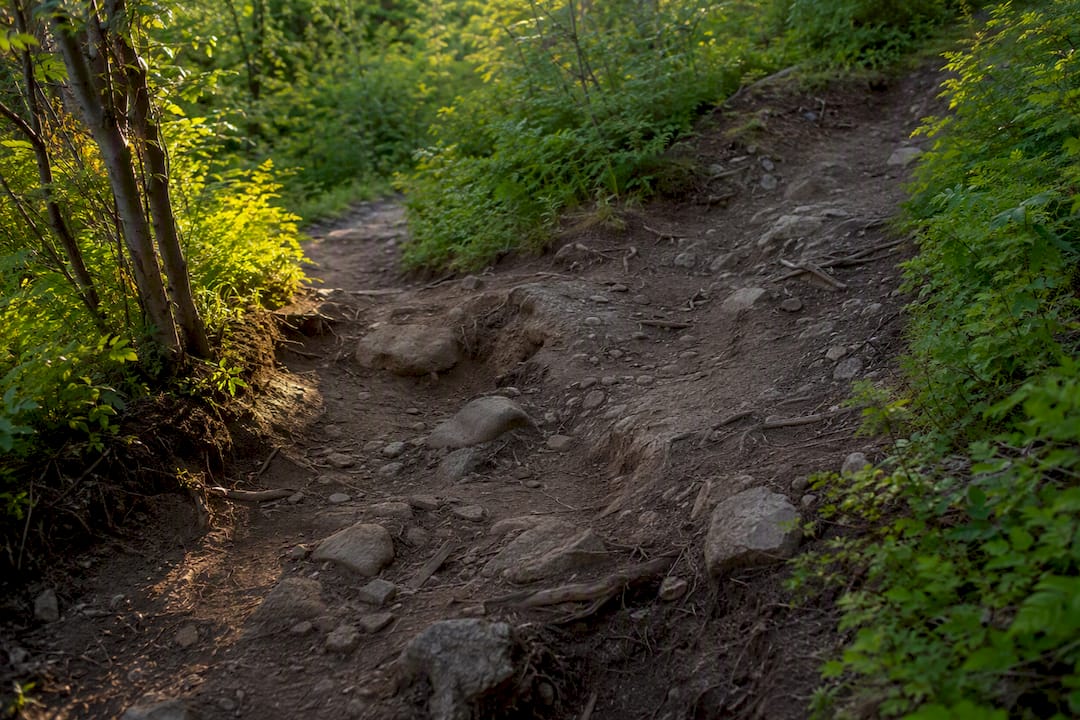
Muddy sections trigger the same instinct in reverse. Hikers step around the mud to keep their boots clean, which tramples the vegetation on either side and doubles the width of the trail. The Appalachian Mountain Club’s guidance on mud season is blunt about this: walk through the center of the mud, not around it. Boots suited for wet ground make this an easy call rather than a sacrifice.
Other behaviors to avoid:
Leaving pet waste bagged on the trailside “to pick up later.” It doesn’t get picked up.
Feeding wildlife, even a small handful of trail mix to a curious squirrel or chipmunk.
Wandering off-trail to photograph a view when a durable overlook already exists a few steps away.
Ignoring posted closures, which usually mean active habitat restoration or nesting season.
None of this requires special gear or training, and avoiding sensitive natural areas helps protect habitats and allows for a sustainable outdoor experience as explained in Biodiv’Sports: Protéger les Zones Naturelles Sensibles pour une Pratique Sportive Durable. It requires noticing where your feet land and making the slightly less convenient choice most of the time.
What Are the Rules for Dogs, Horses, and Wildlife?
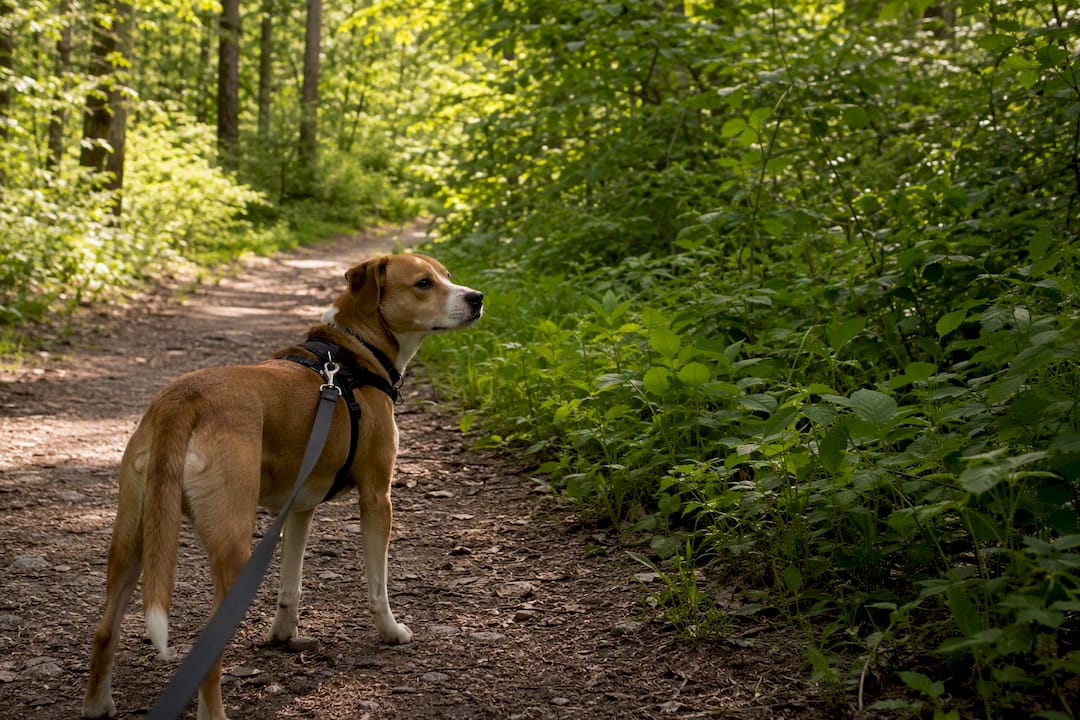
Dogs need a leash short enough that you can control them the instant something unexpected happens, whether that’s a squirrel, another dog, or a horse rounding a bend. Most trail systems post leash requirements, and leashing protects your dog as much as it protects wildlife and other hikers, since an off-leash dog chasing a deer can end badly for the dog, the deer, or a driver on a nearby road. Bring enough water for your dog on hot days, pack out every bit of waste, and check a trail’s pet policy before you go. Some wilderness areas and sensitive habitat zones don’t allow dogs at all.
Horse encounters have a specific script, and it’s worth memorizing before your first one catches you off guard. Stop moving. Step to the downhill side of the trail if the terrain lets you. Speak in a normal, calm voice so the horse registers you as a person rather than an unfamiliar shape in the brush. Then follow whatever the rider tells you to do. NPS guidance is direct on this point: riders know their horse’s temperament better than you ever could in a ten-second encounter, so their instructions override your instincts.
Wildlife encounters follow a simpler logic: distance and food discipline. Keep well back from any animal you didn’t expect to see, resist the urge to approach for a photo, and never feed anything, no matter how tame it looks. Pack out food scraps completely, since even crumbs teach animals to associate people with an easy meal, and that association gets animals killed. If you’re hiking in bear country, carrying and knowing how to use bear spray is standard advice from land management agencies, and it’s worth practicing the draw motion before you actually need it.
Pro Tip: If a horse spooks and the rider seems to be struggling, don’t move suddenly to help. Stay still, stay quiet, and let the rider regain control first. Sudden movement from you is usually what triggers the spook in the first place.
How Should Groups and Solo Hikers Share the Trail?
Groups create their own etiquette problems simply by taking up space. The slowest person in your group sets the pace, not the fastest, and on narrow sections everyone drops into single file automatically. When you stop to regroup, catch your breath, or check a map, step completely off the tread rather than clustering in the middle of the path. Michigan’s DNR guidance is specific about where not to stop: never side-by-side in a narrow spot, never on a blind corner, and never right at the crest of a hill where oncoming traffic can’t see you until it’s too late.
Large groups of six or more should consider splitting into smaller clusters with some distance between them, so a passing cyclist or another hiking party isn’t stuck waiting behind an unbroken line of ten people. A well-run group hike moves like water around obstacles, not like a traffic jam.
If you’re solo and you meet a large group coming the other way, yield first. It’s faster for one person to step aside than for fifteen. Say something as you do it, a quick “go ahead” keeps things moving and avoids the awkward standoff where both sides wait for the other to move.
What Should You Carry for Trail Safety and Preparedness?
Good etiquette and good preparedness are the same instinct pointed in different directions: both come down to not creating a problem for someone else to solve. Land managers consistently point back to the Ten Essentials as the baseline for any day hike:
Navigation tools (map, compass, or GPS with a charged backup)
Sun protection (sunscreen, hat, sunglasses)
Extra layers for weather changes
A headlamp or flashlight with fresh batteries
A basic first-aid kit
A fire-starting method
A repair kit or multi-tool
Extra food beyond what you think you’ll need
Extra water or a filtration method
Emergency shelter, even something as simple as a lightweight bivy
A paper map and compass matter more than most hikers assume, since electronic devices fail exactly when you need them most, whether that’s dead batteries, a cracked screen, or no signal deep in a canyon.
If someone in your group is hurt, call 911 where you have signal and give the dispatcher your specific location, trail name, and mile marker if you know it. A personal locator beacon closes that gap in areas with no cell coverage. Before you ever leave the trailhead, tell someone your route and expected return time. Rescue is not guaranteed in remote terrain, and a trip plan left with a friend is often what turns a bad night into a manageable one.
Why Does Trail Etiquette Actually Matter?
Every rule in this guide traces back to a measurable outcome. Staying on the marked tread reduces erosion and keeps trails open longer instead of forcing land managers into costly closures for rehabilitation. Packing out waste, including pet waste, cuts down on the spread of disease among wildlife populations that would otherwise scavenge it. Yielding and communicating clearly prevents the collisions and near-misses that turn a shared trail into a liability.
Leave No Trace practices don’t just protect the land in the abstract. Trails that avoid erosion and user damage stay open longer and need far less maintenance, which means the access you enjoy today depends directly on the choices hikers make this season.
The National Park Service built its entire etiquette framework around a single golden rule: treat other trail users the way you’d want to be treated. When you’re not sure whether you or the other party has the right of way, yield anyway. It costs you almost nothing and it’s usually the safer bet.
Why We Built This Guide
At Thrillofit, we hear from readers who got burned by a bad encounter on the trail, a spooked horse, a near-collision with a mountain biker, a dog that bolted after a deer. Most of these moments trace back to someone not knowing the basic rules, not to bad intentions. That gap is what this guide closes.
We cover the deeper mechanics of this elsewhere, including our breakdown of Leave No Trace principles and our wildlife encounter guidelines, both worth a read before your next trip. For now, screenshot the checklist above, keep it in your head on the trail, and pass it along to whoever you’re hiking with next.
Frequently Asked Questions
What is trail etiquette in simple terms? Trail etiquette is the shared code of conduct that tells hikers, cyclists, and equestrians who yields to whom, how to pass safely, and how to avoid damaging the trail or disturbing wildlife.
Who has the right of way on a hiking trail? Equestrians have the right of way over everyone else, hikers come next, and cyclists yield to both. Among hikers, the person going uphill generally has the right of way over the person going downhill.
What do you say when passing someone on a trail? “On your left” is the standard call when overtaking from behind. Cyclists often add a short warning like “riders coming through” when passing multiple hikers at once.
Do dogs need to be leashed on all trails? Most trail systems require leashes, and even where they don’t, keeping your dog leashed protects it from wildlife encounters, other trail users, and traffic near trailheads.
What should you do if you encounter a horse on the trail? Stop, move to the downhill side of the trail if possible, speak in a calm voice, and follow the rider’s instructions since they know their horse’s temperament best.
Sources
Recommended
Comments