
High-Altitude Camping Risks: What Every Camper Must Know

TL;DR:
Camping above 8,000 feet involves serious health and environmental risks, including altitude sickness and severe weather. Early recognition and gradual ascent are essential to prevent altitude illness and avoid dangerous situations. Proper gear, site selection, and cautious response to symptoms protect campers from life-threatening dangers.
High-altitude camping is defined as camping above 8,000 feet, where reduced oxygen and lower air pressure create serious health and environmental risks that can turn a great trip into a medical emergency. The primary dangers fall into two categories: physiological threats from hypoxia and altitude illness, and environmental hazards like violent weather swings and intense UV radiation. Understanding what high-altitude camping risks actually look like, before you leave the trailhead, is the difference between a successful summit camp and a dangerous situation. The CDC and the National Park Service both publish specific guidance on altitude illness, and every camper heading above treeline should read it.
What are the physiological risks of high-altitude camping?
Reduced atmospheric pressure at elevation forces your body to work harder for every breath. At 10,000 feet, inspired oxygen drops to roughly 69% of sea level values, pushing arterial oxygen saturation down to 88–91%. That drop is enough to trigger a cascade of symptoms in otherwise healthy people.
Acute mountain sickness, or AMS, is the most common altitude illness. Symptoms include headache, nausea, fatigue, dizziness, and poor sleep. They typically appear within 6–12 hours of arriving at a new elevation and can feel almost identical to a hangover or mild flu. That similarity is exactly why campers miss the warning signs.
The more dangerous conditions are High Altitude Pulmonary Edema (HAPE) and High Altitude Cerebral Edema (HACE). HAPE causes fluid to build up in the lungs, producing a wet cough, breathlessness at rest, and a bluish tint to the lips. HACE causes fluid to accumulate in the brain, leading to confusion, loss of coordination, and eventually unconsciousness. HAPE is the leading cause of death related to altitude exposure, which means recognizing early signs is not optional.
The rate of ascent drives risk more than final elevation. Rapid ascent to 3,000–4,600 meters raises AMS incidence to 30–40%, and flying directly to high elevation carries a 4.5-fold higher risk compared to a gradual climb. That statistic comes from a meta-analysis of over 11,000 individuals, so it carries real weight.
Here are the key physiological warning signs to watch for:
Persistent headache that does not improve with water or rest
Nausea or vomiting without an obvious dietary cause
Unusual fatigue or weakness during minimal exertion
Shortness of breath while resting
Confusion, stumbling, or slurred speech (HACE warning signs)
Wet, gurgling cough or pink-tinged sputum (HAPE warning signs)
Pro Tip: If a headache appears within 12 hours of gaining elevation, treat it as AMS until proven otherwise. Drink water, stop ascending, and rest. If symptoms worsen over the next two hours, descend immediately.
How do environmental factors at high elevations increase camping risks?
Hypoxia gets most of the attention, but the environment above 8,000 feet is independently dangerous. Weather can shift from clear skies to a full snowstorm within hours, and the temperature drop that comes with it can push an unprepared camper into hypothermia territory fast. Afternoon thunderstorms are common in many mountain ranges throughout the summer months, and lightning exposure on exposed ridgelines is a genuine threat.
UV radiation intensity increases with elevation. For every 1,000 feet of gain, UV exposure rises measurably, and at high altitude the thinner atmosphere filters far less solar radiation than at sea level. Sunburn happens faster, snow reflection amplifies the effect, and eye damage from UV exposure without proper eyewear is a real risk. Thrillofit’s UV safety guide for campers covers this in detail and is worth reading before any high-elevation trip.
Terrain hazards compound the weather risks. Steep, unstable slopes create rockfall and avalanche exposure. Loose scree makes footing unpredictable, especially when fatigue from altitude impairs coordination. Site selection matters enormously at elevation.
Key environmental risks to plan around:
Sudden storms with lightning, hail, and rapid temperature drops
Intense UV radiation causing sunburn and snow blindness
Avalanche and rockfall zones on steep terrain
Unstable footing on scree, talus, or icy surfaces
Carbon monoxide buildup from heating devices used in enclosed tents
Carbon monoxide poisoning risk increases at high altitude when campers use stoves or heaters inside tents with poor ventilation. Portable CO detectors are a critical piece of gear that most campers overlook entirely.
Pro Tip: Check a campsite setup guide before you go. Choosing a sheltered site away from avalanche paths and exposed ridgelines reduces your exposure to multiple hazards at once.
What are the best practices to minimize risks while camping at high altitude?
Preparation is the most effective tool against altitude-related dangers. No amount of fitness or willpower substitutes for a well-planned ascent schedule, the right gear, and a clear emergency plan.
1. Ascend gradually. The standard rule is to gain no more than 1,000 feet of sleeping elevation per day above 8,000 feet, with a rest day every 3,000 feet. This gives your body time to produce more red blood cells and adapt to lower oxygen levels.
2. Hydrate consistently. Altitude increases respiratory water loss and can suppress thirst. Drink water steadily throughout the day, even when you do not feel thirsty. Avoid alcohol, especially in the first 48 hours at elevation.
3. Eat carbohydrate-rich meals. Carbohydrates require less oxygen to metabolize than fats or proteins. Prioritizing them during acclimatization gives your body a slight physiological advantage.
4. Recognize symptoms early and act. Descending at least 450 meters is the definitive treatment for moderate to severe altitude illness. Resting at the same elevation when symptoms are worsening is a dangerous mistake.
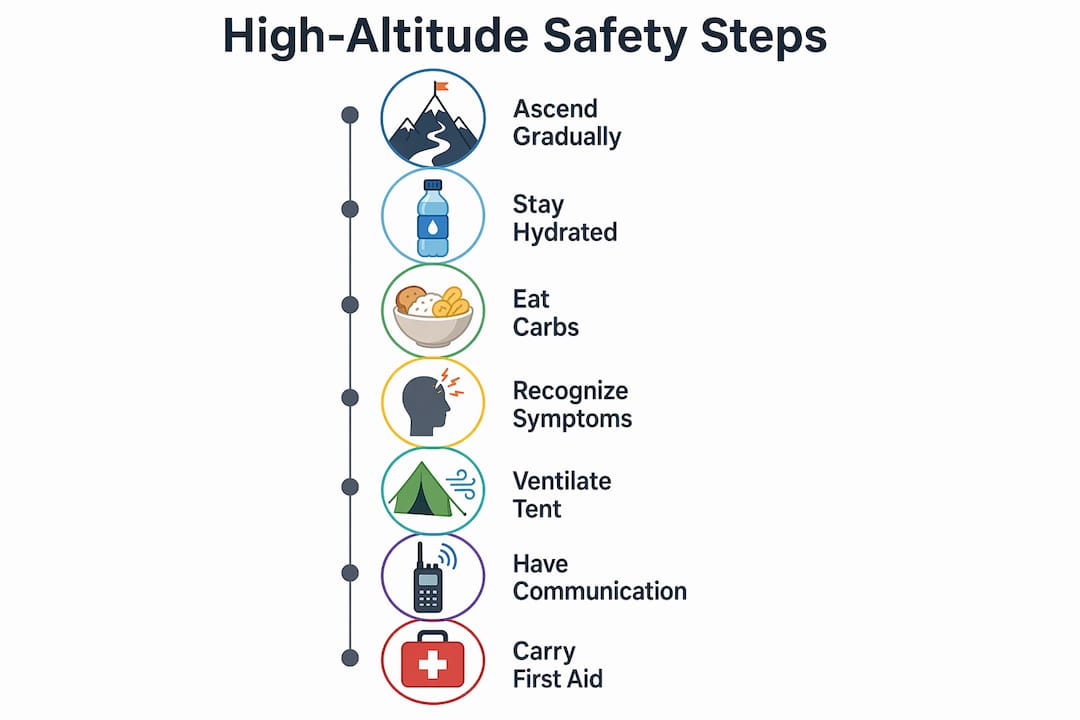
5. Ventilate your tent. Never run a stove or heater inside a sealed tent. Crack a vent even in cold weather, and carry a portable CO detector on any trip where heating devices are used.
6. Build a communication plan. Carry a satellite communicator or personal locator beacon. Cell coverage above treeline is unreliable. Know the nearest trailhead and the fastest descent route before you set up camp.
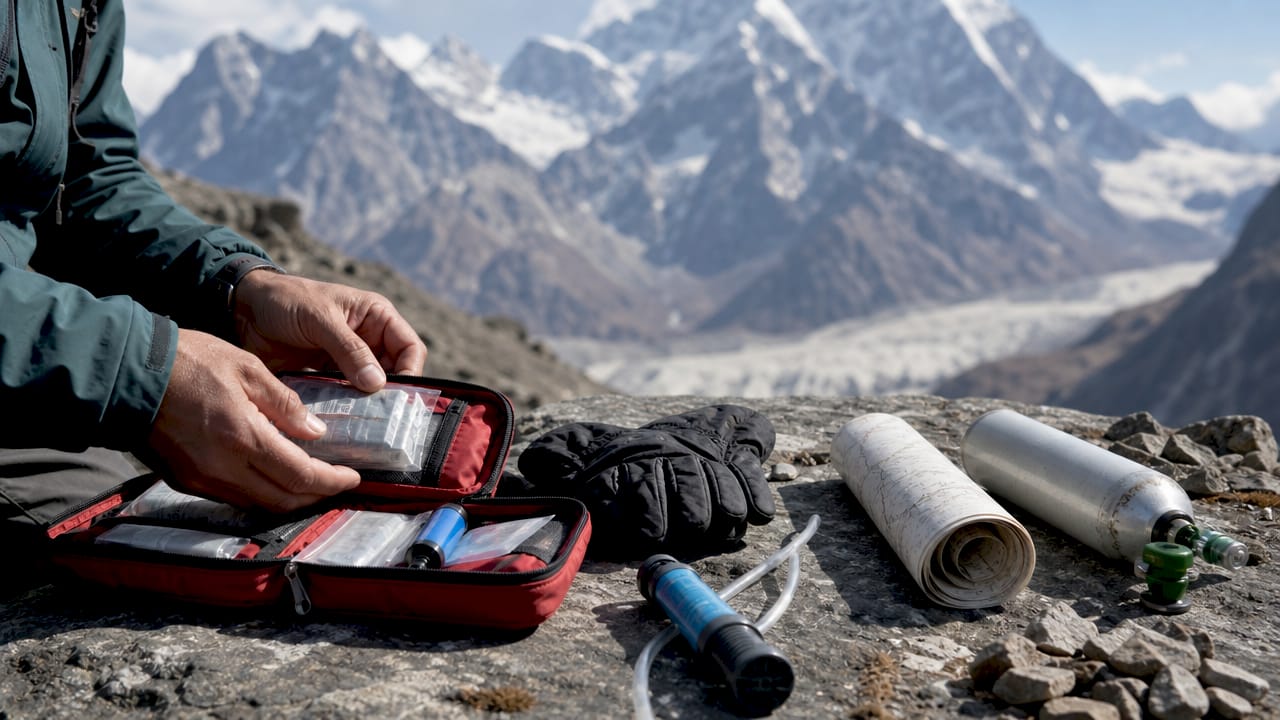
A camping first aid kit stocked for altitude should include ibuprofen for AMS headaches, blister care, and an emergency thermal blanket. Acetazolamide (Diamox) is a prescription medication that speeds acclimatization and can be discussed with a physician before a high-altitude trip.
Preparation area | Key action |
Ascent rate | Gain no more than 1,000 feet of sleeping elevation per day above 8,000 feet |
Hydration | Drink water continuously; avoid alcohol for the first 48 hours |
Symptom response | Descend at least 450 meters at the first sign of moderate or severe AMS |
Tent safety | Ventilate at all times when using any heating or cooking device |
Emergency comms | Carry a satellite communicator; know your descent route before arrival |
What common misconceptions put high-altitude campers at risk?
The most dangerous belief in high-altitude camping is that physical fitness protects against altitude sickness. Physiological fitness does not reduce AMS risk. Susceptibility is largely genetic, and no screening test predicts who will get sick. Elite athletes and sedentary hikers face the same odds at the same elevation.
A second common mistake is using alcohol or sleep aids to manage altitude-induced insomnia. Alcohol and over-the-counter sleep aids depress respiration, lowering blood oxygen further and worsening the very symptoms campers are trying to relieve. Poor sleep at altitude is uncomfortable, but it is far safer than chemically suppressing your breathing.
Campers also frequently delay action by assuming symptoms will pass on their own. Waiting for symptoms to resolve without descending risks rapid deterioration into HAPE or HACE, both of which can become fatal within hours. “Toughing it out” at altitude is not resilience. It is a medical error.
Watch out for these common pitfalls:
Assuming fitness means immunity to altitude illness
Using alcohol or sedatives to sleep at elevation
Mistaking AMS symptoms for dehydration or a cold
Refusing to descend when symptoms worsen
Running heating devices in a closed tent without ventilation
Pro Tip: Keep a simple symptom log during the first 24 hours at a new elevation. Note headache intensity, energy level, and appetite. A pattern of worsening scores is a clear signal to descend, not wait.
Key Takeaways
High-altitude camping above 8,000 feet carries serious, predictable risks that preparation and early symptom recognition can prevent.
Point | Details |
Altitude illness is not fitness-dependent | AMS, HAPE, and HACE can affect any camper regardless of physical condition. |
Rate of ascent is the primary risk factor | Rapid elevation gain dramatically increases AMS incidence; ascend gradually. |
Descend at the first sign of severe symptoms | Descent of at least 450 meters is the definitive treatment for serious altitude illness. |
Environmental hazards compound health risks | Weather, UV radiation, and CO poisoning require specific gear and site planning. |
Alcohol and sedatives worsen altitude illness | Both depress respiration and lower blood oxygen at elevation. |
What I’ve learned from watching altitude sickness unfold in real time
The first time I watched someone develop HACE symptoms on a camping trip above 11,000 feet, the progression was shockingly fast. One hour he was complaining of a headache. Two hours later he was stumbling and unable to answer simple questions. We descended immediately, and he recovered. But the lesson I took away was not about emergency response. It was about how confidently he had dismissed the headache as “just dehydration” for the first three hours.
That pattern repeats constantly in high-altitude camping. Campers arrive fit, motivated, and certain that their bodies will adapt. They attribute early symptoms to travel fatigue or not drinking enough water. By the time the symptoms are undeniable, the window for easy intervention has closed.
Preparation is not just about gear. It is about building the mental habit of taking symptoms seriously before they become severe. The hiking preparation advice that applies to trail hiking applies even more at elevation: know your route, know your limits, and know when to turn back. The mountain will be there next season. A bad decision at 12,000 feet may not give you that option.
Respect the altitude. Plan for the weather. Carry the right gear. And descend the moment your gut tells you something is wrong.
— S
Thrillofit’s resources for safer high-altitude adventures
Heading into the mountains without the right preparation is the fastest way to turn a great trip into a dangerous one. Thrillofit pulls together curated gear picks and practical safety guides built specifically for outdoor adventurers who want to push their limits without cutting corners on safety.
Whether you are planning your first high-altitude camp or refining your kit for a technical route, Thrillofit’s library covers the gear, the skills, and the safety knowledge you need. Browse the full resource hub at Thrillofit and go into your next high-elevation trip with a real plan behind you.
FAQ
What elevation is considered high-altitude camping?
High-altitude camping is generally defined as camping above 8,000 feet. At this elevation, oxygen levels and air pressure drop enough to trigger physiological stress in most people.
Can altitude sickness happen to fit, healthy campers?
Yes. Physical fitness does not protect against altitude sickness. Susceptibility is largely genetic, and AMS can affect elite athletes and casual hikers equally.
What is the fastest treatment for severe altitude sickness?
Descent is the definitive treatment. Dropping at least 450 meters in elevation relieves symptoms faster than any medication or rest at the same altitude.
How do I prevent carbon monoxide poisoning in a tent at high altitude?
Never run a stove or heater in a sealed tent. Keep a vent open at all times and carry a portable CO detector on any trip where heating devices are used.
Is alcohol safe to drink at high altitude?
Alcohol is not safe at high altitude. It depresses respiration, lowers blood oxygen saturation, and worsens altitude sickness symptoms, particularly during the first 48 hours at elevation.
Recommended
Comments