

Paracord Survival Uses: A Practical Field Guide

TL;DR:
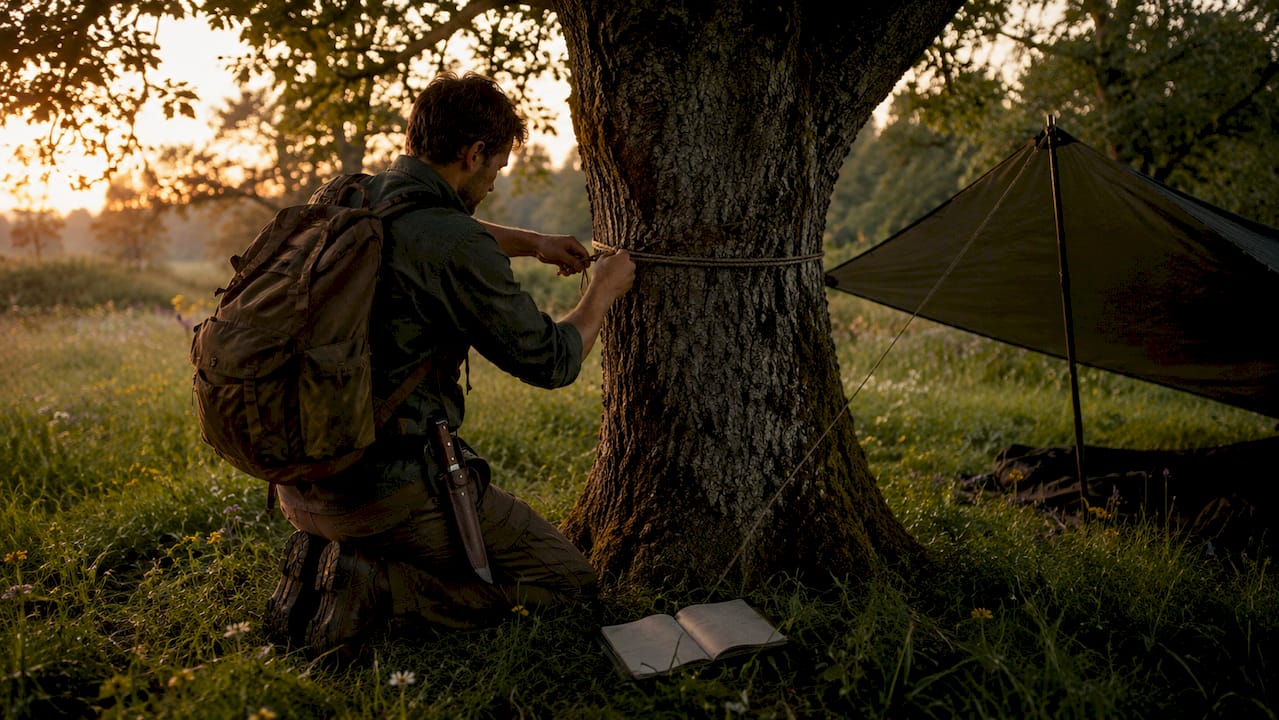
Paracord is a versatile nylon rope originally designed for parachutes and now used in survival situations. Its kernmantle design provides multiple tools inside a single cord, but it is unsafe for climbing or rappelling. Proper handling, sterilization, and practice expand its medical, shelter, and advanced technical uses during emergencies.
Paracord is defined as a lightweight nylon kernmantle rope originally designed for parachute suspension lines, now recognized as one of the most versatile survival tools an outdoorsperson can carry. The role of paracord survival uses spans shelter building, emergency medical care, fire starting, fishing, navigation, and gear repair. Type III 550 cord is the survival industry standard, rated at 550 pounds of breaking strength with 7 inner two-ply nylon strands. Outdoor experts recommend carrying between 25 and 100 feet to cover the full range of survival tasks you may face in the field. No other single piece of gear matches that ratio of weight to function.
What is paracord made of and how does its construction enable survival uses?
Paracord’s kernmantle design consists of a braided outer sheath wrapped around 7 to 9 inner two-ply nylon strands. The sheath handles abrasion and UV exposure. The inner strands do the fine work that most survivalists never think about until they need it.
Those inner strands are the hidden asset. Each one functions as a separate piece of cordage with its own tensile strength, giving you multiple tools inside a single length of rope. That construction is why paracord earns the label “the duct tape of the fiber world” among experienced survival instructors.
One critical caution: paracord is not certified for climbing or rappelling despite its 550-pound rating. Nylon weakens under sustained friction heat and can melt under direct flame. Never treat the breaking strength number as a green light for life-safety vertical work.
Handling the inner strands correctly matters as much as knowing they exist. Follow these steps every time you extract them:
Cut the sheath cleanly with a sharp blade, never tear it.
Melt the cut ends of both the sheath and inner strands immediately to prevent fraying and loss of strength.
Store extracted strands in a small zip-lock bag to keep them clean.
Boil or briefly flame inner strands before any medical or food-contact use.
Pro Tip: Carry a small lighter specifically for sealing cut paracord ends. A melted tip holds its shape far longer than a taped or knotted one, and it takes two seconds.
How is paracord used for shelter building and gear repairs?
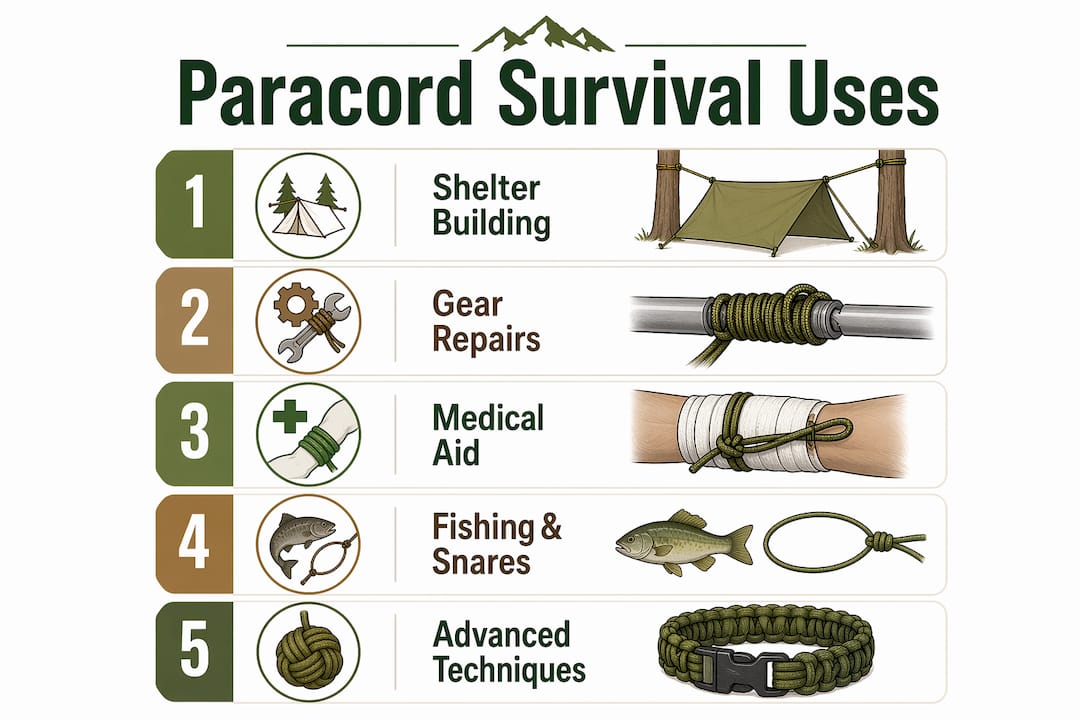
Paracord is the backbone of field shelter construction. A single 50-foot length gives you enough material to rig a ridgeline, run guy lines, and lash a frame for a lean-to or A-frame shelter. The taut-line hitch is the go-to knot for adjustable guy lines because it holds tension under load and releases with a simple push.
Lashing poles for debris shelters requires a different approach. A square lashing or diagonal lashing locks poles at right angles without nails or hardware. Three or four wraps with a frapping turn cinches the joint tight enough to bear the weight of a debris pile or tarp.
Gear repair is where paracord saves trips. Common field fixes include:
Replacing broken boot laces with a full strand of paracord (trim and melt the ends to fit eyelets).
Repairing torn backpack shoulder straps by threading paracord through the webbing loops and knotting it off.
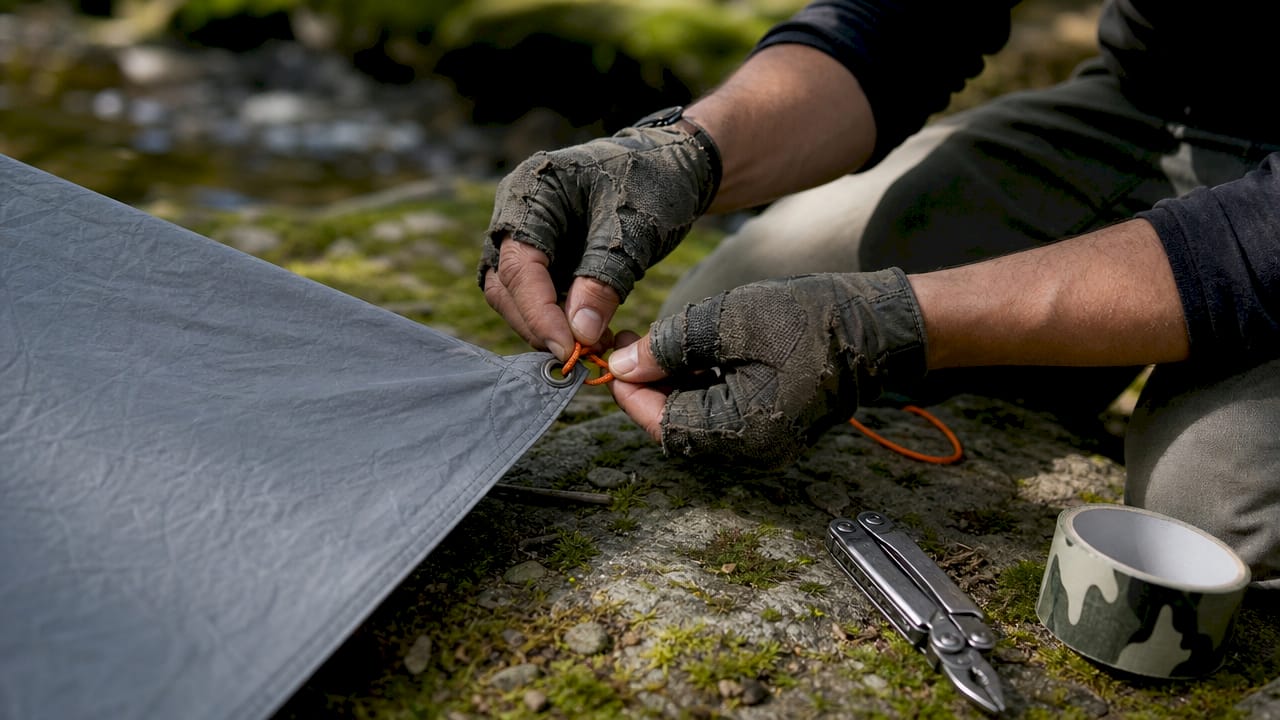
Replacing snapped tent guy lines with matching lengths of paracord.
Securing a broken zipper pull by threading a short loop of inner strand through the zipper tab.
Color choice matters more than most survivalists admit. Bright orange or neon green cord makes your shelter lines visible in low light, reducing trip hazards at night. Camo-colored cord works better for hunting camps or situations where you want a low visual profile. Carry both if weight allows.
What are the medical and first aid uses of paracord in survival situations?
Paracord’s medical applications require the most caution of any survival use. Survival instructors are direct on this point: paracord is a utility cord, not a medical device. Use it in emergencies when proper equipment is unavailable, not as a substitute for trained first aid tools.
That said, the applications are real and potentially life-saving when applied correctly.
Splint lashing is the most common medical use. Pad the injured limb with clothing or foam, place rigid sticks alongside it, then wrap paracord in a figure-eight pattern above and below the injury site. The goal is immobilization, not compression. Tie firmly but check circulation every 15 minutes.
Slings and swathes for arm injuries use a longer length of paracord looped around the neck and under the forearm. The inner strands work well here because they are softer against skin than the full sheath cord.
For wound closure, sterilize inner strands by boiling them for at least 10 minutes or passing them through a flame before use. Unsterilized cordage introduces bacteria directly into an open wound. This step is non-negotiable.
Tourniquet use is the highest-stakes application. Follow these rules without exception:
Use paracord as a last-resort tourniquet only when bleeding cannot be controlled by direct pressure.
Pad the limb with at least two layers of clothing before applying the cord.
Use a windlass stick to tighten the tourniquet until bleeding stops.
Write the time of application on the patient’s skin with a marker or blood.
Never remove a tourniquet in the field once applied.
Pro Tip: Paracord’s small diameter makes it more likely to cut into tissue than a proper tourniquet. Always pad generously. A properly padded paracord tourniquet distributes pressure across the artery rather than slicing through soft tissue.
Check Thrillofit’s camping first aid essentials for a full breakdown of what to carry alongside paracord in your kit.
How can inner strands be used for fishing, snares, and fine tasks?
The inner strands of Type III paracord carry approximately 10 to 15 pounds of test strength per strand. That range makes them suitable for panfish fishing line, snare triggers, and fine repair work. Most survivalists carry a full cord and never realize they have 7 fishing lines inside it.
Fishing and snaring applications require a methodical approach:
Extract the inner strands by gripping the sheath at one end and pushing it back like a sleeve to expose the core.
Pull individual strands free without twisting them, which weakens the fibers.
Melt the cut ends immediately to stop unraveling.
Tie a simple improved clinch knot to attach a hook, or form a loop snare using a fixed loop knot.
Check local regulations before setting any snare or trap. Many jurisdictions restrict or prohibit snaring without a license.
For fishing, a single inner strand works as a trotline drop line for panfish in still water. Multiple strands twisted together increase strength for larger fish. The transparency of nylon also reduces visibility in clear water, which improves catch rates.
Emergency sewing is another underused application. A single inner yarn, split further into its two plies, produces a thread fine enough to close a torn seam or repair a sleeping bag baffle. Sterilize it first if you are using it near skin or food.
Pro Tip: Dental floss is a better emergency suture material if you have it. If you do not, a sterilized inner strand from paracord is the next best option. The key difference is that paracord nylon does not absorb bacteria as readily as natural fiber, which reduces infection risk slightly when properly sterilized.
What advanced survival techniques make paracord indispensable?
Paracord’s utility extends well beyond the obvious applications. The techniques below separate prepared survivalists from those who carry cord but never fully use it.
Technique | Application | Key Detail |
Hypowrap | Thermal insulation wrap | Zig-zag pattern seals warm air against body |
Bow drill string | Friction fire starting | High melting point outperforms natural cordage |
Pace counter | Wilderness navigation | Thread beads on inner strand to track distance |
Perimeter tripwire | Camp security | Inner strands strung ankle-height around camp |
Tool handle wrap | Grip and durability | Full sheath wrapped tightly over knife or axe handle |
The Hypowrap technique uses paracord in a zig-zag pattern over insulation layers to prevent the “chimney effect,” where warm air escapes upward from a wrapped casualty. This matters most for non-ambulatory individuals in cold environments who cannot generate body heat through movement.
Paracord as a bow drill string outperforms natural cordage because nylon resists heat and abrasion better than plant fibers. Natural cordage frays and snaps under the friction of repeated bow strokes. Paracord holds through dozens of attempts, which matters when fire is a survival priority.
A pace counter made from paracord threads beads onto an inner strand to track ground covered during navigation. Move one bead for every 100 paces. After 10 beads, you have covered roughly 1,000 paces, or about half a mile depending on stride length. This low-tech tool works when GPS fails.
Key takeaways
Paracord’s kernmantle construction, 550-pound breaking strength, and 7 extractable inner strands make it the single most versatile utility cord available for survival and emergency situations.
Point | Details |
Type III 550 cord is the standard | Carry 25–100 feet; it covers shelter, medical, fire, fishing, and navigation tasks. |
Inner strands are separate tools | Each strand carries 10–15 lb test strength, usable for fishing, snaring, and sewing. |
Medical use requires caution | Always pad tourniquet applications and sterilize inner strands before wound contact. |
Advanced techniques expand utility | Hypowrap, bow drill, and pace counters turn paracord into a thermal, fire, and nav tool. |
Skill matters as much as gear | Practice knot tying and strand extraction before you need them in an emergency. |
What I’ve learned from years of carrying paracord in the field
Most survivalists carry paracord. Far fewer actually know how to use it. The gap between owning 100 feet of 550 cord and being able to deploy it under pressure is wider than most people expect.
The biggest mistake I see is treating paracord as a medical tool without training. A tourniquet applied with unpadded paracord can cause nerve damage and tissue death faster than the original injury. The cord is thin enough to act like a wire under pressure. Padding is not optional.
The second mistake is never practicing strand extraction. In cold weather with numb fingers, pulling inner strands from a sheath takes real dexterity. Practice it at home, in gloves, until it takes under 60 seconds. That skill is worth more than any knot you can tie.
The third mistake is underestimating the advanced uses. Most outdoorspeople know about shelter lines and gear repair. Almost none have practiced the Hypowrap or built a pace counter. Those techniques require almost no extra gear and can make a real difference in a serious situation. Spend an afternoon experimenting with them before you need them.
Paracord rewards preparation. The more you practice with it in controlled settings, the more options you have when conditions are not controlled at all.
— S
Thrillofit’s survival resources for serious outdoorspeople
Paracord is one piece of a larger preparedness picture. Thrillofit covers the full range of outdoor survival skills, from wilderness self-rescue techniques to building the perfect campsite, with practical guidance written for real field conditions.

Whether you are building your first survival kit or refining a system you have carried for years, Thrillofit’s library of gear reviews and skill guides gives you the depth you need. The top survival gear sources for 2026 article is a strong starting point for anyone looking to pair quality paracord with the rest of a well-built kit. Preparedness is not a single purchase. It is a set of practiced skills backed by the right equipment.
FAQ
What type of paracord is best for survival?
Type III 550 paracord is the survival standard, rated at 550 pounds of breaking strength with 7 inner two-ply nylon strands. Experts recommend carrying 25–100 feet for general survival tasks.
Can paracord be used for climbing?
Paracord is not certified for climbing or rappelling despite its 550-pound label. Friction heat weakens nylon, making it unsafe for life-safety vertical applications.
How do you sterilize paracord inner strands for medical use?
Boil inner strands for at least 10 minutes or pass them through a flame before using them for wound closure or any skin contact. Skipping sterilization introduces bacteria directly into an open wound.
How strong are paracord inner strands for fishing?
Each inner strand carries approximately 10–15 pounds of test strength, making it suitable for panfish and small game snare triggers within applicable local regulations.
What is the Hypowrap technique?
The Hypowrap uses paracord in a zig-zag pattern over insulation layers to seal warm air against the body and prevent heat loss in cold-weather survival scenarios, particularly for non-ambulatory individuals.
Recommended
Comments