

Why Bring Extra Food Hiking: Safety and Energy Guide

TL;DR:
Carrying extra food on hikes ensures sufficient energy during unexpected delays or terrain changes. It provides a safety buffer that prevents calorie deficits and enhances decision-making in emergencies. Properly selected, calorie-dense foods in a separate bag support safety and preparedness.
Bringing extra food hiking means carrying calorie-dense provisions beyond your estimated daily needs to sustain energy, manage unexpected delays, and keep your judgment sharp when conditions change. Hikers on demanding terrain burn 400–600 calories per hour, a rate that outpaces most people’s intuitive sense of how much food they actually need. Trail experts recommend a buffer of 1.5 days of extra food on any multi-day trip lasting three to seven days. That buffer is not paranoia. It is the difference between a manageable setback and a genuine emergency. Thrillofit covers this topic because under-fueling is one of the most preventable causes of trail accidents.
Why bring extra food hiking: the core case
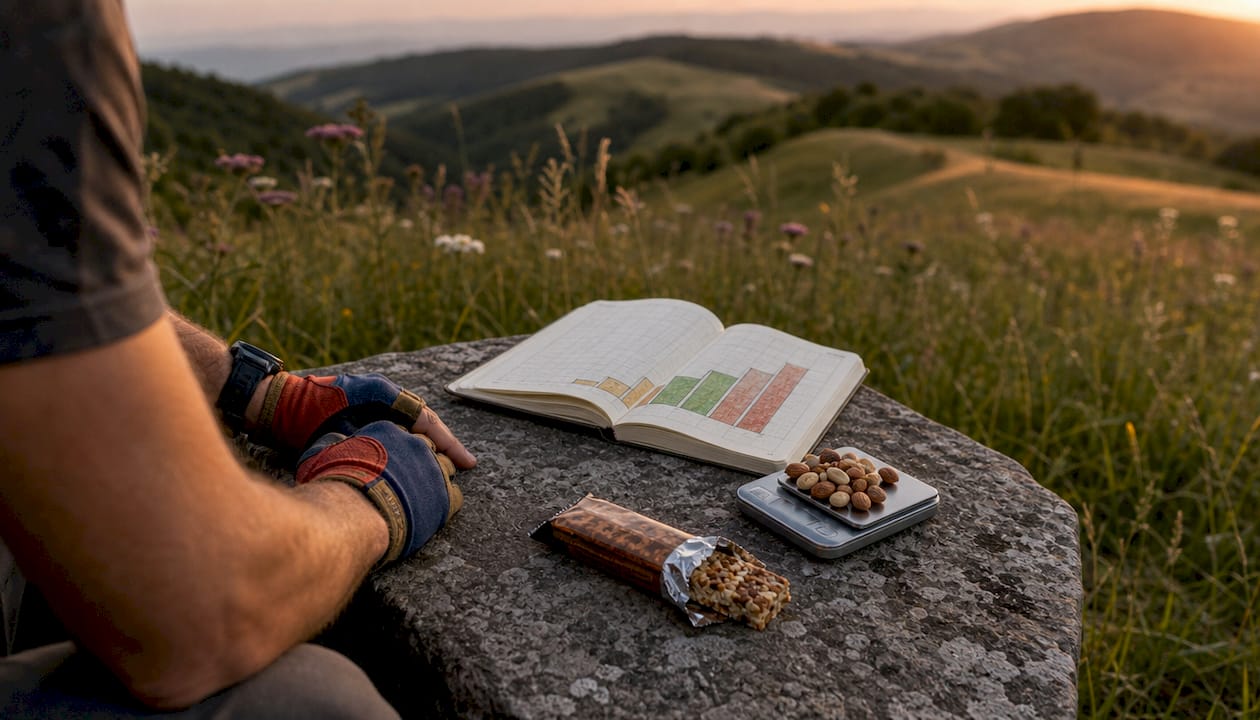
The standard industry term for this practice is “emergency food planning,” and it applies to day hikes and multi-day backpacking trips alike. Extra rations serve three distinct functions: they replace calories burned beyond your planned pace, they cover time lost to weather or route changes, and they protect your decision-making when your body is under stress.
Calorie burn on the trail is not uniform. A flat walk burns far less than a steep climb with a loaded pack. On technical terrain, 400–600 calories per hour is a realistic range, and that number climbs with cold temperatures, heavy packs, or altitude. Most hikers plan meals around a moderate estimate and then encounter conditions harder than expected. Extra food closes that gap before it becomes a problem.
The 1.5-day buffer recommended by trail nutrition experts is not arbitrary. It accounts for the most common disruptions: a twisted ankle that slows your pace, a storm that pins you at camp for a day, or a navigation error that adds miles. Without that buffer, you face those situations on a calorie deficit, which compounds every other risk.
How calorie burn varies by terrain and load
Terrain type | Estimated calorie burn per hour |
Flat trail, light pack | 300–400 kcal |
Moderate incline, standard pack | 400–500 kcal |
Steep or technical, heavy pack | 500–600+ kcal |
These ranges show why a single meal plan built around one burn rate fails on variable terrain. A six-hour day that mixes flat sections with steep climbs can swing your total burn by 600–900 calories compared to your estimate. Extra food absorbs that swing.
Pro Tip: Pack your extra food in calories per gram, not total weight. Foods that hit 4.0+ kcal per gram give you the most energy for the least pack weight.
What are the safety benefits of carrying extra food?
Extra food functions as a first aid kit for your energy system. When your blood sugar drops, your reaction time slows, your balance suffers, and your ability to read a map or assess a river crossing degrades. Keeping fuel in your system is a direct safety measure, not a comfort preference.
The most common scenarios where extra rations matter include:
Weather delays. A storm that forces an unplanned night out doubles your calorie needs without adding any planned food.
Route changes. A washed-out trail or a wrong turn can add two to four hours to a planned day hike.
Injury. A sprained ankle slows your pace dramatically. Slower pace means more hours on trail and more calories burned.
Group needs. A hiking partner who under-packed becomes your responsibility. Extra food covers both of you.
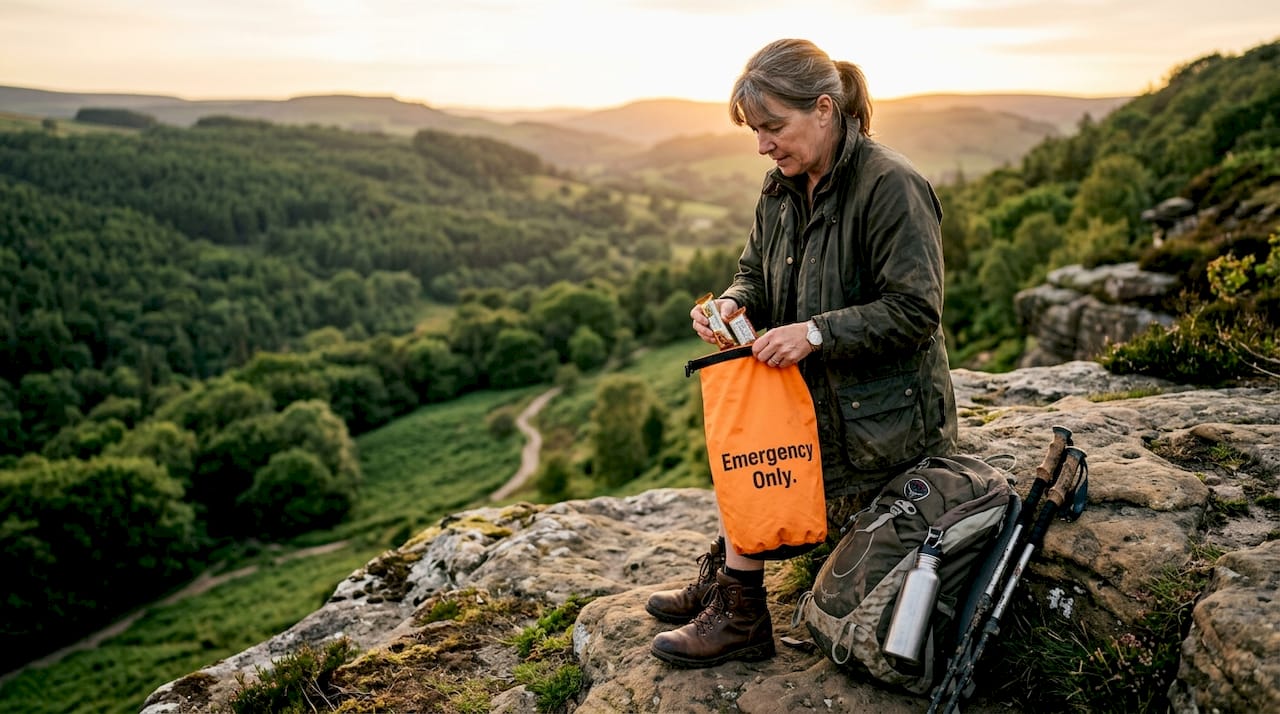
Keeping emergency food separate in a clearly labeled bag prevents accidental eating during normal snack breaks. That separation also means you can access it fast under stress without digging through your entire pack. Think of it the same way you think about a camping first aid kit: you carry it hoping you never need it, but its presence changes what you can safely attempt.
Pro Tip: Label your emergency food bag with a piece of bright tape and the words “Emergency Only.” That visual cue stops you from reaching for it when you’re just bored at mile four.
How to choose and pack extra hiking food
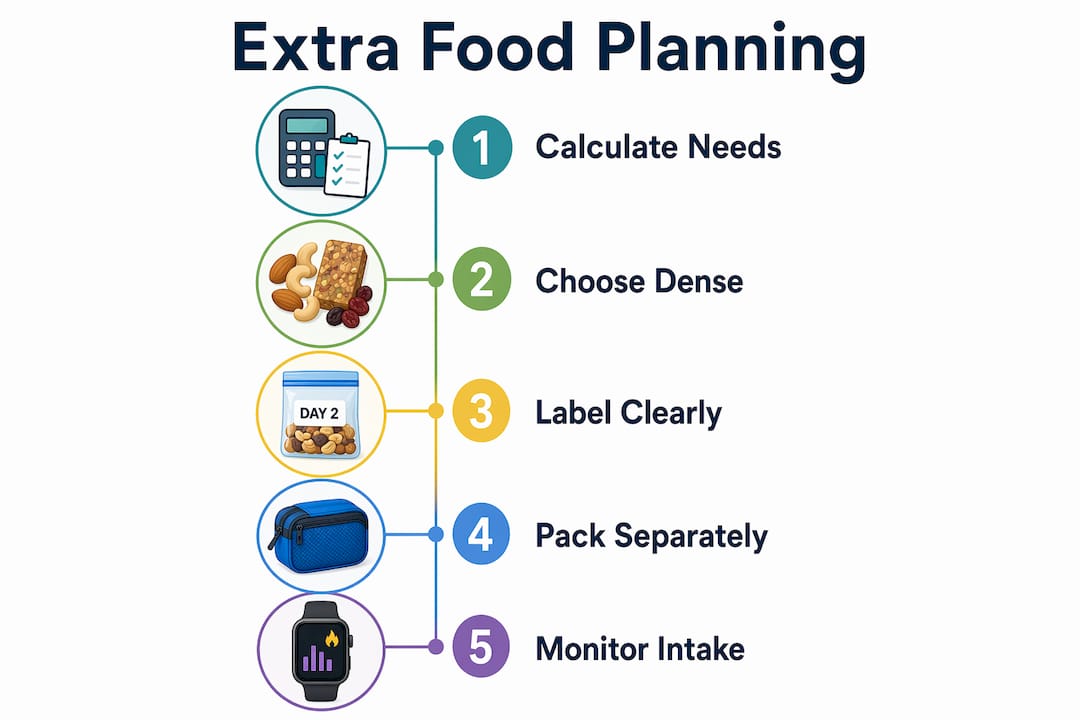
Food selection for extra rations follows one rule above all others: calorie density. You want the most energy in the least space and weight. Calorie-to-weight ratio matters more than total food volume, and the target is 4.0 kcal per gram or higher.
Foods that consistently hit that target include:
Nut butters. Peanut butter and almond butter deliver roughly 6 kcal per gram and require no refrigeration. Single-serve packets weigh almost nothing and survive heat well.
Mixed nuts and seeds. Almonds, cashews, and sunflower seeds average 5–6 kcal per gram. They also provide fat and protein, which sustain energy longer than carbohydrates alone.
Dried fruit. Dates, apricots, and mango strips add fast carbohydrates alongside fiber. They pair well with nuts for a balanced snack.
Jerky and meat sticks. These provide protein, which is critical for overnight muscle recovery on multi-day trips. Protein prevents the muscle breakdown that makes day three harder than day two.
Chocolate and energy bars. A small luxury item boosts morale out of proportion to its calorie count. A single piece of good chocolate at the end of a hard day costs almost nothing in weight and pays back significantly in motivation.
Shelf life matters as much as calorie density. Avoid foods with high moisture content, which spoil faster in heat and humidity. Stick to foods with a shelf life of at least six months. Pack extra rations in a separate, sealed bag inside your pack, away from your daily snacks. This keeps them organized and prevents the slow erosion of your safety buffer one handful at a time.
Pro Tip: Undereating on trail is almost always a planning failure, not a food scarcity problem. Build your extra food list before you pack, not after.
How should you manage eating schedules on a hike?
Appetite suppression during hard physical effort is well documented. Your body redirects blood flow away from digestion during exertion, which blunts hunger signals even when your fuel stores are running low. Waiting until you feel hungry on the trail is a reliable way to fall behind on calories.
The fix is simple: eat every 60–90 minutes regardless of hunger. Set a timer if you need to. Treat it like a medication schedule. Small, frequent eating keeps blood sugar stable, prevents the energy crashes that slow your pace, and reduces the risk of the irritability and poor judgment that come with low blood sugar.
Common pitfalls and how to correct them:
Skipping breakfast to save time. Starting a hike in a calorie deficit means you spend the first two hours catching up. Eat before you leave the trailhead.
Eating only carbohydrates. Fast carbs spike and crash. Pair every carbohydrate snack with fat or protein to extend the energy curve.
Saving the extra food “just in case” for too long. If you are behind on calories by midday, use your extra rations. That is what they are for. Replenish them at the next resupply point.
Drinking water without eating. Hydration and fueling work together. Drinking without eating dilutes your electrolytes and can worsen fatigue.
A sustained calorie deficit of 500 calories per day over 30 days produces a shortfall of 15,000 kcal and measurable performance loss. On a week-long trip, even a 300-calorie daily deficit compounds into a significant drag on your pace and mood. Extra food gives you the flexibility to correct those deficits in real time rather than grinding through them. For hikers planning their first multi-day trip, Thrillofit’s beginner hiking guide covers food planning alongside gear and trail selection.
Key Takeaways
Carrying extra food on a hike is the single most effective way to protect your energy, your safety, and your enjoyment when conditions change unexpectedly.
Point | Details |
Calorie burn is higher than expected | Demanding terrain burns 400–600 kcal per hour; plan food around your hardest expected conditions. |
Pack a 1.5-day buffer on multi-day trips | Trail experts recommend this amount to cover weather delays, route changes, and injuries. |
Prioritize calorie density | Target 4.0+ kcal per gram; nut butters, nuts, and jerky are the most efficient choices. |
Eat on a schedule, not by hunger | Eat every 60–90 minutes to prevent appetite suppression from creating a calorie deficit. |
Keep emergency food separate | A labeled, sealed bag prevents accidental use and allows fast access when you need it most. |
What carrying extra food actually taught me
Most hikers learn the hard way. I did. The first time I ran genuinely low on food was a two-day trip that turned into three because of a washed-out creek crossing. By the end of day two, I was rationing trail mix by the handful and making decisions I would not have made on a full stomach. I turned back when I should have pushed forward, and I pushed forward once when I should have stopped. Neither call was good.
The shift that changed my hiking was treating extra food as non-negotiable gear, the same way I treat a headlamp or a rain jacket. You do not debate whether to bring a headlamp because you might not need it. You bring it because the cost of not having it is too high. Extra food works the same way.
The mental benefit is underrated. Knowing you have a full day of backup calories in your pack changes how you think on the trail. You make slower, better decisions. You stop at the right time. You help your hiking partners instead of conserving energy for yourself. That shift from scarcity thinking to abundance thinking is the real benefit of extra rations, and it shows up in every aspect of your experience. Thrillofit’s survival category covers more of these mindset shifts alongside practical skills.
— S
Thrillofit’s resources for smarter hiking food planning
Thrillofit covers the full picture of outdoor preparedness, from gear selection to trail safety to food planning. If this article got you thinking about how to build a better pack list, the site has practical guides that go deeper on every piece of the puzzle.
Thrillofit’s camping food ideas guide covers specific meal options that work for both day hikes and multi-day trips, with a focus on foods that travel well and deliver real energy. For hikers who want to build out a complete safety kit alongside their food plan, the campfire cooking hacks and gear picks sections offer tested recommendations. Every guide on Thrillofit is built around the same principle: preparation is what makes adventure possible.
FAQ
Why bring extra food on a day hike?
Day hikes can run long due to weather, navigation errors, or slower-than-expected pace. Extra food prevents calorie deficits that impair judgment and physical performance.
How much extra food should I pack for hiking?
Trail nutrition experts recommend 1.5 days of extra food on trips lasting three to seven days. For day hikes, one to two additional snacks covering 300–500 calories is a practical minimum.
What foods are best for extra hiking rations?
Nut butters, mixed nuts, jerky, and dried fruit all hit the 4.0+ kcal per gram target and have long shelf lives. These foods provide fat, protein, and carbohydrates for sustained energy.
Should I pack extra snacks even on short trails?
Yes. Even a two-hour trail can become a four-hour trip if conditions change. Two extra snacks weigh almost nothing and cover the most common short-hike scenarios.
How do I stop myself from eating emergency food too early?
Store emergency rations in a separate, clearly labeled bag away from your regular snacks. The physical and visual separation makes it easier to treat that food as a last resort rather than a convenience.
Recommended
Comments